|
|
Aids a 'Burden' on The Elderly
News24.com
South Africa
December 1, 2004
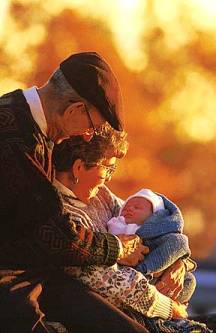
Johannesburg - The HIV/Aids pandemic has placed a heavy burden on the elderly, the Human Sciences Research Council (HSRC) said on Wednesday, World Aids Day.
"The elderly are the unsung heroes of the current pandemic", said Dr Monde Makiwane, a researcher at the HSRC, who conducted a study on the elderly (aged 60 and older) in Mpumalanga for the Department of Health and Social Services.
Instead of reducing their financial and care-taking concerns, older people now have to provide for their grandchildren and nurse their sick adult children.
The study found that 72% of older people in the province are the main breadwinners in multi-generational households, spending most of their income on household necessities and education of grandchildren.
"Nine percent are caring for sick young adults living in the household, 22% are staying with grandchildren whose own parents are either dead or away in the cities on a long-term basis, 20% take care of children six years or younger, and
46% take care of children between the ages of six and 18."
Grandparents bringing up kids
Makiwane said with 60% of orphans in South Africa being cared for by their grandparents, bringing up a second generation weighed heavily on the elderly.
"To this, HIV/Aids has added a significant burden with the added costs, reduced income earners and increased physical load. Because of the epidemic, the elderly people are often faced with having to look after their own children as sick adults."
Makiwane said that even without HIV/Aids, younger generations are a growing problem for the elderly.
After finishing school, young people face the prospect of unemployment. This is often coupled with unplanned pregnancies and the grandparents are left to look after the babies, with little support from the parents.
Sole providers
They have to provide food, clothes, education and medical treatment for themselves and the rest of the household.
"Funerals carry a substantial cost, often shouldered by the elderly as the main breadwinner, or receiver of a state pension. Loss of breadwinners stretches the old age grant for the elderly to the limit."
Makiwane said the physical demands placed on ageing parents was enormous, especially in rural areas where accessibility to basic resources such as water, energy, food and proper infrastructure was limited or non-existent.
"On top of that, they also retain the responsibility for doing domestic work in the house. Most of the elderly are victims of the past discriminatory policies, with low education attainment and low socio-economic status."
He said the overwhelming numbers of the elderly are females - according to census 2001 there are 34 males to 100 females in Mpumalanga - as males generally die earlier.
Most stay in rural areas, with even those who worked in the cities returning to rural areas when reaching pensionable age to reconnect with their extended families.
Edited by Tori Foxcroft
|
|