|
|
The Cost of Care: Women and AIDS
HelpAge International
December 1, 2004
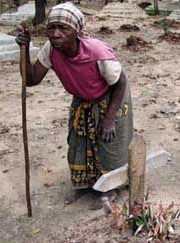
"Yahoo" Image
A new report produced by HelpAge International Tanzania, explains how HIV/AIDS erodes families and communities and exacerbates gender inequalities.
The cost of love: Older people in the fight against AIDS in Tanzania, is based on participatory research with 2,000 people from seven districts in Tanzania.
World AIDS Day this year focuses on the impact of HIV/AIDS on women and girls. HelpAge International's report highlights the roles and responsibilities assumed by many older women in Tanzania's fight against AIDS.
Shouldering the responsibility
90% of care for people living with AIDS in sub-Saharan Africa is provided at home. Many older women are shouldering this burden of care, and caring for the ever-increasing numbers of orphaned children.
Because of their care-giving responsibilities, older carers have less time to earn an income or produce food. They may have to abandon economic activity altogether, especially when they are caring for very young children. Those left with orphaned children report spending 80% of their time looking after them.
Necessities such as food, medicines and health care for their affected adult children, and schooling for their grandchildren, amount to four or five times the meagre income older carers earn. Many have sold their assets or used savings in order to cover these costs.
In the dark about HIV/AIDS
The report shows how information on HIV/AIDS bypasses older women. Low literacy levels, language constraints and limited access to written materials combine to leave older women carers in the dark about the disease. Older women in the study identified peer-educators and home visitors as their main source of information on HIV/AIDS.
The need for direct support
The report concludes that economic support for older people and their families is key to securing their own wellbeing and that of the people they care for. HelpAge International is arguing for governments to provide direct income support, including social protection measures, to older people and AIDS-affected families.
Specifically the report calls for
. The international community to give adequate support and funding to Tanzania's commitments, in its National Strategy for Growth and Reduction of Poverty, to deliver cash transfers to older people and vulnerable households.
. National policies on education, health and HIV/AIDS to be reviewed and amended to target and support older people, including full implementation of the National Ageing Policy.
. Appropriate information and training on HIV/AIDS prevention, treatment and care to support older women's role in the fight against AIDS.
Voice from Tanzania
"My son was a long distance truck driver. In caring for him, we sold all his property, radio, furniture, cooking utensils, tables and so on, to raise money for his medical bills and food. He died during the fourth month.
"Four months later, his wife became very sick and died after two months. This time, there was nothing to sell. I really don't know how we managed. They left behind three orphans, one of whom also died shortly after.
"The two surviving children are now aged 8 and 16. The older one was selected to continue with secondary education but I will have to sell some of my land to pay part of her school fees. It is quite tough for me."
Older woman, Muheza district, Tanga region, Tanzania
|
|