|
|
|
|
||
|
||
|
|
||
| SEARCH | SUBSCRIBE | ||
|
 |
Tackling
discrimination in South East Europe
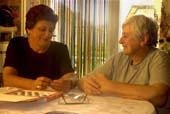
A
representative from a project partner organisation, the Association for
Social Assistance in A
new HelpAge International office will open in February 2004 in With
finance from the Community Fund (UK), the South East European project aims
to empower older people to tackle age discrimination across the region. It
will also encourage local NGOs to support older people in this process.
The countries covered are In
the first year, the focus will be on building the capacity of partner NGOs
to work with older people, and raising awareness of the problems of ageing
in rapidly changing societies. In the second year, participatory research
will be used to find out how older people identify their key problems and
the changes they want to see. Developing
a network At
a planning conference for the new project, held in Older
people lose out The
collapse of the Eastern Bloc economic and political systems and the
‘shock therapy’ of the 1990s have hit older people hardest. Many older
people do not have access to adequate health services, or a basic income
to cover essential bills and the cost of medicines. At the same time, the
value of pensions has shrunk with inflation. (Download a copy of HelpAge
International's report, A
generation in transition: Older people's situation and civil society's
response in East and Copyright © 2002
Global Action on Aging |