|
|
Plan To Free Up City Beds
Exeter Express, England
18 August 2004
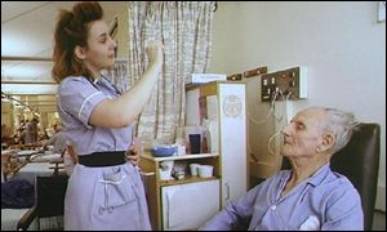
City hospital bosses have drawn up a new battle plan to free up much needed beds.
Part of the strategy will be to give a six-day deadline to elderly patients who are 'difficult' or 'reluctant' to leave at the end of their treatment.
These long-term-care patients, who hold up beds because they are waiting for a room in a nursing home of their choice, will be given six days to find a place.
If they fail to before the cut-off date, they will be allocated one in a council-run home.
The new policy comes into force from October at the Royal Devon & Exeter Hospital. The South West Peninsula Strategic Health Authority, which drew up the new plan, has emphasised it is a 'last resort'.
Exeter Primary Care Trust says the aim is to help cut the numbers of patients staying on in hospital, curb infections among elderly people, and stop them becoming increasing dependent on care.
But Exeter's Age Concern is worried about the move - especially about the 'blanket' time-scale.
They believe patients should be treated 'sensitively' at such a traumatic time and each individual case assessed on its own merits.
Recent Government figures revealed that on any given day more than 4,000 people aged over 75 were in NHS hospitals in England even though they were fit to leave.
The report by the National Audit Office said this was damaging for everyone concerned - for the patient stuck in a much-needed hospital bed and equally for the patient unable to get into hospital for treatment.
Under the new system elderly patients who are well enough to leave the hospital will be given six working days to find a home or accept an interim placement from social services.
If after six days no discharge date has been agreed, the ward manager or matron will give seven calendar days written notice of the hospital's intention to have them moved to an interim care home. This will be done in consultation with the patient's family. Once in the temporary home a social worker will be assigned to them to ensure they eventually get into the home of their choice. Patients in temporary homes would still pay for their care as they would in a permanent home.
The South West Peninsula Strategic Health Authority, which drew up the policy, has emphasised it was a 'last resort'. The document, which has been approved by Exeter Primary Care Trust's board and Devon County Council, states: "An individual does not have the right to occupy a hospital bed where the sole reason for doing so is because the individual's preferred form of onward care is unavailable."
It adds that for those having difficulties, a conference between all parties will be held, at which family, nurses and social workers would agree how to move the patient to a temporary home 'as soon as possible'. These homes would have to meet their nursing needs and be within visiting distance from relatives.
Sally Slade, health and social care manager for Exeter said: "We know if people stay a long time in hospital then their dependency increases and they can become poorly."
The policy, she added, made it much clearer about the issue of patients' rights at the point of discharge.
But Martin Rogers, director of Age Concern, Exeter, was more concerned about the affect on the elderly patients. He said: "We appreciate the problems hospitals have in ensuring their capacity meets demand. Nobody stays in hospital for the fun of it, but moving into long-term care is a major and often traumatic decision which needs careful and sensitive consideration.
"We are concerned if blanket time-scales are imposed on patients, indicating how quickly they must find a care home. Individual circumstances will differ greatly and each case should be assessed on its own merits.
"People need to know that they cannot be forced to accept a residential or nursing home placement against their will so it is in everyone's interests to find mutually acceptable solutions within a time-scale that suits the individual case.
A spokesperson for Devon County Council said: "It can be distressing for some patients when they're advised by health or social care professionals that they need long-term care. Some patients agree with the advice, whilst others understandably are reluctant or perhaps fearful of the unknown, which is why we and our health colleagues work very hard with patients and their families to come to terms with that.
"All patients that need long-term care after leaving hospital have a choice as to where they get that expert care and we make sure as far as possible that they get places in the homes that they want.
"By providing patients with a temporary placement, it means that their discharge from hospital is not held up, enabling the hospital to treat other patients. It doesn't mean that patients will be told to leave hospital whilst they still need hospital care.
"Interim care placements will meet all the patients' care requirements, and they'll be able to stay there for a long as it takes for them to decide which permanent home they'd like to live in, or for a place in that home to become vacant."
|
|