|
|
Canadians Happy to Provide Care
for Elderly Loved Ones, But Need Some Relief
Greg Bounnell, Canadian Press
Canada
September 16, 2004
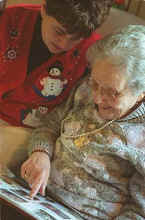
More than half of Canadians caring for elderly parents and loved ones wish they had someone to provide "occasional relief" from their duties despite finding the caregiving experience a rewarding one, Statistics Canada reported Tuesday.
When asked what would allow them to continue providing care, 51 per cent of respondents answered "occasional relief or sharing of responsibilities" - but less than one in five receive such respite.
"What the Canadian government needs to do is embrace a national strategy," said Lorna Hillman of Canadian Caregiver Coalition. "Address (caregiving) in a comprehensive way so that it becomes part of the health-care system."
The Statistics Canada report, entitled Looking After Seniors: Who Does What For Whom? drew its data from some 25,000 respondents over the age of 45 residing in all 10 provinces.
Based on that information, Statistics Canada concluded that some 1.7 million Canadians between the ages of 45 and 64 were providing informal care - doing housework, providing transportation, helping with personal grooming - in 2002 to almost 2.3 million seniors with a long-term disability or physical limitation.
The majority of caregivers were assisting their parents (67 per cent) and their spouse's parents (24 per cent), while others were caring for neighbours and close friends.
While men were just as likely to be caregivers as women, their female counterparts were dedicating almost twice as much time to the task - 29.6 hours per month for women compared to 16.1 hours for men.
"Canadians willingly take on this role," said Hillman in a telephone interview from Victoria. "They'll tie themselves up in knots trying to figure out how to deal with the challenges on their own before they tap the formal health-care system."
The research suggests that respite from those commitments is crucial in maintaining the caregiver's well being.
"It can be a break to go out and do some shopping, some socializing, to get involved in a physical activity program," said Taylor Alexander, president of the Canadian Association for Community Care. "Just a break away so that they have a chance to recharge their batteries, both mentally and physically."
The demands of caregiving highlighted in the report included sleep deprivation, changes to one's work, social, and vacation schedules, and impact on overall health.
"That's why these respite services are so important," said Alexander. "These caregivers need a break so that their health does not deteriorate."
Of the minority that found respite, 82 per cent relied on other family members while 16 per cent called on private or government services to ease the load.
While families will often exhaust their own resources before seeking outside help, the government needs to provide more programs to help ease the strain, Hillman said.
"Canadians are already demonstrating their commitment to provide care, so I don't think abuse of the system would be an issue."
The data presented Tuesday appear to support that.
Almost nine in 10 of the respondents said providing care strengthened their relationship with the parent or loved one, and repaid some of what they themselves had received from others in their lifetime.
Despite the demands of such a commitment, 34 per cent of caregivers reported being very satisfied with their lives while 30 per cent of Canadians not caring for a loved one could report the same.
Overall, 95 per cent of caregivers reported being either very satisfied or satisfied with their lives overall, on par with the non-caregiving population.
The report also looked at people over 65 providing care for other seniors, including spouses, close friends, and neighbours. More than one in 12 seniors were doing so - with the majority (59 per cent) being female.
Similar to the middle-aged caregivers, only 18 per cent of the elderly group said they could rely on someone else to assist with their duties if they needed time off.
"Often, it's women taking care of an elderly husband," said Alexander.
"They're almost like prisoners in their houses because they're so devoted, so caring, and they want to do the best," he said. "They end up basically burning out."
A program already offered by Veterans Affairs - which provides adult day programs that include bathing - could easily be expanded to the general population, suggested Hillman. Or send someone to the home to attend to the gentleman's grooming needs while his wife has breakfast and reads the paper.
Overall, respite programs must be flexible.
"You've got to support people where they're at," said Hillman. "One size fitting all is not going to work."
|
|