|
|
Mexico City on Edge with Murders of
26 Senior Citizens over Two Years
By Kevin Sullivan, Washington Post
Mexico
December 5, 2004
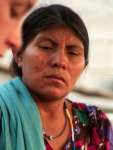
The last time anyone saw Imelda Estrada alive, a neighbor waved to her as she stood in the doorway of her home Nov. 17, talking to a woman the neighbor did not recognize. Three hours later, Estrada, 76, was found inside the ransacked house where she lived alone, strangled with a pair of stockings.
"We don't even have a name for someone who could do that," said Gloria Perez, 74, a friend who lives about six doors down from Estrada, and who met with her regularly to say the rosary. "I'm very sad, and everyone is afraid now."
At least 26 senior citizens, almost all of them women, have been killed in Mexico City in the last two years, according to Bernardo Batiz, the city's top prosecutor. The killings have alarmed senior citizens, angered women's groups, and prompted comparisons with the decade-long string of murders of women in the border city of Ciudad Juarez.
In most of the Mexico City cases, police said, the killer probably talked his or her way into the homes of seniors who lived alone, perhaps posing as a nurse or meter reader. They said robbery seemed to have been the chief motive in most cases.
Two people - a woman who posed as a social worker and a man pretending to be a nurse - have been arrested in connection with five of the deaths, and a third suspect has been charged with attempted murder in another case. The rest of the killings remain unsolved.
Barbara Yllan Rondero, an official in the prosecutor's office, said authorities believed that the killings in which no robbery was involved might have been the work of a serial killer. She said others were likely done by opportunistic copycats who saw the elderly as easy targets for robbery.
"People are really very scared," said Pedro Borda, head of the National Institute for Senior Citizens, which has held safety lectures and passed out more than 10,000 door chains. "They are most concerned because the authorities aren't doing anything."
Borda said the elderly were especially vulnerable to criminals, and they are the fastest-growing segment of the population. He said there were 7.9 million Mexicans over 60, a figure that is expected to nearly double in the next decade.
"The numbers are dramatic, and the government needs to protect these people," Borda said.
Prosecutor Batiz and Mexico City Mayor Andres Manuel Lopez Obrador have played down the killings and accused the news media of exaggerating their significance. At a recent news conference, Batiz said investigations were "going well" and that legislators who had demanded investigations were seeking publicity for themselves.
Such statements have prompted comparisons to the official response in the Ciudad Juarez killings, which began in 1993. Human-rights groups say most of those killings of young women remain unsolved, largely because government officials for years refused to acknowledge that the problem existed.
"We hope the authorities see this as a real problem, not as something insignificant, which is what happened in Juarez," said Eliana Garcia Laguna, a federal congresswoman and head of a legislative commission studying "feminicide," as the phenomenon is now called here. "They need to open investigations so this doesn't become a greater problem."
Garcia said violence against women of all ages has been increasing across Mexico. More than 300 young women have been killed in Chihuahua state since 1993, and officials said more than 90 showed similar signs of torture and rape. Garcia said the states of Sonora and Guanajuato, as well as the popular resort city of Cancun, have also recorded significant numbers of women killed in the last two years.
"There are alarming statistics from many states," said Aracely Escalante Jasso, a federal senator who is president of the Senate's Equality and Gender Commission. "We want to know what the situation is with the killing of elderly women in Mexico City, but we get no response from city officials. No one wants to admit what's going on."
Escalante said Lopez Obrador's claim that the murders have been exaggerated was "totally false."
"The bodies are real, and the authorities have to assume responsibility," Escalante said. "We want a deeper investigation and for the authorities to release real information and not to hide the fact that these brutal crimes are taking place."
|
|