|
|
One Quarter Senior Citizens in Beijing have no Spouse
Chinaview
May 5, 2004
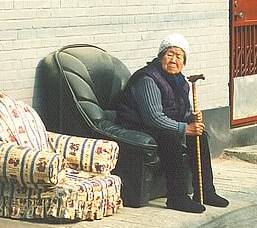
One quarter of the 1.88 million senior citizens aged over 60 in China's capital Beijing have no spouse, the latest statistics show.
A Beijing-based research center on aging has found that 470,000 senior citizens in the city are single, including 440,000 widowed and 30,000 unmarried or divorced people.
The fifth nationwide census in 2000 also found 23.4 percent of the city's elderly people are widowed while the unmarried and divorced made up one percent of the population.
More females than males were found to be single in their old age. Of the 440,000 widowed senior citizens, 318,000 are widows and 122,000 are widowers.
Psychological and social research has revealed that marital status directly affects one's physical and mental health, and a better half becomes more important than ever when one retires and loses many social contacts.
The sudden death of their spouse often cause the widowed to die an earlier death, as researchers have found the death rate of the newly widowed elderly is seven times as high as the normal death rate for senior citizens.
Experts on aging problems say a remarriage often boosts the widowed people's health by helping them regain faith in life and feel less lonely.
Many elderly people themselves, particularly those who are healthy and financially independent, need a spouse to keep them company. A recent sampling survey has found 54 percent of the senior citizens in Beijing say it is quite acceptable for a widowed person to remarry.
But researchers say many elderly cannot do so in face of prejudice and rejection.
Du Peng and Yin Bo, specialists on aging problems based in Beijing, found in their research that 50 percent of the senior citizens are confined by traditional beliefs that one should marry only once in life and a second marriage would be a betrayal to the deceased spouse.
Traditionally, old people in China got plenty of respect as long as they remained faithful to their spouses, even into death.
On the other hand, many Chinese think it is embarrassing to remarry when one is getting on in years. "It's a question of face," said Lu Jie, manager of Milan Spring Wedding Photo, a studio in Beijing's bustling Xidan shopping district.
Lu said no elderly couple planning remarriage ever entered the studio.
Meanwhile, children's rejection -- for fear of losing face or inheritance -- was another major obstacle that kept 33 percent of the single senior citizens' from getting married again, said the two researchers.
Still, experts believe more senior citizens will choose to remarry as the elderly people are more attentive to the quality of their life and depend less on their children for companionship and support.
"Besides, the younger generation will be more considerate as they get on in years themselves," said Du Peng.
China is moving rapidly toward an aging society, registering over 130 million elderly, about 10 percent of the total population, and the figure will keep growing at an annual rate of 3.2 percent in the next half century.
In an effort to improve their welfare and overall quality of living, the government has actively promoted community service for the elderly, including matchmaking services for the widowed and divorced to tie the knot again.
|
|