|
|
Work! --- It Won't Kill You
The Australian
July 31, 2004
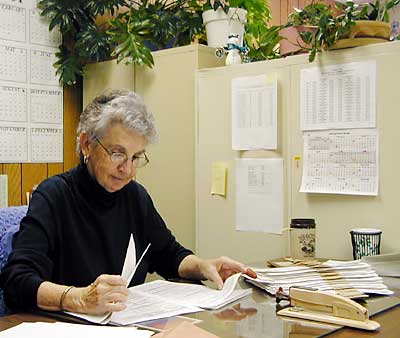
Staying on the job after pension age could help your longevity, as well as the PM and Treasury, writes Anna Fenech.
Prime Minister John Howard turned 65 this week and, to the likely consternation of the Treasurer, continues to work on past the retirement age.
It's no surprise, then, that Howard's Government is at the forefront of a push that uses a raft of carrot-and-stick measures to see that others of retirement age follow his working example.
Howard's level of activity suggests he's in line for a long life, while a parliamentary superannuation retirement income will alleviate any financial worries.
A plethora of benefits begins kicking in for men who retire at 65 and women who retire at 62. These include a seniors healthcare card, transport concessions and discounts on utility bills.
The Seniors Healthcare Card, which gives access to cheap prescriptions, is available for single retirees with an income of less than $50,000 a year and for retiree couples earning $80,000 or less a year. Transport and utilities bill discounts are available to those who qualify for any aged pension.
Access to superannuation is allowed at "preservation age" (generally 55) for those who take early retirement, though experts say there's nothing to stop someone from reversing that decision later, even though they have accessed their superannuation (as a lump sum or pension).
However, this year the Howard Government began rolling out financial incentives aimed at persuading people to stay in the workforce beyond age 65. These included allowing non-workers to contribute to super as well as allowing people to work while getting a superannuation income stream.
Much of it is a response to the Government's 2002-03 "Intergenerational Report", which forecast the number of people aged 65 and over would double in the next 40 years to 25 per cent of the population.
In mid-July, Family and Community Services Minister Kay Patterson also announced a review of the existing Pension Bonus Scheme, which awards a maximum tax-free lump-sum bonus of $28,363 for staying up to five years longer in the workforce beyond pension age.
Patterson says a communications campaign is being developed to ensure people approaching retirement are aware of the scheme. In addition, changes are being considered to make it more flexible. Currently only 20 per cent of people over pension age who are working are registered in the scheme.
"A total of 7407 bonuses were paid in 2003-04, an increase of 31 per cent over the previous financial year," Patterson says. "The average amount of bonus paid in 2003-04 was $11,324, an increase of 53 per cent over the previous year."
At the launch of a retirement book, Retireready this week, Commonwealth Bank chief executive David Murray noted that eight taxpayers were needed to support one pensioner.
But he also says a growing group of people approaching retirement have realised "they have no choice but to work longer". The $11,500 a year age pension available for a single person or $19,000 for a couple "is not high", he says.
"Australian Bureau of Statistics figures show in the three years to May, the number of workers aged 55 and over rose 30 per cent, from 980,000 to 1.26 million workers," Murray says.
Apart from the financial incentives, experts say social networks and mental wellbeing are good reasons for remaining in the workforce beyond retirement age in whatever capacity.
Heather Mitchell, a lecturer in the school of economics and finance at RMIT, examined more than 50,000 superannuation records of public servants who retired between July 1998 and February 2004. The study -- entitled Did Hard Work Ever Kill Anyone? -- found her subjects' risk of death declined by about 9percent for each year they remained in the workforce.
"The gist of the findings was that early retirement increases your risk of dying early and if anything, all things being equal, working longer may aid your longevity -- a bit," Mitchell says. "In other words, there was little evidence of people dying of work stress." Case studies in Retireready appear to back these findings.
One concerns a former geologist from the NSW Illawarra region, Peter Lamb, now aged 66, who retired eight years ago. With lots of spare time, and concerned that he was not doing anything except "spending money", which he thought would run down his super too early, Lamb answered a job ad in the local paper.
It was Lifeline looking for people who were prepared to train as volunteer counsellors and was something Lamb felt he could at least "sink my teeth into". In the book he says he developed listening and communication skills he never thought he had.
He has since trained as a (paid) financial counsellor, and now works three days a week. While it does not pay enough for him to live on completely, it has reduced his dependence on his superannuation nest egg, which will now last some years longer.
Currently, few Australians are actively planning for their retirement. A March Newspoll survey showed only 50 per cent of people of pre-retirement age had made financial plans, and about 25 per cent of those surveyed had procrastinated for 10 years before they started to plan for their retirement.
Philippa Smith, chief executive of the Association of Superannuation Funds of Australia, says the reality is that most people do not start thinking about retirement until age 45 or 50.
"They do have other priorities." These included coping with big mortgages in capital cities, school fees, marriage breakdowns and lifestyle costs.
However, based on our longevity, advance planning for a 20-year or longer retirement is fast becoming a necessity, and for the group approaching retirement age, knowledge of the incentives available to help boost superannuation by working longer are useful to know.
Pension Bonus Scheme
This gives people a tax-free cash bonus for every year (up to five years) beyond age pension age that they remain in the workforce and don't claim the pension.
"It's basically a government reward or incentive for not claiming the pension," says Sam Wall, technical manager at Zurich. The idea is that people register for the scheme once they are of retirement age and, assuming they qualify for some age pension once they do decide to stop working, they will get a bonus.
Removal of the Work Test for those under age 65 to contribute to superannuation "This is a good strategy for retirees who want to top up their superannuation but don't want to return to the workforce and have to satisfy a work test to do it," Wall says. "So if you get a windfall or an inheritance, you can put it in super. You could claim the first $5000 contributed as a tax deduction, then 75 per cent of the rest up to your age-based limit."
For instance, this may be a good strategy to move a $50,000 share portfolio into super. "The capital gains tax liability on that portfolio could be offset by the tax deduction on your contribution," he says.
A new work test for those over 65
Instead of a strict 10-hour a week requirement, which was hard for those who had casual work, the requirement is now that people must have worked for 40 hours in 30 consecutive days to make a super contribution in that financial year.
Then, in order to be allowed to leave your superannuation in the accumulation phase, you need to have worked 240 hours in the previous financial year.
"You used to have to take your super almost immediately after your 65th birthday -- this will give people a year's grace if they want to leave their super accumulating for a while longer," Wall says.
Access to superannuation while working for those over the preservation age (from July 1, 2005)
This allows people to gain access to superannuation while still working. But under this formal arrangement workers would have to access super through a non-commutable income stream, that is, a pension that does not allow withdrawal of lump sums. Details on how it would work are yet to be released.
"This proposal would allow greater flexibility for pre-retirees in a transition to retirement," Advance Asset Management technical manager Matthew Esler says. "This is especially the case for those who wish to reduce their hours of work and supplement their salary or wages with superannuation pension income."
The pre-retiree could begin to draw the income stream from their superannuation savings. They would be entitled to receive concessional treatment such as the 15 per cent pension tax offset available to those aged 55 years and over who draw a pension from super -- while the growth on the capital amount used to fund their pension would be tax-free.
"If they did not require the income, the pre-retiree could salary-sacrifice their salary into superannuation up to their age-based deductible limits," Esler says.
|
|