|
|
Asian Elderly in Crisis
Care Lacking for Asian Elderly in the UK
Channel 4 news
United Kingdom
February 22, 2005
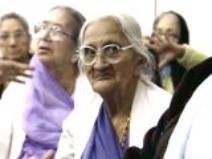
Research claims that a breakdown in traditional family structures is leading to a crisis in care for the Asian elderly.
As first generation Asians who settled in the UK in the 1960s and 1970s age, it is estimated that in the next five years, the number of Asians aged over 65 will treble.
The report by the Policy Research Institute on Ageing and Ethnicity (PRAIE) claims that local authorities are failing to respond to these rapid, demographic changes.
For instance, the Varsanis represent the traditional image of an extended family - four generations living together in one house with 16-year-old Joyti studying for her GCSEs. She lives with her father, Ravji, who works in construction.
Also in the house are her grandmother Dhanbi Varsani, 67, who came to Britain in the 1970s from east Africa and her great-grandmother, Radhbai, who is 94 and was born in India.
The family has enjoyed living together and supporting one another but are now facing the same dilemmas about their future as many other families.
Rajiv Varsani says: "I don't expect my children or my grandchildren to look after me because they have grown up in this country, their way of life is totally different to what it used to be."
A three-year study has found that local authorities are still making assumptions about ethnic minority families caring for their own and that as a result, they are failing to respond to their needs.
Naina Patel from the PRAIE has called for action.
"We have already seen some very tragic situations of abandonment. Some housing providers say they can't cope any longer and we see that already happening," she said.
"We see minority elders being referred in housing situations that are not appropriate or where staff do not speak the language. It does not always follow that minority elders are unhappy to be with English elders and vice versa, but in old age people like to be in familiar situations."
According to the study, pensioners from an ethnic background are amongst the very poorest with a disproportionate number relying on benefits. Many Asians arrived in Britain part-way through their working lives and then faced periods of unemployment - which meant they were unable to build up healthy pensions.
They now have to turn to the state for care - but many are finding that the services are inadequate.
A day centre in Wandsworth, south London, is aimed specifically at the borough's Asian elders. The staff can all speak several Asian languages and they cater for cultural, religious and dietary needs. Above all, it provides a place to meet others and share company.
The Wandsworth Centre is hugely popular - 25% over-subscribed. In the next 10 years, the borough predicts that the number of ethnic minority elders will rise by a massive 300%. And yet this centre had to be set up by a group of volunteers, because they felt the local authority was not responding to their needs.
Lalita Gohal came to the UK in the 1970s and says she never imagined she would end up staying or living alone at the age of 79. Her daughter has just bought her first property and simply can not afford somewhere big enough for the both of them. She is a regular at the Wandsworth centre.
She said: "I come here in the morning. I stay here till 5pm. I go home, say my prayers and then that's it until the next day. I get very lonely."
It is often assumed that Asian elders wouldn't use state care services - and so provision is patchy.
Wandsworth centre manager Misbah Islam said the centre fills an important gap.
"I have met quite a few Asian elders who had no place to go to and had mental problems when they were left on their own, others become physically ill."
By 2030, there will be over 1.7m ethnic minorities over the age of 65 living in Britain. The problems faced by the Asian elderly are similar to those faced by all pensioners - but they are compounded by language barriers, social exclusion and discrimination, the report says.
If they are to experience ageing with dignity and respect, local authorities are being warned that their plight cannot be ignored.
|
|