|
|
High Cost of Growing Older
Isabelle Southcott , The Powell River Peak
Canada
April 20, 2005
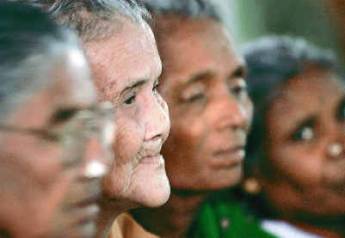
Growing old can be expensive.
As people age so do their various body parts, and some begin to wear out.
"It costs a lot to be a senior," said Shirley Lee, past president of the Senior Citizens' Association of Powell River Branch 49. "You have to pay for your teeth, your eyes and your hearing, and these three things wear out with age."
Besides eyes, teeth, and ears needing care and attention, medications and accessories are often needed to help keep seniors mobile.
Irene Kitson said it costs her and husband several hundred dollars the last time they visited the dentist. "We don't have a dental plan anymore," said Kitson, who is 76.
She also said hearing aids are expensive. Three years ago she purchased hearing aids and it cost her $4,600.
"Some people who have been widows or widowers, their finances don't stretch that far," she said. "I feel very sorry for people who can't afford them."
Hearing loss is one of the most common conditions affecting older adults. One in three people older than 60 and half of those older than 85 have hearing loss. Hearing problems make it hard to understand and follow a doctor's advice, to respond to warnings, hear doorbells and alarms. It can also make it hard to enjoy talking with family and friends.
Jason Gordon is an audiologist for Island Hearing Services and said he is the only licensed audiologist serving Powell River. "The cause of hearing loss due to old age is called presbycusis and it is due to the death of inner ear hair cells," he explained.
There are 2.6 million Canadians over the age of 65 who have some kind of hearing loss.
Hearing aids can help most people and there have been advancements in technology in the last four to five years that help control background noise, which can interfere with conversation and with feedback and whistling problems.
Gordon said hearing aids will not restore a person's hearing to the way it once was, but they will assist people in filling in most of the blanks that older people miss in conversation.
Jeff Germaine, a registered hearing aid practioner with Beltone Hearing Care Centre, recommends that everyone over the age of 55 have their hearing tested annually.
A person needs a prescription to obtain hearing aids. They range in price from $1,000 to $3,000 for each aid, and most people need two.
In BC the provincial medical plan does not assist with the cost of hearing aids, however some people may be able to apply for assistance through Worker's Compensation Board or Veteran's Affairs.
Optometrist Dr. Thomas Adamack said between the ages of 50 and 60 glaucoma, cataracts and macular degeneration begin to occur in the eyes.
"These are things that happen in our senior years and the frequency and likelihood of it increases as we get older. If we all live long enough we'll all get cataracts."
He recommends an eye exam every year or two after the age of 50 and an annual exam after the age of 60. After 65, the exam is covered by the BC Medical Service Plan, he said.
A cataract is a clouding of the eye's naturally clear lens and is characterized by a loss of colour or perception or hazy vision. Of the three eye conditions Adamack mentioned, cataracts are the easiest to deal with, as surgery can be done locally and the actual procedure only takes 20 minutes.
Macular degeneration is the most devastating of the three, as less than 20 per cent of cases are treatable and treatment only prevents further loss--it doesn't recover what has already been lost. With macular degeneration, there is a loss of central vision, however the peripheral vision remains.
With glaucoma, the loss of vision is silent, painless and insidious, said Adamack. The central vision remains, but the peripheral vision is lost. It can lead to permanent blindness if undetected and untreated, however it can be controlled with eye drops and its progression can be halted if treated and controlled.
Other eye conditions associated with age are dry eyes, wet eyes, spots and floaters. However there is good news, said Adamack. "We see lots of people in their 80s, 90s and a few over 100 who are still able to drive legally from a visual perspective."
Drugs are another expense seniors face and not all prescriptions are covered by the province's medical plan.
"All my drugs right this moment are not covered," said Lee. "And it's all because things are wearing out. "It's like you are a piece of machinery that wears out and you need stuff to fix it."
Medicines prescribed in hospitals are fully covered by provincial medical plans. Outside of hospital, Canadians must pay for medicines out of their own pocket or receive reimbursement through private or government-subsidized drug plans. Every province and territory offers some form of subsidy for its seniors, and some are more generous than others.
Lee said the cost of growing old is so expensive that some seniors have to choose between eating or buying hearing aids.
Specialized equipment such as walkers, wheelchairs, canes, electric hospital beds, stair lifts and grab bars help seniors enjoy an improved quality of life.
Betty Parker, manager of Medichair Medical Equipment, knows what equipment is on the market and what it can and can't do.
She quickly points out that one size doesn't fit all. "A lot of people don't know this and they'll go to a garage sale and pick up a walker or something that might not work for them because it doesn't fit them."
Daily living aids such as a product that helps people put their socks on, one that helps extends someone's reach, utensils with large handles and non-tip cups make life easier for many.
|
|