|
|
Seniors Rally Around Mayor of Mexico City
By Marla Dickerson, Los Angeles Times
April 13, 2005
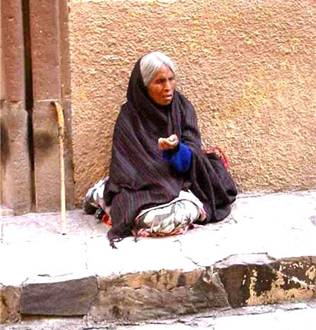
In a nation without universal social security, $64a month for the elderly gains Andres Manuel Lopez Obrador ardent supporters.
If you think the AARP is a force to be reckoned with, then you haven't met Martha Dominguez
Davy.
She has high blood pressure and at times is troubled by
arthritis. But the 72-year-old was headed to the
barricades to defend her $64-a-month pension and the
man who gave it to her. That would be Mexico City Mayor
Andres Manuel Lopez Obrador, whose impeachment by
Congress last week was a major setback in his bid to
become the country's next president.
"I will fight with everything I have to help him," said
the Mexico City grandmother, kissing a button
emblazoned with Lopez Obrador's smiling face that she
keeps pinned to her blouse, over her heart.
Such is the devotion the populist mayor inspires among
the capital's senior citizens, a long-marginalized
group of voters who, like their U.S. counterparts, are
mobilizing around the theme of social security.
Dominguez joined an estimated 400,000 people, many of
them elderly, in the city last week to protest a
decision by Congress to strip Lopez Obrador of his
immunity from prosecution over a minor property
dispute.
The front-runner in next year's presidential race is
expected to be charged and potentially jailed pending
trial for allegedly ignoring a 2001 court order to stop
construction of a city-financed hospital access road on
expropriated land.
Under Mexican law, he would be banned from politics
until his case is resolved. It's a legal blow that
could knock him off the 2006 ballot even if he is
cleared.
Supporters of the leftist mayor, who has taken a leave
of absence from his duties, say the decision is a dirty
trick to sabotage his presidential aspirations. Lopez
Obrador has made enemies of the rich and powerful for
his criticism of the North American Free Trade
Agreement, and for his opposition to the privatization
of state industries and other tenets of free-market
economics.
But he is wildly popular among the poor and working
class. His administration has distributed free school
supplies to youngsters and provided thousands of
construction jobs to laborers through a slew of public
works projects. No group, however, reveres him more
than the capital's senior citizens, for whom his
administration has developed a bare-bones but universal
social security system, something unheard of in the
rest of Mexico.
Launched in 2001, the program provides about 370,000
Mexico City residents aged 70 and over with a stipend
of about $64 a month. The money is credited to them
electronically on plastic cards the size of a driver's
license. Holders can use them like debit cards in major
supermarkets and discount stores to buy just about
anything except liquor. Beneficiaries also receive free
medical care at city-financed clinics.
Sixty-four bucks a month is little more than bingo
money for many seniors in the United States. But it is
a small miracle in Mexico, where eight out of 10
elderly people lack pension benefits and nearly half
have no health-care coverage.
Although programs such as Social Security and Medicare
have helped drive down elderly poverty rates in the
U.S. from about 35% of American seniors in the 1950s to
10% today, around 60% of Mexicans over the age of 60
are poor. There is no old-age safety net beyond family
for millions who work in Mexico's underground economy,
the nation's principal job engine.
For seniors like Dominguez, a divorcee who supported
five children working as a waitress, baby-sitter and
bakery clerk, the monthly stipend has brought a small
degree of dignity. Shampoo and underwear are no longer
unthinkable luxuries. She said she eats meat regularly
now and occasionally treats herself to cookies and
chocolate.
"Thanks to Andres Manuel, I may have to lose some
weight," she said with a laugh, patting her firm
midsection as she relaxed in her tiny living room. She
has decorated the iron gate leading to her home with a
poster of Lopez Obrador that reads: "They didn't rob us
of hope."
Critics have called such social spending unsustainable
and a thinly veiled attempt to buy votes from the poor.
Conservative President Vicente Fox has warned the
public repeatedly to beware of "populist messiahs" who
"offer gold and riches."
But some analysts who have looked at the books say
Lopez Obrador has paid for the $342-million program at
least twice over by slashing the capital's bureaucracy.
Independent Mexico City economist Rogelio Ramirez de la
O says the mayor has cut at least $721 million in city
spending by eliminating jobs, consolidating office
space, bargaining hard with vendors and yanking away
cellphones, vehicles, business lunches and other perks
from city employees.
"He is very hands-on," Ramirez de la O said. "He
literally squeezed that money out of the bureaucracy."
Legions of senior citizens are repaying that generosity
by rushing to Lopez Obrador's defense. Sections of the
capital's massive central square, the Zocalo, looked
like a Gray Panthers rally last week, with white-haired
protesters waving banners and shouting, "We are with
you!"
Socorro Camacho Romero is among the mayor's defenders.
The 79-year-old keeps her food card tucked inside a
protective case along with the grocery receipts so that
she knows exactly how much she has left to get her
through the month.
In her nearly eight decades, she said, she can't
remember another elected official who has improved her
quality of life as much.
A doctor's appointment kept her away from the rally
Thursday. But she vows she won't miss the next big one,
scheduled for later this month. "He is the only
politician that has ever taken us old folks into
account," she said. "His enemies think that we'll tire,
that we'll keep quiet because we are old and poor. But
I am going to march until I can't march anymore."
|
|