|
|
Millennium Development Goals Must Target Poorest, Say Older People
HelpAge International
World
September 13, 2005
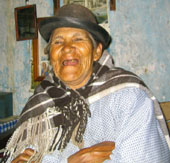
Doña Fernanda, 83, lives in La Paz, Bolivia. She collects rubbish to earn a meagre income.
More than 10 per cent of those living on less than a dollar a day are over 60 and are among the world's poorest. Therefore the Millennium Development Goals' (MDGs) global commitment to halving extreme poverty by 2015, must target older people.
At this week's United Nations Millennium Summit Review in New York, HelpAge International is asking the international community to take action by responding to the needs and rights of the poorest and most marginalised - including older people - in order to achieve the MDGs and the broader development agenda.
"While the MDGs have specific targets on children and youth they are silent on issues of age, ethnicity and disability. As a result, these invisible groups are unlikely to benefit from the global effort to eradicate poverty," says Todd Petersen, HelpAge International's Chief Executive Officer.
Proportion of older people on the increase
Doña Fernanda, 83, lives in La Paz, Bolivia. She never went to school or learnt to read but spent her childhood working. Now, in her old age, she collects rubbish in the streets. She works all day every day picking up paper and plastic on the street. For each kilo of rubbish she collects, she gets paid US$0.05.
Ageing is a major structural issue for the 21st century. In developing countries the proportion of older people is predicted to rise from 8 to 19 per cent by 2050. In Asia and Latin America the numbers of oldest people will rise the fastest.
Older people, especially older women, are also among the poorest in the developing world. Older women around the world face gender discrimination and inequality.
They also contribute to the survival of the young in poor families, including the health and wellbeing of infants and young mothers. A large number of older people, mainly women, play key roles in fighting the effects of the HIV/AIDS epidemic, as carers of people living with AIDS and of orphaned children.
Social protection - a means of reaching the poorest
HelpAge International would like poverty analysis to be disaggregated by gender and age as well as ethnicity and disability. HelpAge International is also calling for equitable development targeted at the very poorest through a universal social protection package, including education, health and income.
Poor older people should be core beneficiaries of such a package, alongside other vulnerable groups, so as to fulfil their own right to development as well as be able to contribute to their families and those in their care.
|
|