|
|
Asia's Slowing Down
Taipei Times
July 9, 2005
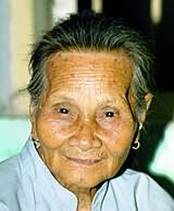
East Asia's dynamic economies which built themselves into mass exporters
through innovation and hard work could be heading into the twilight era
unless they urgently find a way to have more children.
Instead of focusing its energy on designing the electronics and cultural
assets that drove its wealth, East Asia in just a few decades will see its
most urgent priorities turn to solidifying pension systems and medical
care as a smaller working population props up a growing army of seniors.
The elderly will likely eat up their savings to survive, meaning less cash
on hand for other investments that sustain economic growth, experts warned
ahead of World Population Day, this Monday.
Some six percent of Asia's 3.88 billion people were aged 65 or older last
year.
But with people living longer and more young people choosing to put off
having families, that figure is set to nearly triple to 17 percent of the
estimated five billion Asians by 2050, according to the Population
Reference Bureau, a US-based research group.
"The standout feature of aging in Asian economies is that it is
happening extremely fast," said Manabu Shimasawa, associate professor
of economy at Japan's Akita Keizaihoka University.
"The demographic shock will lead to an increase in tax and pension
burdens. The economic welfare of individuals might decrease sharply."
A study in May by ABN-Amro said Asia had an "unprecedented
demographic challenge" with an aging population and with existing
pension assets that are low in proportion to gross domestic product.
The study found that South Korea was the most vulnerable in part due to
the relatively meager wages among nations whose populations are set to
dip.
China, now the toast of the business world for its surging economic
expansion, will likely see its growth plunge from 9 percent in 2002 to 3
percent in the next 50 years, Shimasawa said.
The percentage of elderly will shoot up from 6.9 percent in 2000 to 22.7
percent in 2050, according to Shimasawa's estimate.
China has made a conscious effort to control its billion-plus population
in a rare effort for a developing nation. But for more developed
economies, the cost of having fewer children could be much more acute.
In Japan, the elderly population will account for 35.7 percent of
population by 2050, up from 17.4 percent in 2000, Shimasawa said.
"The flow of money might change as the elderly use their savings. It
might become more difficult to sustain industries, and companies might
experience difficulties obtaining necessary capital to, say, renovate
factories," he said.
Some 27.4 percent of the South Koreans will become elderly by 2050, up
from 7.1 percent in 2000. For Singapore, the ratio will be 28.6 percent in
2050, up from 7.2 percent in 2000, he said.
Asia's economic miracle had been supported by an abundance of young,
healthy workers, said Yasuko Hayase, an expert on population issues who
lectures at several Japanese universities.
Faced with the collapse of the young population, East Asia may have to
break taboos by accepting large-scale immigration.
"Workers might tend to gather in richer nations for better wages.
That will take away quality workers from rural areas of poorer
countries," Hayase said.
The Japanese government has called on the corporate world to look at the
elderly with new eyes. Instead of the post-World War II model of lifetime
employment and a comfortable retirement at age 65, the government hopes
more elderly people can stay on in a less formal capacity as mentors to
keep the economy moving ahead.
Eun Ki-soo, a sociology professor at the school of international studies
at Seoul National University, said society would go bankrupt within 20 to
30 years unless the population problem was addressed.
"South Korea is rapidly aging but it is not ready for the
challenges," Eun said. "We must finds ways for senior citizens
to contribute to society."
The social costs of caring for the elderly used to be low in Asia because
families traditionally took care for their aged parents, Hayase said.
"Amid falling fertility rates in the region, we are seeing an
increase in the number of nuclear family households who do not live with
elders," she said.
"This means the public sector will have to carry the burden and cost
of elderly care. The corporate sector might be asked to pitch in to help
in the form of pensions. It is not necessarily a bad idea. But that might
slow down corporate activities," she said.
In less developed economies, the elderly will have to spend their savings
as they would have no other way to survive.
"Lower national savings and an aging workforce, in combination, will
weaken the economic strength of the region," said Keiichiro Oizumi,
economist at the Japan Research Institute.
In the end there was no choice for governments but to try to reverse the
declining population, he said.
"It is a matter of human security. It is not an option, we must do
this," Oizumi said.
|
|