|
|
S. Korea Will Become Most Aged Society
in 2050
By Bae Keun-min, The Korea Times
South Korea
May 22, 2005
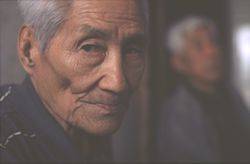
South Korea is forecast to record the world's highest proportion of senior citizens in 2050 with the younger generations having to shoulder heavier burdens to support the elderly.
According to the Ministry of Health and Welfare yesterday, the population of senior citizens aged 65 and over is expected to surge from the current 9.1 percent to 24.1 percent in 2030 and 37.3 percent in 2050, the highest level in the world.
The forecast is based on data from the United Nations.
In contrast, Japan, a nation with a large elderly population, will see the ratio grow from 19.7 percent to 30.4 percent in 2030 and 36.5 percent in 2050.
In Italy, senior citizens will make up 28.2 percent in 2030 and 34.4 percent in 2050, soaring from the current 19.6 percent.
As a result, Korea will surpass Japan and Italy in the ratio of senior citizen population by 0.8 percentage points and 2.9 percentage points, respectively, in 2050.
The ratio in the United States is expected to jump from 12.3 percent to 20.2 percent in 2030 and 21.1 percent in 2050.
A global average of the elderly population ratio is estimated to rise from 7.3 percent to 11.8 percent in 2030 and 15.9 percent in 2050.
A ministry official said the surging percentage of senior citizens will impose heavier burdens on youth in supporting the elderly as well as change the demographics of workers.
Young workers have decreased in workplaces during the past few years, while middle-aged and senior workers have risen.
However, children aged 14 or younger in Korea are likely to plunge from the current 19.1 percent of the total population to 11.2 percent in 2030 and 9 percent in 2050.
People aged between 15 and 64, who are classified as the economically active population, are also forecast to decrease from 71.8 percent to 64.7 percent and 53.7 percent in the
cited period.
In consequence, Korea's ratio of senior citizens to economically active population will jump from 12.6 percent to 14.9 percent in 2010, 21.8 percent in 2020, 37.3 percent in 2030 and 69.4 percent in 2050, the ministry said.
In other words, 10 percent of the economically active population will be responsible for taking care of seven senior citizens in two and a half decades.
The trend is already visible in the workplace.
According to the state-run Work Information Center, those in their 20s and 30s accounted for 63.3 percent out of the total workers who benefited from employment insurance as of March.
The ratio decreased from 65.2 percent in 2002, 65.1 percent in 2003 and 63.6 percent in 2004.
However, beneficiaries from employment insurance in their 50s and 60s rose from 11.1 percent in 2002 and 11.2 percent in 2003 to 12.7 percent in 2004 and 13 percent in March.
The trend was also visible in the manufacturing industry, as workers in their 20s and 30s edged down 1.4 percentage points with the older group rising by 0.8 percentage points for the cited period.
|
|