|
|
Elderly Suicide Rises 5-Fold in 20 Years
By Lee Hyo-sik, The Korea Times
South Korea
July 20, 2005
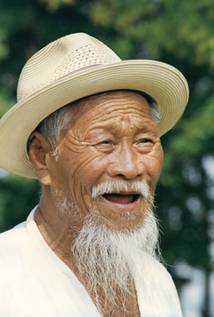
The suicide rate for South Korea's elderly has increased more than five-fold over the past 20 years as more senior citizens opted to terminate their lives due to economic hardship and loneliness.
Suicides by the elderly aged over 65 resulted in 72.5 deaths per every 100,000 senior citizens in 2003, up from 14.3 in 1983, becoming the seventh major cause of death, the National Statistical Office (NSO) reported Wednesday. In comparison, the figure stood at 55.8 in 2002 and 42.2 in 2001.
The sharp rise reflects the transformation of the Confucian Korean society into a Western-style nuclear family structure where the elderly are less supported by their siblings than under the big family system.
Elderly men are 1.5 times more likely to commit suicide than women as 113.4 out of every 100,000 elderly men terminated their own lives in 2003, while 46.9 women committed suicide.
``The fast pace of social change coupled with difficult economic conditions contributed to the increase in such deaths. Suicides were on the rise for senior citizens who had not fully prepared for old age and were not properly supported by their children,'' an NSO official said.
Cancer was the leading killer of Koreans aged 65 and over in 2003 as 961.2 out of every 100,000 senior citizens died of the disease, up from 466 in 1983, the NSO said.
Among cancers, the number of deaths from lung cancer topped 227.6 per 100,000 people, with 186.5 deaths linked to stomach cancer and 116.7 deaths to liver cancer.
The second major cause of death for the Korean senior citizens was by stroke, which killed 744.2 per every 100,000 people, followed by heart diseases with 310.8 and diabetes with 223.7.
In particular, the number of deaths caused by diabetes rose by more than 6.7-fold over the past 20 years, up from 33.4 per every 100,000 senior citizens.
``Brain stroke was No.1 cause of death for senior citizens until 1998 but various types of cancers became the largest death factor from 1999,'' the official said.
By gender, various types of cancer was the main cause of death for elderly men as they killed 1,515.8 per every 100,000 people, followed by heart diseases with 330 and lower respiratory track diseases with 307.9.
About 703.3 out of every 100,000 elderly women died from strokes, followed by cancer with 615.1 and heart diseases with 298.9.
The number of elderly deaths rose to 156,000 in 2003 from 115,200 in 1983 due to a sharp increase in the number of senior citizens aged over 65, according to the NSO.
But the overall death rate among the elderly fell over the same period, thanks to improving medical technology and services, and increasing awareness of health.
The elderly death rate, the ratio of deaths to 1,000 senior citizens, dropped to 41.2 in 2003 from 71.3 in 1983.
|
|