|
|
"It's like 1944 all over again." Uzbek Authorities are Driving Elderly Persons from Their Homes
By Aleksei Volosevich, Ferghana.Ru
Uzbekistan
January 12, 2005
The authorities of Uzbekistan made one of their most odious decisions on December 18, the day of the Cabinet meeting. It was chaired by Prime Minister Shovkat Mirzioyev. The Cabinet voted for the document stating that security of the population of the Tashkent region and Tashkent itself and normal work of border guards and law enforcement agencies require dismantlement of several settlements located near the border with Kazakhstan. The local authorities were given 44 days to report fulfillment of the task. The settlements numbering almost 2,000 houses are supposed to become bare steppes by February 1.
Judging by the protocol of the meeting, heads of appropriate structures were given two days to order the tearing down campaign. Khokims (administrators) of the districts of the Tashkent region and the city of Tashkent were made personally responsible.
The government of Uzbekistan does not say a word on what compels this hasty deportation from the border areas. Officially, Uzbekistan and Kazakhstan are good neighbors whose citizens enjoy a visa-free regime in crossing the border. In fact, Uzbekistan closed its borders with Kazakhstan and Kyrgyzstan two years ago. Special permits are needed to visit these countries. Demolition of dachas near the border is another step in the process of maximum possible alienation of the two once sisterly republics.
It is known as well that the authorities do not intend to recompense the owners for what is to be pulled down. They will merely provide the machinery and leave the payment to its operators to the citizens themselves.
The settlement of Kushkundi in the Tashkent district of the Tashkent region is one of the settlements earmarked for demolition. The authorities intend to demolish 867 houses there, plus 69 households in the namesake village nearby. Within the next 2-3 weeks several thousand people, most of them pensioners who spent their lives working for the republic, will be deprived of their worldly assets it had taken them decades to acquire. Shock is the only fitting description of what they must be feeling.
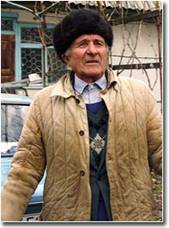
"It's like 1944 all over again," Reza Bekirov, 70, said. "We, Crimean Tatars, were expelled from our homes then. I was a lad of 10. They marched in at 4 a.m., drove all of us outdoors, and did not even permit to take anything with us. We were brought here in boxcars for cattle. I spent 60 years here, in Central Asia. Working. Well, I hear this "Come on, get out of here" again. We are back to square one, back to 1944. All they have to do now is put me in a boxcar for cattle and ship me out of here..."
The Soviet regime once permitted workers to buy plots of land beyond city limits and build shacks called dachas there. Decades later, Kushkundi became a true oasis of good homes surrounded with flowers and fruit-bearing trees. Many owners settled there for good when they retired, and live there even now. All these houses are to be pulled down, their owners thrown out overnight now - without so much as an explanation.
The authorities promise land plots elsewhere instead. "Elsewhere" is an euphemism for the lands of collective farm Uzbekistan also on the Uzbek-Kazakh border. The owners say that this is but barren hills, without running water or electricity, an area no transport means come close to approaching. There is nothing there but a cemetery.
"That's where we will probably be interred," pensioner Viktor Nikolayevich Kalmykov said with a sigh. "These are but hills where everything has to be done from scratch - water, electricity, etc. But we are not young anymore, we cannot handle it..."
It should be noted that the border with Kazakhstan there is as close as it is in Kushkundi. What's the point then? The authorities do not say. The decision was made in the corridors of power, by a narrow circle of decision-makers. It means that finding out what jeopardizes security or whatever is a sheer of impossibility. Decision-makers never offer any explanations.
Uzbekistan and Kazakhstan marked boundaries of their territories several months ago. They went about it differently. Near Kushkundi the Kazakhs merely erected a blue and yellow boundary post - just to indicate where their territory began. Uzbekistan used prisoners on the border with the friendly neighbor. The prisoners set up concrete posts and stretched 16 lines of barbed wire between them.
That was when the authorities began talking of the necessity to pull down the houses on the border. Residents of Kushkundi say that the authorities announced at first that only the buildings 15 meters from the border would be demolished. The decision to expand the quarantine zone to 50 meters was made soon after that. When bulldozers demolished them, however, the authorities resolved to proceed.
"We were told at first that all buildings within 15 meters from the border would be pulled down," Nazim Parmankulov of the settlement administration said. "Then, within 50 meters. They were demolished. They said "150 meters" soon after that. A week later we were told that all of the settlement must be pulled down. The zone 4 kilometers wide was first mentioned yesterday. No recompense is offered, absolutely nothing. Just "Take them apart and take them away..."
Like others, Vladimir Iosifovich Rysnik has lived in Kushkundi for decades. Once chief of the main directorate of the Ministry of Water Resources, he is but an elderly gent living out what is left of his life in his own house.
"I have had this house for 30 years," Rysnik said. "I have worked on it since 1974. Everything was OK, you know. And here they come and say, "Get out, it will be pulled down." I'm 78, I already had one heart attack. Instead of our homes, the authorities offer us the barrens no transport means go to. I cannot take apart my house and move it there. They say they will help. All right, they may hire someone to get the job done, but I cannot feed or pay them. Not on my pension..."
We saw what was left by the 'dozers. Blocks of concrete, remains of foundations, heaps of broken bricks... And boundary posts with barbed wire disappearing beyond the horizon. With the hilly Kazakh steppes behind them. The locals accompanying us said they had gone there to pick mushrooms once. Some dachas were built on the Kazakh territory but nobody there worried. After all, there is plenty of land in Kazakhstan. The border was set a year or two ago and these houses were demolished, trees felled. Just several houses bought by the Kazakhs remained.
We were told that demolition within the 50 meters wide zone began as soon as the barbed wire was put in place. The authorities were smart. At first, they promised people a recompense to avoid mass riots.
"Deputy khokim of the district came and said that the authorities needed a 50 meter wide zone without any buildings on it," pensioner Gennadi Vasilievich said. "We told them to go ahead. I had a small house here. We took it apart. They brought in a bulldozer, felled all trees, and filled all pools. They said everything would be recompensed. The money was already in the bank nearby or so we were told. The financier would come on October 26 or 27 and pay. They demolished everything and that was that. No recompense, no nothing. They say nowadays that absolutely everything will be pulled down. As for the recompense, the district khokim said no way, forget it, the state does not have the money."
Only one house stands out against the background of what amounts to scorched earth. It survived by a miracle. Its owners refused to move out and have stood their ground so far. They say they will not move without an adequate recompense.
A dozen meters to a side is a watchtower. Without servicemen with automatic rifles on it as yet. There is a road from it to the nearby settlement, a road with endless barbed wire along it. Installed barely months ago, it is no longer an impenetrable barrier. It is all rusty. Kick it and it falls into pieces. As a matter of fact, even kicking is not required. There are very many sizeable holes in the wire. Moreover, there is no barbed wire at all between some posts.
This is where trucks cross the border in both directions. The locals say that the trucks smuggle fruits and vegetables to Kazakhstan and consumer goods to Uzbekistan. Policemen require but a small token to look the other way. The authorities regularly replace police details, but nobody seems to be able to withstand the temptation.
Territory of Fakel settlement is impressive indeed. Two-level houses of bricks, many of them surrounded with trees. Kazakh Alsatians guard every one of them. What will they guard when the houses are pulled down, trees felled?
Antonina Pavlovna Shagiyeva used to be chief of the fuel division of Soyuzuzbekgazprom once. He husband is a privileged pensioner. She loaned 5,000 rubles from the organization in the late 1980's, bought construction materials with it, and built a house of two stories. (The loan was paid long ago.) There are birches, firs, and lindens in the garden. All of that is to be razed to the ground now for no reason the Shagiyevs understand.
"We built it all with our own hands," Antonina fights back tears. "We did not ask for help from anybody when we retired. We did it all with our own hands and we live here now. There was no running water for three years once. We brought it from Tashkent to water the trees. They say we must leave now. They even warn in advance that we cannot count on any recompense. They offer us land plots right near the border - just like here. There are boundary posts within reach there too. What's the point then? There is the border here, there is the border there. How shall we fare there? We are old now. Take this house apart and we will end up with so much rubble. Nobody can build anything from rubble. We are told that settlements are to be demolished for security considerations. We will probably sign a petition that we do not want this kind of protection from the state..."
In the meantime, settlements earmarked for demolition are raided by looters from nearby kishlaks. This is the only fitting term for these people looking for a quick and easy profit. It is clear that pensioners lack the strength to settle in a new place anymore. They are offered help in the taking apart for a symbolic price. We saw with our own eyes residents of nearby kishlaks and settlements pulling down houses. We were told how collective farmers in whole teams walk door to door offering their services. Nothing unusual about it, come to think of it...
The demolition campaign is supposed to last several weeks longer yet but the authorities are already active. Reinforced by the police, machinery, and the locals who would not balk at getting construction materials free of charge, they are already pulling down houses. I'll venture an opinion as to why the authorities are so much in a hurry. They do not want people to get together and coordinate their protests. When attention of general public is finally drawn to the problem, it will already be history. Settlements will be demolished. Hence the speed with which they are being pulled down.
How legitimate is all of that? It is not a law, a decree, or a resolution. Just a decision. But even a court verdict on eviction may be challenged. Moreover, the court will necessarily explain on what grounds the decision is made, what laws are invoked. Nothing of the sort here. The decision is made by several persons without any public debates, and it cannot be questioned for some reason. On the other hand, decisions of top brass in Uzbekistan mean more than verdicts of all courts.
The decision refers to "security considerations". As I see it, residents of the settlements need protection. Not from some vague danger - from the state officials ready to demolish houses of thousands of elderly people and leave them homeless.
|
|