Germany
December 14, 2006
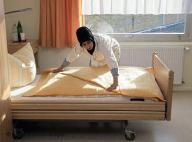
The
retirement home's first seniors will move into their new accommodation on
Monday
Germany will open its
first retirement home exclusively organized for Turks on Friday in a bid
to cater to the first generation of aging guest workers as they enter
their twilight years.
Called Türk Huzur Evi,
Turkish House of Well-Being, the private institution in the
Berlin
district of Kreuzberg will serve Turks who initially came to
Germany
to work and ended up making the country their home, organizers said
Wednesday.
Of the 2.4 million Turks
or Germans of Turkish origin living in Germany, some 350,000 have now
reached retirement age, according to official estimates.
"We want to give them
a little bit of home," the secretary-general of the Turkish Community
in Berlin, Celal Altun, said at a news conference.
Celal's organization and a
private hospital group, Marseille, joined forces to launch the home, where
the first residents will move in Monday.
Catering to cultural needs
Employing 75 staff fluent
in Turkish and German, the institution is eventually expected to offer all
the comforts of Turkish life to 155 residents in Germany.
The new building
emblazoned with a crescent moon has a prayer room and an imam who will
visit the home regularly and is decorated with pictures of Turkish
landmarks and outfitted with bilingual menus and door signs.
The breakfasts will
include olives and goat's cheese while all the meat served is halal, or
permitted under Islam. Pork and alcohol are strictly taboo.
Men will receive baths and
help in the toilets from male personnel while the women will be cared for
by female staff.
Guest workers who chose to
stay
Altun said more Turkish
pensioners are remaining in Germany as most of their children and
grandchildren live here.
"It has not even
occurred to many of them to return to their home country," he said.
An intercultural apartment
building for senior citizens opened in Bremen in 2004
At the same time, many
families living in a hectic western European culture do not always find
the time to care for their elders, breaking with a long-standing Turkish
tradition.
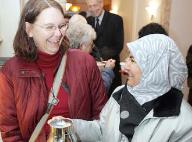
Although there are
sufficient German facilities available, many older Turks feel more
comfortable being in the majority, with care tailored to their needs.
"Many men did hard
physical work all their lives, don't speak German well and would thus have
a difficult time explaining their health problems," Altun said.
Less expensive than other
homes
Marseille chairman Axel Hölzer
said the cost of the facility would be below average for a private
institution due to smaller average household incomes among Turks in
Germany.
"Many Turks have
modest financial means," he said. "Residents have to pay between
1,100 euros and 1,500 euros ($1,451 and $1,979) per month for their
stay."
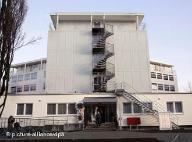
The company has set its
sights on a growing potential market. By the year 2020, the number of
Turks between 65 to 75 years old in Kreuzberg is expected to double while
the number of Turks over the age of 75 is to quadruple, according to
Berlin health authorities.
Hölzer said that if Türk
Huzur Evi becomes a success in Berlin, the company would consider opening
similar homes in other German cities.
No fear of separate
community for elderly
Bara John, who spent more
than 20 years managing integration efforts for the city of Berlin, said
she welcomed the idea of a specialized facility for Turks and rejected the
notion it perpetuated "ghettoization."
"People
must be able to choose where they want to spend their advanced years,
particularly when they become helpless," she said. "In a
multicultural society, diversity has to be allowed to express
itself."
Germany launched a
"guest workers" program in the 1960s to fill a shortage of
blue-collar labor.
Although the arrangement
was considered temporary, many of the newcomers brought wives from home,
started families and stayed on, prompting Germany in recent years to
liberalize its citizenship laws.
Copyright © Global Action on Aging
Terms of Use |
Privacy Policy | Contact
Us