|
The Best of Russia Close-Up: Siberians Adopt Needy Pensioners
Russia Today
Russia
July 14, 2008
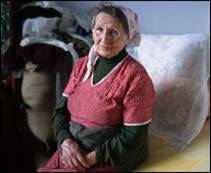
The western Siberian region of Novosibirsk is more than 3,000 kilometres east of Moscow. Its capital Novosibirsk is the third largest city in the country. One problem facing Russia and the region in particular is how to provide a decent standard of living for senior citizens.
An adoption scheme to find new families for the elderly was pioneered in Novosibirsk. Traditionally, most Russian grandparents move in with their children's families. Often the main carers as parents return to work, they're the heart of the Russian nuclear family.
However, for those who have no-one or whose children are unwilling or unable to take care of them it can be very different.
In Novosibirsk’s state-run care centre the elderly are provided with food and shelter. But conditions are basic: shared rooms and a life of minimal luxury.
Nevertheless, many have had hard lives and some opinions are mixed as to whether they would now leave even if a family would take them.
“I had a very negative experience with my own daughter. Money is the only thing these people are interested in, and I don’t get an awful lot of money. My pension is just $100 a month,” a woman living in the centre says.
Another old lady says, “They could take me for some time and then refuse to keep me”.
“Then where would I go? I don’t have much time left, because my health is failing,” she adds.
Russia now has an adoption scheme to find new families for the elderly - a kind of sponsored adoption with an allowance provided by the state.
It was pioneered in Novosibirsk, which is still the most successful area in the country at making it work.
“I am pretty sure that the only reason is people’s kindness. They feel compassion. Now we have 137 families who have adopted old people. 140 senior citizens are living in families experiencing human care,” Sergey Pykhtin from Novosibirsk Region Administration, said.
And in an outlying village there is an example of it in action - in the home of Madiet Khairov. His wife and children share their home with Kamalia Uzhugpaev, a former neighbour who is now simply "grandma".
Madiet says that his wife learned a lot from Kamalia, including how to keep the house and to cook traditional meals.
“Respect for elders is a tradition in our culture. The children love her. We do too. She is a family member,” he says.
“An older person has to live in a family. She helps us with her wisdom,” the wife adds.
Kamalia says she couldn't be happier with the hand life has dealt her.
“Everything is good and happy. It’s like my own family, my own son and daughter-in-law, and like my own grandchildren,” she says.
More
Information on World Elder Rights Issues
Copyright © Global Action on Aging
Terms of Use |
Privacy Policy | Contact
Us
|