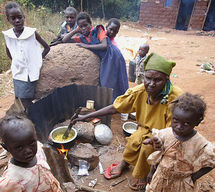
Universal social pensions can improve food security for poor older people and their families.
HelpAge International has today renewed its call for the introduction of a universal social pension in the wake of rising food prices that are currently affecting the world’s poorest people.
The EU Development Commissioner Louis Michel said earlier this week that the rising costs could lead to a humanitarian crisis in Africa. British Prime Minister Gordon Brown today warned that the cost of food was threatening to roll back progress made on development.
100 million older people in developing countries who live without a regular income on less than a US$1 a day are among those hit hardest by the recent rises. Rice, wheat flour and maize have seen the largest increases – foods that are often a key staple for people in developing countries.
In much of West Africa, the price of rice has risen by 50%. Food riots have taken place in countries including Senegal, Mozambique, and Cameroon.
Social pensions can improve food security
HelpAge International is calling for the introduction of a universal social pension for people over the age of 60. This will increase food security and nutritional intake for older people, ensuring that they are less vulnerable to sudden rises in the cost of food.
Many older people also support younger generations of family within their households, particularly through the provision of care to grandchildren orphaned by HIV/AIDS, making the need for food security even greater.
Evidence from developing countries indicates that older recipients of regular cash transfers such as pensions spend it on their own or their families’ immediate needs, including food and healthcare, and on investments such as livestock which serve as a form of security in times of need.
The old-age pension in Lesotho, launched in 2004, has significantly improved food security by increasing food consumption, stabilising access to food, and improving nutrition through the purchase of more nutritious food such as meat.
In South Africa, social pensions increase the income of the poorest 5% of the population by 50%. Pensions can also help to stimulate local economies and encourage sustainable food production.
Extending social protection in Africa
HelpAge International is currently working in close collaboration with the Commission of Social Affairs of the African Union (AU) to deliver a series of national consultations and regional expert meetings on approaches to extending social protection, including through social pensions, in advance of the first ever AU Conference of Social Development Ministers to be held later this year. The first regional expert meeting is to be held in Uganda from 28-30 April 2008.
Richard Blewitt, Chief Executive of HelpAge International, says: “It is a scandal that 80% of the world’s people have no access to social security, many of them older people who are particularly affected at times like these. There is a great opportunity to address this through social pensions and many good models exist from Bolivia to Nepal and Lesotho.”
Amleset Tewodros, Regional Programmes Manager for Africa at HelpAge International, says: “In a world which is capable of producing enough to feed everyone, universal social pensions guarantee that older people and multigenerational households are able to afford the basic minimum diet they require, and can plan ahead to meet challenges such as rising food prices.”
More
Information on World Elder Rights Issues
Copyright © Global Action on Aging
Terms of Use |
Privacy Policy | Contact
Us