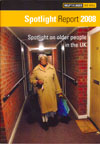
One in four older people in the UK have become so worried about the future that they are making themselves ill, according to Help the Aged's third annual ‘Spotlight’ report.
The number of older people concerned about their future to the extent that their physical health has been affected has risen by the equivalent of nearly a million in the last year.
'Spotlight 2008' draws attention to the issues faced by vulnerable older people living in the UK today:
• ageism
• neglect
• poverty
• isolation
• future deprivation
With limited progress on many of the issues in the past year, the Charity is urging the Government to remedy the long term neglect of older people. Help the Aged is challenging Gordon Brown’s Government to ease their worries by ensuring they have equal rights and are free from discrimination, wherever it confronts them, from hospitals to the high street.
Paul Cann, Director of Policy and External Relations at Help the Aged, comments: 'This year’s "Spotlight" report shines a light on some of the worsening facts of life for today’s pensioners.
'It’s appalling that we live in a society where older people feel sick with worry about the future. The Government must ease their concerns by banning the ageism that continually sinks its poison right into the heart of our society.'
Other key facts which show the reality of growing older in the UK include:
Grinding poverty grinds on
In the past twelve months an estimated 200,000 extra pensioner households have been plunged into fuel poverty. The same number of older people are living in poverty in 2008 as in the previous year, with 21 per cent of pensioners surviving below the poverty line. 15 per cent of pensioners are living in persistent poverty.
Ageism rife
29 per cent of older respondents to Help the Aged research - equivalent to 2.8 million people - agreed that health professionals tend to treat older people as a nuisance. The Charity’s 'Just Equal Treatment' campaign has highlighted the rampant age discrimination faced by older people, and called for a complete ban on age discrimination and a new duty on public bodies to promote age equality, as part of the Equality Bill announced in last week's Draft Legislative
Programme.
Dignity shock
The proportion of older people in England who say they are not always treated with dignity in hospital has worsened from 21 per cent to 22 per cent. Provision of low level social care dropped dramatically with 11 per cent fewer households - the equivalent of well over a million people - receiving care in England than in the previous year.
Access denied
One in ten people aged 75 or over find it very difficult to get to their local corner shop - a jump of three percentage points in just a year. In 2008, an estimated 290,634 older people in the UK do not get the help they need to get out of their own home, up by over 80,000 from 2007. According to ‘Spotlight’, around one million older people in the UK are lonely - this is an improvement of just three percentage points on 2007.
Paul Cann concludes: 'While the report paints a rather dismal picture of growing older in the UK, there have been some steps forward. More people aged 60 and over in Great Britain are taking up their entitlement to concessionary fares. The digital divide also seems to be narrowing, with people aged 65 and over now more likely to have used the internet.
'That said, the Government has an enormous job to do to improve the lives of older people. As society ages, the demands of older people will rightly get louder and louder. The Government must respond or run the risk of alienating millions of voters as we approach the next general election.
As part of the launch of the 2008 'Spotlight' report, Help the Aged has issued a series of key policy demands from the Government. These are:
• Include a complete ban on age discrimination in the upcoming Equality Bill
• Outlaw mandatory retirement ages in employment
• Establish a targeted strategy to reduce pensioner poverty
• Introduce a system of automatic payments of benefits for older people
• Eradicate fuel poverty in vulnerable households by 2010
• Commit to a new settlement for funding a transparent, universal method of delivering social care for our ageing population
More
Information on World Elder Rights Issues
Copyright © Global Action on Aging
Terms of Use |
Privacy Policy | Contact
Us