|
HelpAge International Statement on Recent Killings Related to Witchcraft Accusations in Kenya
HelpAge International
July 16, 2009
Kenya
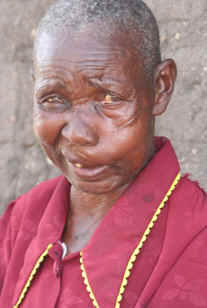
After being
viciously attacked in her village 70 year old Salome from
Tanzania
came to stay with her 80 year old sister and has been supported by HelpAge
International.
HelpAge International and its partner, HelpAge Kenya, strongly condemn the recent, brutal killings of older women and men accused of witchcraft in Kenya.
Older women and men are being accused of witchcraft and subjected to brutal beatings and, in the worst cases, being burnt alive by what are being described in the Kenyan media as angry lynch mobs taking the law into their own hands.
Scale of the accusations
Reliable data on the number of witchcraft accusations and physical attacks is hard to come by. It has been reported in the media that an average of six people are lynched every month in Kisii district alone for allegedly practising witchcraft. 22 killings have also been reported in Malindi since mid-2008. A recent assessment by HelpAge Kenya and HelpAge International found that there has been an upsurge in the number of killings of older people accused of witchcraft. It estimates that 42 older people were killed in Kisii District in 2008 and 23 older people have been killed in Coast, Rift Valley and Nyanza provinces so far in 2009.
Underlying causes
Belief in witchcraft is strong in Kenya and a range of factors can lead to accusations. Accusations are often made by younger family members who act with impunity. Accusations can be connected to unexplained events, often mysterious deaths or illnesses. Accusations can also have an economic motive where younger relatives want older people’s land and property. Kisii District is one of the most densely populated regions of Kenya with little land remaining uncultivated. HelpAge Kenya and HelpAge International’s research in Kisii, Nyamira and Gucha Districts has also linked accusations to crop failure, poor milk production by cows, school drop outs, polygamy, loss of wealth and alcoholism in families. Poverty, disease, ageism and gender inequality are underlying causes for these accusations and violent attacks.
Older women and men are unfairly targeted
Older men and women are often poor, lack legal protection and are physically vulnerable. Older, widowed women who live alone are particularly vulnerable to accusations and attacks related to property and inheritance. Despite their contribution to their families and communities, older people are often regarded as a burden and an unnecessary mouth to feed. Accusations of witchcraft can result in isolation, psychological and physical abuse, loss of property, withdrawal of family support and sometimes suicide.
Response to the killings
Calls in the media to apply existing Kenyan law which both criminalises the practice and accusations of witchcraft will do little to effectively address the underlying causes of this violence. The killings that result from witchcraft accusations must be treated as murder and be investigated, prosecuted and punished as such by the police and judiciary. But this alone is not enough. A more holistic approach is necessary to address the underlying causes of these accusations and their violent consequences.
A holistic approach
HelpAge International has been working with communities in Tanzania to reduce the number of killings resulting from witchcraft accusations for a number of years. Work with community members, traditional healers and local militia (who may have participated in accusations and killings) to change attitudes killings has been complemented by practical measures such as providing older women with fuel efficient stoves. These stoves not only decrease the burden of collecting and purchasing firewood but help to remove ‘red eyes’, considered by the community as an ‘indicator’ that an older woman is a witch. Building secure houses has also provided older women with physical protection from attack.
Between 1999 and 2003 an estimated 317 older women and 28 older men were killed as a result of witchcraft accusations across 9 districts in Northern Tanzania. In 2007 2 older women were killed. There still remains a great deal of work to be done, but the results speak for themselves.
Killings and abuse of older women and men as a result of witchcraft accusations is a gross violation of human rights. HelpAge and its partners have recently highlighted the killings and of older women accused of witchcraft in Burkina Faso to the Human Rights Council as part of the Universal Periodic Review process and in Tanzania and Mozambique to the Committee that monitors the implementation of the Convention on the Elimination of All Forms of Discrimination Against Women (CEDAW). The CEDAW Committee urged the governments of Tanzania and Mozambique to challenge these harmful traditional practices.
Call to action
HelpAge International calls on the Government of Kenya to ensure that killings related to witchcraft are treated as murder and are investigated, prosecuted and punished accordingly by the police and judiciary.
The Government should adopt and implement the draft policy on ageing to ensure the contribution that older men and women is better recognised, their issues given greater priority and their rights protected.
More needs to be done in communities to address the underlying causes of the accusations. Civil society and community organisations need to work with all members of the community, the police, and local authorities, to dispel myths about witchcraft and older women and men and promote positive intergenerational relationships between the young and old.
More
Information on World Elder Rights Issues
Copyright © Global Action on Aging
Terms of Use |
Privacy Policy | Contact
Us
|