|
|
|
|
T H I
S W E E K ' S F O C U S |
|
|
|
Japan: Japan Under the 'Silver Impact' of Seniors (October 26, 2009)
(Article in French) |
|
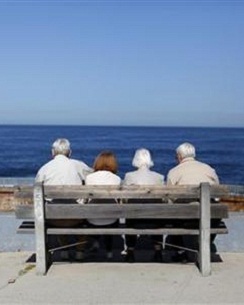
Japan is the oldest country in the world: 21% of its population is more than 65 years old. Nowadays, loneliness, isolation and small pensions generate more and more tragedies. For instance, old persons now kill their partners because they can no longer care for them. Moreover, Japanese social standards make things worse since people are ashamed to ask for help. In a country where there are more than 40,000 centenarians, old persons must help the oldest ones, and many 'young elderly' keep on working long after they have reached age 65.
|
|
|
 |
Zimbabwe: Anna Matopodza, "When I Tell People I am a Grandmother, They Do Not Believe Me" (November 3, 2009) |
|
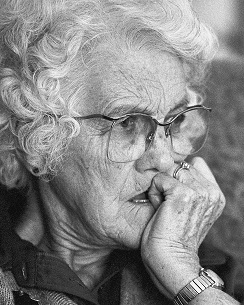
When Anna Matopodza, 55, from a village in the Buhera district of Manicaland Province, Zimbabwe, found out she was HIV-positive, she worried about who would look after her five children when she died. The thought of death haunted her for months. Then she joined a dance group and traveled around the world, teaching people about HIV/AIDS, through song and dance.
|
|
. |
|

|
International Day of Older Persons: Joan Wile Speech Delivered at the Conference on Aging at the UN (October 8, 2009)
|
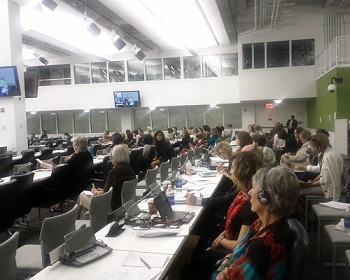
Joan Wile, a former working singer and songwriter, spoke at the UN during the International Day of Older Persons giving an example of aging activism. As a grandmother of five, she founded Grandmothers Against the War six years ago. This association, along with the Granny Peace Brigade, has organized many activities to oppose the US wars in Iraq and Afghanistan. To tell her story and the story of those grandmothers, Joan Wile recently published her first book: Grandmothers Against the War: How We Got Off Our Fannies and Stood Up for Peace.
|
|
. |
|
|
|
Report: China: Role of Health Insurance in Averting Economic Hardship in Families Following Acute Stroke in China (October 2009)
|
|
Report: United Kingdom: Attitudes About Age in Britain 2004-8 (October 2009)
|
|
Chinese citizens finance some 60 per cent of health care expenditures with out-of–pocket payments. Illness is a major cause of economic hardship and poverty. Stroke, a killing disease in China, accounts for almost 20 per cent of all deaths in both rural and urban settings. Health care costs are high relative to income; many Chinese families face considerable economic hardship following a stroke in the family.
|
|
The ageing population presents a pressing policy concern in the UK and internationally. Government policy and public responses to that policy reflect people’s experiences, perceptions and assumptions about age and age differences. Yet there is little systematic evidence about the nature of these perceptions or their implications. This report examines age differences in perceptions, how stable the patterns of attitudes are over time, and whether various demographic variables affect perceptions and attitudes about different age groups.
|
|
|
|
|
 |
Argentina: What Has Been Done With the Retirement Money? (October 26, 2009)
(Article in Spanish)
|
|
A proposition to put retirement funds in the hands of the multinationals and banks was made about a year ago in Argentina. However, many preferred to leave the retirement funds in the hands of the Government of Argentina. It turns out that older persons may not have benefited directly from this change. Retirement funds were used to finance public works, to give loans in the amount of 250,000 million pesos to companies such as General Motors, Mercedes Benz and Peugeot Citroen, as an economic stimulus. The author asks why older Argentines did not get additional personal credit from these funds.
|
|
... |
 |
Russia: Russian War Veterans Still Cannot Move into Single Apartments (June 22, 2009)
(Article in Russian)
|
|
More than 52,000 Russian veterans of WWII, finished 64 years ago, still don't have an adequate place to live, i.e., they either live in communal apartments or don't have enough living space at home. From the example of St. Petersburg, one can see how ineffectively the government handles this problem. In 2008 more than 17,000 veterans applied for single apartments in St. Petersburg, but only 7,000 remained on the list in 2009 because some categories were canceled, such as those who have lived in the city less than 10 years. Moreover, new houses with single apartments don't have the necessary infrastructure (transportation, elevators, etc.), meaning that in practice veterans cannot move to their new apartments even though on paper it says they can.
|
|
... |
|
France: The Future of the Elderly (October 23, 2009)
(Article in French) |
|
Sociologist Claudine Attias-Donfut calls for global thinking on the consequences of aging. In France, because jobs are not available, pension funds are facing deficits. Despite government policies to help older workers remain active, strong age discrimination and some social standards prevent them from finding jobs. Consequently, France will need many migrants to renew the active generation. For all those reasons, a large, public debate is needed to raise awareness about aging issues and to create standards to benefit all generations.
|
|
... |
|