


Back
to current issues
2011
2010
2009
2008
2007
2006
2004
2003
2002
2001


|
 |
Elder Rights Issues
around the World
Archive 2005
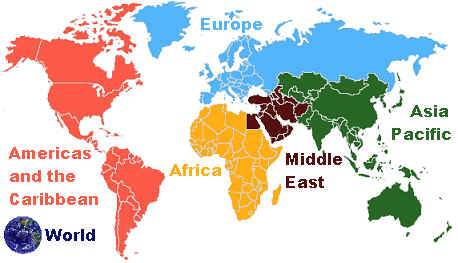
Africa
Reports
Africa: Aging in Africa Issue
24 HelpAge International (May 2005)
HelpAge International released its No. 24 newsletter on
Ageing in Africa. The publication adds to information on
older refugees caught in emergency situations in the
Darfur Crisis. Here you can also find out about the
Regional Aids Programme launched to maximize the
involvement of elderly and increase the awareness,
support, and inclusion of older people affected by
HIV/AIDS at district, national and regional levels.
Africa: Ageing in Africa
Issue 23: HelpAge International (February 2005)
HelpAge International, an active advocacy group based in
London focusing on aging issues in developing countries,
released its 23rd newsletter featuring stories about
Africa. This publication treats elder abuse, HIV/AIDS,
poverty, and other topics.
Articles
Kenya:
Humor: Why the Elderly Don't
Like Hospitals (December 12, 2005)
A short humorous story about seniors and hospitals in
Kenya.
Madagascar:
Governmental Lack of Interest in Elderly's Situation
(December 12, 2005)
(Article in French)
The last celebration of Human Rights
Day disappointed an entire part of the population of
Madagascar. Once more, older persons have been ignored
by the Ministry of Population which refuses to support
any legislative action to assist the elderly. "Most
authorities are not even aware of the difficulties
encountered by older people to survive," say Fizoma's
members, a federation of associations and charities for
the elderly. "Eighty percent of MPs are not even able to
give a definition of the elderly," Fizoma adds.
Algeria: Center
for Older Persons in Bab Ezzouar and Dely Ibrahim: Lost
Lives (November 8, 2005)
(Article in French)
Older Algerians come to these two centers from nearby
towns. Their families abandoned them and left them to the
State's care. That's why they are in this humble public
center, still lucky to have been accepted, while others
are still on the waiting lists. They all remember happy
lives and regret that they will die by themselves, in a
center. They acknowledge that they had become a burden to
their families. Yet they remember that the last generation
of elderly was still considered in Algeria as a "wise
present from time" by their relatives. Not so for these
older persons.
Burkina-Faso: Holding Retirees
Hostage (October 31, 2005)
(Article in French)
This letter comes from retired
employees of the Burkina social security program to the
general director of the social security fund. The
retirees are claiming their pensions and asking the
general director to follow the law. This long letter
attests to the difficulties some African retirees much
contend with to get their due pension paid. Note how the
retirees do not want to beg. This is quite a striking
example of seniors' efforts to have their rights
respected in some developing countries.
Senegal: Teach Young People How to
Look After Old People (October 29, 2005)
(Article in French)
Senegalese gerontology Doctor Ousseynou
Kâ criticizes the lack of education among young adults
who want to take care of the older members of their
family now that traditional family solidarity
disappears. Dr Ka underlines the necessity to launch a
communication campaign about the nutritional, health and
social needs of the elderly of the same type that
already exists for women and children.
Kenya: Forced Evacuations
in Deep Sea Village (October 28, 2005)
(Article in French)
The campaign of W Nairobi W is successfully fighting
against the threats of the Kenyan Government to empty
the ghetto of Nairobi of its 350 000 inhabitants. On
September 23, the government launched a policy that aims
to "clean the Capital," and started forced evacuation in
the middle of the night. The following morning, about
3000 people, including about 1,000 older persons, were
left homeless in the streets. Their houses had been
destroyed, they had lost everything. By enforcing this
evacuation of the Deep Sea ghetto, the Kenyan government
deprived these Deep Sea residents of their international
economic, social and cultural rights.
Morocco: Are
Seniors a Marketing Target ? (October 26, 2005)
(Article in French)
Many companies are more and more interested in targeting
seniors and are developing some very specific
advertisements. Meanwhile, some companies don't believe in
the reality of the new market. As a matter of fact, take
into account the effect of multiple generations, fashion,
and the fact that seniors over 65 are 70% women. These
criteria could make marketing campaigns much more
powerful. Seniors will surely become the favorite target
for marketers for years to come.
Algeria: Elderly's "Baraka" (Charity)
(October 20, 2005)
(Article in French)
The elderly association, Dar El Ihcene, in Ain
Tremouchehmt-ville (Algeria) plays an active role in
Muslim Ramadan solidarity. Every day its members offer
about 500 full meals to the poorest families of the town.
The well-organized and very active team is already
focusing on another project: they're planning to buy a bus
to transport older persons.
Cameroon: Cameroon
Forgets the Elderly (October 17, 2005)
(Article in French)
The living conditions of older people in Cameroon is
becoming more westernized. Elderly are more isolated and
alone. This development follows the rural exodus and the
HIV/AIDS epidemic that's decimated a whole generation of
children who were supposed to take care of their parents.
While they should be resting, the elderly now have to take
care of their grandchildren. "It's a real change in the
traditional African way to respond to elderly, and old
people have a hard time accepting it," Jean Robert Mbané,
president of the organization, "Together, Let's Protect
Our Elderly," explains. Old people used to make a living
with cocoa and coffee, but these economic markets have
disappeared.
Tunisia:
Plan to Create an Arab Elderly Persons' Care Union
under the Supervision of the Arab League (October
10, 2005)
(Article in Arabic)
The Qatari Institution for Elderly Persons' Care took
part in a workshop, "The Integrated Care of Elderly
Persons" held in Tunis ,
September 27-29. A number of Arab countries discussed
institutional care that is available for older persons.
They discussed the social and the health needs of older
people in their countries and exchanged practical
information about elder care. The meeting ended with
plans to create an Elder Care Union under the
supervision of the Arab League.
Congo-Brazzaville: October 1: International Elderly Day
(October 1, 2005)
(Article in French)
"Aging in the new millennium: poverty, aged women and
development under focus" that's the theme of the
International Older Persons Day 2005. While the UN asks
governments to develop ageing policies, Congo has promoted
concrete actions towards older people. The media press
from Congo
describes the increasing interest in aging issues in
developing countries in this article.
Niger: UN Secretary General
Calls for More Aid to Niger (August 24, 2005)
United Nations Secretary-General Kofi Annan urges
humanitarian organizations to send more food aid to
drought-stricken Niger, as the UN has only received half
of the aid it asked for. While the response of aid
agencies has been slow, Annan attests that it is
important humanitarian organizations get together now to
help the people of Niger
. Young children and the elderly have been most
affected by the severe lack of food.
Sudan: Garang Death Hampers Return of
Refugees (August 24, 2005)
Following the death of Sudan's First Vice President as
well as the leader of the Sudan People's Liberation
Movement/Army, John Garang, humanitarian workers say there
is dampened enthusiasm for repatriation among some
Sudanese refugees in Uganda. Many people, including the
elderly, wish to return to their native homes but fear
doing so, as bloody riots are ensuing in the war-torn
country.
Congo:
Chased Then Robbed: Another Day In Congo's Katanga
(August 24, 2005)
Three thousand residents, elderly men, women and children
included, of Congo's Katanga fled their camp fearing an
attack by the "Mai Mai" militia, only to return to find
that government troops sent to their rescue had looted
their food and belongings. The situation in the Democratic
Republic of Congo has been named one of Africa 's most neglected crisis
areas, as the safety of civilians and UN peacekeepers are
constantly being threatened by soldiers or militiamen.
Sudan: Garang Death Hampers
Return of Refugees (August 24, 2005)
Following the death of Sudan's First Vice President as
well as the leader of the Sudan People's Liberation
Movement/Army, John Garang, humanitarian workers say there
is dampened enthusiasm for repatriation among some
Sudanese refugees in Uganda. Many people, including the
elderly, wish to return to their native homes but fear
doing so, as bloody riots are ensuing in the war-torn
country.
Congo: Chased Then
Robbed: Another Day In Congo's Katanga (August 24, 2005)
Three thousand residents, elderly men, women and children
included, of Congo's Katanga fled their camp fearing an
attack by the "Mai Mai" militia, only to return to find
that government troops sent to their rescue had looted
their food and belongings. The situation in the Democratic
Republic of Congo has been named one of Africa ’s most neglected crisis
areas, as the safety of civilians and UN peacekeepers are
constantly being threatened by soldiers or militiamen.
Ghana: Interview with
Chief Nana Boakyewa Yiadom Apeadu from Ghana (August 2005)
Chief Nana Boakyewa Yiadom Apeadu is the first female
chief in Aburi , Ghana
, West Africa . She
has risen to leadership in her area to a position that
no woman has had before her. She has a Bachelor’s degree
in Sociology as well as a Master’s degree in Human
Rights and Justice. In an extensive interview with Chief
Nana Apeadu, GAA learns about the joys and growing
struggles of the elderly in Ghana .
Africa: Views from Africa on Social Protection
(July 2005)
Leaders of the world are trying to tackle issues of
poverty affecting third world countries, especially
in Africa . Many
people recognize the importance of social protection
for vulnerable citizens, like the elderly. This
includes the potential role of cash transfers within
an integrated social protection system. But besides
implementing effective social protection programs,
several problems need to be addressed first. Social
welfare agencies need more financing from
governments and donors. Agencies need to root out
corruption or assure transparency so that people
feel secure about their cash transfers. If these
issues are neglected, it will compromise trust in
governments’ commitment to social protection.
Zambia: Suspected Witches Find
Refuge in Kaleni Hills (July 7, 2005)
In the Kaleni hills of Mwinilunga district, a
North-Western province in Zambia , there is a mission where old
women seek refuge. The camp provides the elderly
women food and shelter, as these women have no one
to ask for help. Why would these old ladies flee
from their homes? Because they have been accused
of being witches and driven away from as far as Angola . Read on to learn more!
South Africa: One Person
Commits Suicide Every Hour in SA (May 30,
2005)
Every hour in
South Africa , one person commits suicide!
Professor Lourens Schlebusch, the Department
of Behavioural Medicine at the Nelson R
Mandela School of Medicine, released these
shocking statistics. According to Schlebusch,
“During the 45 years, the highest fatal
suicide rates have moved from the elderly
towards younger people in that 57 % of
suicides are committed by people in the 35 to
44 year age group, for both males and
females.” Especially, those who diagnosed with
HIV/AIDS are 36 times more likely to have
suicidal behavior compared to the general
population. If these middle-age adults commit
suicide, who will care for their children? For
their elder relatives? The article lists some
Help Lines.
Zambia:
Discrimination Makes Senior Citizens’ Survival Difficult
(May 26, 2005)
Cyprian Pombolokani, Zambia Aged People’s Association
vice-national secretary, said that because of
discrimination and a lack of policies and legislation on
the elderly, African elderly find it difficult to survive.
He emphasized that HIV/AIDS and the increase in armed
conflicts meant that older people in
Africa were denied access to basic rights
and services, which caused the elderly live in poverty.
Yes, if a government would allocate a little bit more
money from the military budget and put it into health care
and a social pension, a lot of poor elderly would survive,
right?
Zambia:
Care for Elderly, Zambians Urged (May 3, 2005)
70-year-old Zambian freedom fighter Mpundu Mutale has
complained that “other countries are caring for their
aging parents but not in this country where even those who
fought for this nation’s independence are left in the cold
without any incentives to support them by the Government.”
Ronald Banda, a deputy minister of the Community
Department and Social Services, attended the launch of
Senior Citizens Day at Arcades in
Lusaka . While a special day may help, it leaves income,
health and human rights issues untouched. How will the
Zambians meet the real needs of their elderly?
Morocco: An
Eighty-Year-Old Moroccan Woman was Abused Sexually
by a Counsel (April 2, 2005)
(Article in Arabic)
A Moroccan woman,
80 years old, claims that the Municipality Counsel
abused her. He knocked on her door and showed his
good intentions by giving her a couscous meal. But when
she opened the door for him, he hit her and abused
her sexually. Elder abuse is everywhere!
Kenya: Elderly Women
Break Taboos to Talk About Sexuality and Aids (March 6,
2006)
Talking about sexuality with children has been taboo in
sub-Saharan Africa .
Some experts say that due to this traditional inhibition,
HIV/Aids has spread faster and wider there. Cecilia
Wambui, a 70-year-old Kenyan who lost her daughter by
Aids, started to talk about how HIV/Aids is transmitted
and ways to avoid it with her grandchildren. She is a
member of Mwiterethia SelfHelp Group, which involves 90
elderly slum people who learned life skills by HelpAge Kenya
. The result of learning, people realized that Aids is
real and the best way to be healthy is to discuss it. They
are now undergoing training as peer counselors on HIV/Aids
as well as learning how to care for the sick.
Nigeria: Common Health Needs of
Elderly People (January 20, 2005)
Aging is a part of the process in human life. However, in
Nigeria, elderly people are treated as a nuisance and
hence do not accord them the much required love, care and
attention. Remi Kolawole, a retired nurse but luckily
still has a job as a physiotherapist, emphasizes that the
government must provide recreation, rehabilitation and
free medical services. Kolawole stressed that that family
members should provide good food with rich vitamins and
minerals. Everybody gets old sooner or later so it is
"your" problem if elderly people are not treated well in
your country/community.
Return to Top of Page
Americas
& Caribbean
Reports
Argentina:
Conference of Governments and Experts on Aging in South
America (November 14, 2005)
(Report in Spanish)
In November 2005, CELADE (The Latin American and Caribbean
Demographic Center), a division of the UN Economic
Commission for Latin America, UNFPA, along with various
non-governmental and international institutions, and the
Argentinean government hosted a conference of governments
and experts on Aging in South America. The event gathered
representatives of all South American countries and many
international experts. The participants presented their
work and accomplishments in the areas of economic
development, health, intergenerational relationships,
elders' well-being and public policy. The Madrid 2002
International Plan and the Santiago 2003
intergovernamental regional strategy on aging served
as guidelines for this conference's agenda.
Canada: Violence Against the
Elderly (October 21, 2005)
(Report in French)
The Canadian department of justice published a report to
describe violence against the elderly. The text aims to
inform the population about a taboo issue and develops
very precisely the different aspects of this violence. The
report is divided into 8 main themes that reveals the gaps
in current Canadian laws. It explains, among others, the
widespread violence against the elderly, the circumstances
that encourage this violence and its impact on the
society. The report contains different strategies to
improve the situation.
Canada:
Encouraging Full Elder Participation in Quebec's
Development (October 4, 2005)
(Report in French)
Acting on the request from
Quebec's ministry for family, elderly and women's
rights, the Elderly Council published a report entitled,
"Encouraging Full Elder Participation in Quebec's
development," in order to build a Quebec "for all ages."
The Elderly Council sought ways to use the energy and
talents of some 2.5 million older persons in improving
Quebec's development. This report presents 17
suggestions to engage them, or conversely, to
overcome elders' feeling of being abandoned. It
highlights the necessity of organizing an information
and promotion campaign about the image of older people.
The report could have been even more interesting by
generating ideas and methods to achieve
intergenerational projects such as engaging very old
persons with midlife professionals. The project
reveals that governments are trying new approaches in
this provocative regional assessment.
Brazil: 'Sixty Plus:
The Elderly Brazilians and Their New Social Roles’ (June
2005)
Brazil now contends with a rapidly aging population. The
impact of this change will be seen in the future. A new
book compiled by Ana Amelia Camarano about aging in Brazil
explores the dynamics of the aging population “in the
context of marked social transformations and fiscal
adjustments.”
The book, published in English, was released during the
18th Congress of the International Association of
Gerontology in Rio De Janeiro in June this year. Featuring
over 30 contributors, the book includes subjects such as
aging and disability, families, social security, health,
financial motivations in later life, inflation and elderly
Brazilians, and population aging in the public policy
agenda.
Articles
Mexico: Conapo Predicts
a Fast Growth in the Elderly Population (December 31,
2005)
(Article in Spanish)
The Mexican National Council of Population (Conapo) says
that the country will soon experience a profound
demographic shift as the number of elderly persons will
dramatically rise. Conapo predicts that the annual growth
of older persons will increase from 6.8% (2000) to 28% in
2050. Patterns in life expectancy will also rise to an
average of 75.7 years (73.2 for men and 78.1 for women).
This demographic change in Mexican history-the first since
the 1910 Revolution-will surely require a major
transformation in social services and public health.
Mexico: 29% of the Elderly Population is
Economically Active (December 30, 2005)
(Article in Spanish)
In Mexico, the National Council of Population (CONAPO)
stated that 29% of the persons above 60 are engaged in the
labor market. Sixty-five per cent of men between 60-64
have some form of formal employment, whereas only 12% of
women do. Gender disparities are part of the lives of
elderly workers. For instance, most men labor in
agriculture and most women work in the service sector.
Unfortunately, the majority of old people have low paying
jobs, receiving salaries below the minimum wage and many
work without getting any wage at all.
Canada: More Older Persons than Children in 2010
(December 19, 2005)
(Article in French)
The Statistics Office of Canada predicts that the number
of older citizens will match the number of children in
2010. In that year, there will be about six million
older persons and about 5.7 million children. The study
also highlights that the number of dependent persons
will change from the current 44% of the population to
61% in 2031. About 100,000 centenarians will be living
in Quebec by 2010.
Canada: Conservative Leader Harper Wants to Increase the
Non-Taxable Income of the Elderly (December 12, 2005)
(Article in French)
In the current electoral campaign after the recent
dissolution of the Canadian Parliament, the Conservative
leader Stephen Harper said he wanted to increase the
non-taxable income of the elderly and to create a
national council for senior citizens. The leader wants
to combat the declarations of liberal leaders who, he
says, are trying to frighten older voters about
potentially negative policies that conservatives might
enact.
Mexico: Senate Approves Law to
Give Preferential Attention to the Elderly in Public and
Private Establishments (November 30, 2005)
(Article in Spanish)
Yesterday, the Senate of the Republic of Mexico ratified a
reform mandating that beginning in 2006, public and
private establishments must give preferential attention to
elderly patrons. Jorge Kahwagi Macari, a representative of
Mexico's Green Ecologist Party proposed the reform as an
addition to the Fifth Article of the Law for the Rights of
Elderly Persons. The united commissions of Justice,
Population and Development, and Legislative Studies,
agreed with senatorial delegations to create a "effective
judicial measure that would guarantee the fundamental
right of human dignity of elderly persons." The law also
mandates that private and public establishments must
provide adequate transportation services for older patrons
to and from their homes.
Mexico:
Raymundo Ocampo Advocating for the Indigenous and the
Elderly (November 30, 2005)
(Article in Spanish)
In his campaign to become the Federal Deputy for the Party
of the Democratic Revolution of District XI, headquartered
in Pátzcuaro, José Raymundo Ocampo Ontiveros has advocated
the interests of three traditionally neglected and
marginalized demographic groups: elderly adults, women,
and migrants and indigenous workers. Ontiveros, wants to
see the Indigenous Law in Michoacán implemented more
effectively. Ontiveros says that he's running for office
thanks to indigenous support as well as help from citizen
organizations that share his vision of improving human
rights for vulnerable people. Ontiveros has already
achieved substantial results in the fight for these
groups' human rights through the political activity he has
undertaken as a private citizen. He instituted a social
pension for older persons in Mexico City while he served
as Mayor of this important city.
Canada: Private Retirement Homes in Quebec Will Have to
Be Certified by the State (November 29, 2005)
(Article in French)
To avoid future "discoveries"
revealing poor living conditions in retirement homes,
the government of Quebec (Canada) has decided to create
a certificate of quality delivered by the State, to the
private homes. The National Assembly voted to develop
electronic health files for seniors to improve their
medical follow up.
Canada: Canadian Companies Poorly
Prepared for Retirement of Baby Boomers (November 22,
2005)
Canadian companies are less prepared than others to face
the brain drain caused by baby boomers who are about to
retire. Indeed, the generation of boomers that will soon
retire won't be totally replaced. But most Canadian
companies are trying to plan this shortage while
Australian ones have come late to this process. No
concrete plans have put forward thus far in
Australia.
Canada: Older Gays and Lesbians (November 21, 2005)
(Article in French)
Older citizens who are homosexual are even more vulnerable
to discrimination than others. Indeed, most grew into
adulthood when being homosexual was considered a sin. Even
now, many people of their generation are still quite
reluctant to accept them. Moreover, homosexuals may be
less prepared to get old than the others because
"youthism" seems to be stronger in the homosexual
community. That's why they are more likely to face
isolation and depression, especially when they have to go
to a nursing home and confront the prejudices that still
mark their generation.
Canada: The Situation Is Being
Improved in Three Retirement Homes (November 15, 2005)
(Article in French)
Three retirement homes which had been strongly
criticized by the government of Quebec in its recent
reports are trying to improve their situation. The
homes' management teams have launched some projects such
as building palliative care rooms, the development of
leisure programs for retirees, and a better follow-up to
medications. The State's inspectors say they're
satisfied with the changes observed.
Canada: Elderly
Facts (November 8, 2005)
(Article in French)
With discrimination over age, physical and mental abuse,
neglect, carelessness, fraud and more. The lives of older
persons can become unbearable. During a special week
dedicated to ending abuse of the elderly, the association
RQCAA (Network of Quebec against abuse on older persons)
wants to increase people's knowledge on this topic. In a
recently published booklet, the organization asks many
questions: "Did you know that up to 15% of the elderly are
abused?" or: "Did you know that 50% of the people who
commit suicide are over 65?"
Canada: A Federal Building Dedicated to WWII Veterans
(November 7, 2005)
(Article in French)
In this Canadian Veteran's Year and sixtieth anniversary
of the end of World War II, a federal building has been
dedicated to the memory of veterans. Its new name is
"Victory's Building," to symbolize the engagement of
veterans to future generations.
Canada: National
Week for Elder Safety (November 6, 2005)
(Press Release in French)
From November 6, 2005 until November 12, the Canadian
Council for the elderly has organized its national week
for the safety of elderly persons. This year's theme is,
" It is easy to make your home safer." Falls on stair
steps are the major cause of mortal injuries to older
Canadians. These
accidents can be easily prevented.
Canada: Ontarians
Commemorate the Soldiers Who Died During WWI (November
5, 2005)
(Article in French)
The Canadian State Department of Civic Affairs encourages
all Ontarians to commemorate the Canadian soldiers who
died during WWI. They want to assure that the Canadian
soldiers who died during both World Wars remain in history
books. Too often, Europe tends to forget that Canadians
helped the Allied effort and that more than 1.5 million
served over there and 110 000 died while fighting. The
younger generations must remember this part of
history.
Mexico: In Guadalajara, Reduced Fares for Elderly Adults
Using Public Transportation (November 3, 2005)
(Article in Spanish)
In Guadalajara, Mexico, high school students as well as
university students at the University of Guadalajara
already receive state-financed transportation benefits to
help defray the cost of getting to and from school using
the city's public transportation system. Soon, the elderly
citizens of Guadalajara will also be able to ride the
public transportation system at a discounted price. Emilio
Gozález Márquez, the municipal president and a key
supporter of the plan to reduce prices, explained elderly
Guadalajarans will have to verify that they are at least
60 years old and complete an exam that assesses their
socioeconomic status in order to qualify for the transport
discounts.
Chile: Proposed Voting System Changes
to Benefit Elderly Adults (November 3, 2005)
(Article in Spanish)
About 12% of Chile's 1,700,000 citizens are older than 60.
Much of this population continues to play a crucial role
in Chilean society. Given the contribution of Chile's
elder adults to the general population's well-being,
various social activist groups advocating the rights of
Chile's elderly have proposed changes in the voting system
to make the process easier for older Chileans. One change
would display the names of candidates in a larger font
size to make them more legible for elder citizens. The
activists have effectively convinced the government of
Chile that because elder Chileans remain a vital part of
the country's civil society, they ought to have no
barriers to exercising their right to participate in
electing Chile's leaders.
Mexico: Heightened Demand for Public Policy That Would
Support the Elderly (October 27, 2005)
(Article in Spanish)
Rita García López, the state delegate of the National
Institute for Elderly Persons (Inapam) in Veracruz,
reported at the Second State Forum to Promote Healthy
Lifestyles for Active and Independent Ageing. She pointed
to the current 10% of the population of Veracruz that is
older than 60 years. In the near future, the proportion
will increase to 60%. For this reason, García López argued
that politicians and general population of Veracruz must
address healthcare and the economic challenges facing the
constantly increasing elderly section of the population.
Identifying Xalapa, Veracruz, Orizaba and Coatzacoalcos as
the cities with the greatest number of adults over 60,
García López urged these cities' governments to work with
individual families to create an integrated support
network for the elderly.
Argentina: In Rosario, Computing Courses Offered for
Adults Aged 60 and Over (October 27, 2005)
(Article in Spanish)
At the municipal School of Gerontology in Buenos Aires,
adults age 60 and over gather once a week to take 90
minute computer classes that the school offers with the
help of these two organizations, Nasa Computación and
Multijuegos. They learn basic computer skills, word
processing, create spreadsheets, and search the internet.
The class enables its participants not only to familiarize
themselves with new technology but also to build a sense
of camaraderie and community. Some computer students,
having mastered basic computer skills, are considering
buying computers themselves to communicate with each other
and family members.
Canada: WWII
Veterans Start a "Pilgrimage" in France (October 27,
2005)
(Article in French)
Some Indigenous veterans from Canada who fought in World
War II have set off for France to commemorate their
service decades ago. Michaelle Jean, Governor General of
Canada will accompany them." This journey will be a great
opportunity to remind the Canadian and world populations
of their heroic actions," said the Governor General.
Canada: Preparing a Five-year
Aging Plan for Quebec
(October 24, 2005)
(Article in French)
On October 25, the
Trois-Rivieres oganizations of the elderly met to
prepare a five-year plan for the aging population that
they will present to the Minister of Health in December.
The population aged over 65 in Mauricie and in the
Center of Quebec is above the average in the Province of
Quebec.
Canada: Unworthy Life-Conditions
for the Elderly (October 22, 2005)
(Article in French)
Timeworn facilities, ignored calls for help,
lack of hygiene, emptiness of activities: these are some
of the deficiencies of numerous retirement homes in
Quebec, according to an inspection report of the
ministry of Health and Welfare. In a third of Quebec's
retirement homes, the government judges the condition of
older persons as inadequate and dangerous.
Mexico: By 2030,
Elderly Adults Will Comprise 17.68% of the Population
(October 20, 2005)
(Article in Spanish)
At an international conference that addressed the issues
facing elderly citizens of various Latin American Nations
(Segundo Curso de Capacitación para Coordinadoras de las
Estancias de Atención y Encuentro para Adultos Mayores)
representatives from 35 municipalities from the region of
Morelia and Uapan discussed topics such as providing
appropriate employment and adequate social assistance to
the continuously increasing number of elderly persons. The
conference also focused on ways in which the represented
nations could reorganize their social structures to
address the needs of their elderly members. Teresa Zarazúa
Ortega, chief of the Department of Attention to the
Elderly, stressed the importance of overcoming cultural
stereotypes that inhibit a nation's citizens from
recognizing their responsibility towards their elder
counterparts.
Canada: Driving After 65.What's the
Problem? (October 18, 2005)
(Article in French)
How can security of older drivers be assured? When
authorities revoke an older person's driver's license, the
person will suffer from isolation. The former drivers then
can lose their self reliance as well as their bond to
their families. Although families try to prevent their
relative's isolation, former drivers usually have to give
up their social life. That's why some cities deliver meals
to older persons, a new kind of license that includes
observing the health condition of the older person. But
this made-to measure license is not available in all Canada
: the most isolated counties have no delivery programs.
The Network of the Adoptive
Grandparents: a Real Professional World (October 10,
2005)
(Article in French)
The Senior Corps gives grandparents a real education about
how to deal with problem children or abandoned children.
The elder ones have the chance to remain active or to
learn from new techniques. Numerous organizations of this
type have been created, to encourage intergenerational
activities, such as "Foster Grandparents program"
(Dakota). In this program, old people with low incomes can
meet problem children within the framework of the
legislation entitled "To fight against the abandonment of
children." These organizations play the role of
"go-between" among generations and help combat poverty as
well.
Cuba: Population Aging Confronts the Nation and it
Must Adapt (October 4, 2005)
(Article in French)
It is now the time when all
universities start their academic year. In Cuba, the
first great senior university session gets underway as
well. In Cuba people over 60 represent more than 14.5%
of the population and in 2010 Cuba could have the oldest
population of Latin America. This specialized session
offers classes and other activities to improve the life
quality of the elderly. These policies aim to exchange
intergenerational knowledge with a focus on the
important role for the elderly, as a real part of the
Cuban society.
Canada: Getting Old.Getting Poor (October 3, 2005)
(Article in French)
The National Consultative Council on Aging (CCNTA) asks
all governments and the general society to do all that is
possible to reduce poverty among the elderly in Canada.
Indeed, about 7% of the Canadian older persons live below
the poverty line and the gap between poor and wealthy
retired people will grow wider in the next decade, though
the Canadian system claims to be one of the best in the
world. That's why the Council decided to address all the
failures in the pension system by proposing some 15
recommendations contained in this report.
Mexico: The Attorney General's Office
of Mexico City Anticipates Signing an Agreement to
Investigate the Killings of Older Adults (September 30,
2005)
(Article in Spanish)
Who is killing older adults in
Mexico City ? What
lies behind these heinous acts? The Mexico City Attorney
General's office of Mexico City
is discussing signing an agreement to increase
investigations with the National Institute of Penal
Sciences of the Attorney General of the Republic. The
investigations will focus on the assassination of elderly
adults in the city. Batiz Vazquez, the Attorney General of
Mexico City, acknowledged the pressing need to address
this problem, indicating that in the last eight days, the
Attorney General's office has registered three homicides.
According to Gerardo Laveaga, director of the National
Institute of Penal Sciences, the covenant will bolster
theoretical knowledge regarding the killing of the elderly
by conducting more statistical research on specific
homicides, and to use the research findings to take
preventive measures against possible criminals.
Brazil: Statue Has Improved the Lives of the Elderly
(September 28, 2005)
The president of the National Council for the
Rights of the Elderly, Perly Cipriano, announced that the
Senior Citizens' Statute has improved since it was
ratified on October 1, 2003. Even though the rules still
need some improvement, most of the Brazilian states have
Councils of the Elderly and the National Health
Surveillance Agency, the Public Defense Ministry, and the
Brazilian Bar Association monitor the activities against
the elderly. The number of elderly in Brazil
as well as Latin American countries is rapidly increasing.
While free access to mass transportation and concert
ticket discounts help, affordable medical care and a
secure pension are really needed!
Chile: One in Three Elderly Adults
Suffers Some Form of Abuse (September 23, 2005)
(Article in Spanish)
Although Chile has no statistics on abuse of its
elderly, three recent Latin American demographical
studies show that at least 30% of older Chileans regularly
suffer some form of mistreatment ranging from negligence,
to physical, psychological, and sexual abuse. Despite the
alarmingly high rate of elderly abuse, of the 600 studies
concerning elderly members of the Chilean population, only
one deals with physical and psychological mistreatment.
According to one of the three recent Latin American
studies, the abuse of elderly women (33.2%) is slightly
more common than that of men (26.9%). The most common form
of abuse is psychological. Most victims of elderly abuse
do not look for help, and those who do tend to consult
with friends, based on the assumption that to look for
help through public services would be futile.
Ecuador: Renewed Concern for Elderly
Adults (September 23, 2005)
(Article in Spanish)
Non-governmental organizations in Ecuador
have recently complained about the lack of free healthcare
and assistance in planning a healthy lifestyle for older
adults. The most recent chapter of this debate took place
at the Department of Medicine at the Catholic University
of Guayalquil, Ecuador, and was organized by the Committee
for Social and Educational Action. The Committee said that
of 140,000 elderly citizens in Guayalquil, only 28% of
them receive sufficient health care benefits to remedy
their most basic medical needs. In organizing this
conference, the Committee wanted to draw attention to the
urgent needs of older persons and to propose projects that
would improve the quality of life for older citizens and
increase their involvement in the city's economy.
Mexico: Elderly Affected by
Electoral Reforms (September 15, 2005)
(Article in Spanish)
Changes in the electoral
procedure in Cuernavaca , Mexico, if approved by the Chamber of
Disputes, could result in those members of the
population aged sixty-five and older obtaining the
right to participate in the upcoming 2006 elections.
Humbreto Valverde Prado, former electoral counselor
of the Chamber of Disputes in
Cuernavaca
, sent a document to the Congress of the State on
Wednesday containing, among other proposed reforms, one
requesting that all persons aged sixty-five and older
and in sound mental and physical condition be granted
the right of suffrage, which, up to this point,
legislation has denied them. Along with pressure from
the State Commission of Human Rights, associations of
elderly persons will appeal to parliamentary factions to
push for a reform that would enable them to participate
in the elections.
Mexico: Recognizing the
Importance of the Elderly (August 31, 2005)
(Article in Spanish)
The physical and psychological well-being and
continued social involvement of older persons are
paramount to a country’s success. In Mexico
City, the government has revised the pension system so
that older persons receive a universal or social
pension, resulting in an improved quality of life.
Nonetheless, 60% of Mexico's elderly population continues to
live in poverty and marginalized conditions.
Although Mexico's constitution protects
elders from abuse, and permits older persons to
demand pensions from their children, most elderly do
not know that they possess such rights. Mexico's
government must continue to work for social and
economic justice by making this crucial section of the
population aware of its rights.
Mexico: The Generational
Pyramid Undergoes Important Changes (August 26,
2005)
(Article in Spanish)
According to Mexico
’s National Consensus of Population (Conapo), there
are 20.5 elderly adults for every 100 children. Elena
Zuniga, general secretary of Conapo, points out that
this means there are five dependents for every older
worker, which, in turn, should result in an enormous
potential for production. The ratio of older adults to
children will continue to increase in the coming
decades, predictions by Conapo indicate, as will life
expectancy of both men and women. Along with her
optimistic comments, however, Zuniga adds that the
increasing elderly population could result in a
“delicate situation,” as the government will have to
create more informal employment for elders and
strengthen the social security system to meet growing
needs.
Argentina:
A Great Love Illuminates Old Age (August 15, 2005)
(Article in Spanish)
The film “Elsa and Fred,” written and directed by
Marcos Carnevale, casts new light on the notion of
aging, urging viewers to reconsider negative
stereotypes often associated with older persons. In
suggesting that elderly adults may enjoy the same
intensity of sentiment in an amorous relationship as a
passionate young couple, the film forces us to
acknowledge that the human erotic emotional
sensibilities are not necessarily dulled by the ageing
process. Carnevale’s work also suggests that such
character traits as risk and spontaneity are not
confined to younger individuals, but that the elderly,
too, may behave with the same energetic impulse that
society tends to attribute only to the young and
restless. “Elsa and Fred” thus ultimately seeks to
eliminate the negative implications associated with
the term “old age” and the artificial separation
between the young and the elderly.
Mexico: Mexicans at Home Abroad
(August 4, 2005)
In recent decades, millions of working-age Mexicans
have entered the United States.Most of them
have come illegally, taking jobs on the bottom rungs
of the American labor market. The question that
follows is: do they go back to Mexico
or stay in the States as they
retire? With a rapidly aging population and
virtually no public system of social security or
health insurance, Mexico
is not prepared to receive them back. But the United
States is also unprepared to deal with millions of poor,
aging immigrants, eking out a living without recourse to
Social Security, Medicare, Medicaid or most other forms
of federal assistance.
Canada: Retirement Laws Bad For the
Working Poor (August 3, 2005)
A new book shows that Canada’s mandatory retirement is
forcing many senior citizens, especially women, into low
level jobs in order to survive. Fortunately, attitudes
toward older persons in the workforce are slowly
shifting. Experts expect
Canada to eventually catch up
with Australia,New
Zealand and the US, which have
largely banned compulsory retirement.
Mexico:
Building Human Capital in an Aging Mexico (July 2005)
While the number of young children (under age 20)
exceeds that of older adults (65+) in Mexico today,
according to UN projections the country will go through
a huge demographic change in the foreseeable future. By
2050, the number of older adults will represent the same
proportion with children, which means 1 out of 5 people
in the country will be over 65years old. This report
analyzes how Mexico’s expanding aging population will
affect its future labor market and human capital
formation. It also emphasizes the importance of
socioeconomic development in the next 25 years while the
population is still young and growing, so that the
government will be able to support the coming large
generation of older adults.
Argentina: Geriatric Hospital Fire
Leaves Government In the Hot Seat (July 25, 2005)
(Article in Spanish)
Aníbal Ibarra, the Chief of the
Porteño Government assured that the “sad and fatal”
geriatric hospital fire that killed three elderly women
and injured 15 others in the town of Palermo, was due to
an electrical malfunction. According to an Argentinean
news agency, after the fire on July 23rd, one
of the deceased who had died of smoke inhalation, was
tied to a bed. This
revelation left officials wondering if the other two
women were in the same condition. When questioned if the
hospital was overpopulated, Ibarra firmly stated to
authorities that there were “fewer residents than
permitted.” He denied any responsibility for the three
deaths. As part of a worldwide movement, many suspect
the hospital's poor conditions. They demand reforms to
ensure the safety of all elderly people.
Chile: The Elderly
(July 20, 2005)
(Article in Spanish)
Latin America is
rapidly aging. For this reason Chile is modifying the
services it offers to older persons. A surprising new
report describes the growth, lifestyle, financial status,
and pensions of today and the future for the older people
living in Chile .
Canada: 8M to Increase Senior Home Care
(July 20, 2005)
The Ontario government is increasing spending on senior
home care by more than 8 million dollars into the London
area. This money will help relieve hospitals and long-term
care facilities from seniors seeking treatment, where care
is more expensive, as well as allow the elderly to receive
care within their own homes.
Canada: Commitment to
Find Solutions for Seniors (July 19, 2005)
“Seniors are the fastest-growing age group in Canada.
Presently, one in eight people is over the age of 65; that
number will be one in five in less than 20 years.
Ministers Responsible for Seniors met in Québec City to
reestablish their commitment to prepare for the challenges
facing Canada’s governments and society, due to Canada's
aging population and demographic shifts. Ministers also
agreed to work together on issues affecting the elderly,
such as social isolation and prevention of elderly abuse.
Hopefully, Canada’s governments will keep their word and
not alienate their senior citizens.
Chile: Chile’s Court of Appeals Absolves Elderly
Marijuana User (July 13, 2005)
Chile's
Court of Appeals revoked a charge against María Luisa
Velasco, an elderly woman who has been suffering from
arthritis and rheumatism. In February, police seized 40
marijuana plants and found 500,000 pesos (US $860) in
cash at Velasco’s house. But she claimed that she used
marijuana for medical purposes, and never sold it.
According to Mariano Montenegro, the chief for the
National Council for Narcotics Control, there are
regulations which restrict use to patients with chronic
pain, who undergo chemotherapy, or who need marijuana to
stimulate their appetite. Velasco is now allowed to grow
marijuana at her home.
Chile: Debt Reduction in Service
(July 12, 2005)
(Article in Spanish)
Sonia Tschorne, the Minister of Housing and Urbanism in
Chil, announced that
around 31,000 modest families will greatly benefit
from the bill signed by President Lagos. This bill
promises to settle and reduce debt amongst the poor
elderly, indigenous and others indebted civilians.
However, the plan is facing firm opposition from many
Chileans such as Eduardo Leiva, spokesman for the
National Grouping of Indebted Habitants and Friends
(Agrupación Nacional de Deudores Habitacionales y
Allegados). The group feels more Chileans deserve to
benefit from the new bill and are greatly skeptical of
the Chilean government’s intentions. They describe it
as a deceptive empire that says one thing,
but as demonstrated in the past, does another. This
group is pushing the government to help free all
Chileans from debt, or in the least, allow them to
pay a very low minimum in order to settle their
financial troubles.
Mexico: Help for the Elderly
(July 12, 2005)
(Article in Spanish)
Due to the serious problems amongst the elderly,
Mario García Jiménez, the subdirector of
Citizen Attention (Atención Ciudadana) in Chihuahua
announced a new municipal government program that will
offer assistance to the elderly living in poverty and
abandonment. With thousands of people in full support,
the program plans on visiting the homes of five
thousand beneficiaries in order to provide them with
medical attention, health provisions, access to a
hospital whenever needed, and donations of costly
orthopedic and medical devices.
Mexico:
More Older Adults Living on the Border (July 11,
2005)
(Article in Spanish)
In the dangerous Ciudad Juárez in Mexico,
the number of older adults is growing at an
exaggerated pace. Between 2000 and 2005, the older
population has doubled and will continue to do so
every five years, thanks to medical advances and
nutritional improvements that have greatly increased
life expectancy.
For that reason, there is a disproportion
between the rapidly growing older population and the
resources available to them. Data from the health
sector of the city indicate that in Ciudad Juárez,
the main causes of elderly death are diabetes,
hypertension and heart attack. Unfortunately,
neither government nor civic organizations nor
religious groups have developed such programs;
rather, they have abandoned the elderly for the most
part.
Canada: Advising the Older
Client (June, 2005)
Ann Soden, in her book entitled “Advising the
Older Client,” explores critical issues relating to
older persons and the Canadian legal system. Discussed
in detail are the ethics and dilemmas surrounding
elder law practice, general planning for the older
client, guardianship of the person and the estate,
enduring powers of attorney and health care
directives, capacity, consent and health care
decision-making, the abuse and neglect of older
Canadians, discrimination, assisted living, principles
of equity, and the elderly and family law. A big step
forward in the field of elderly representation!
Cuba: Cuba's Living Embodiment of
History (June 23, 2005)
One of the proudest boasts of the Cuban revolution is
that despite being one of the poorer countries in the
world, it has managed to raise life expectancy of its
citizens to 77 years, equal to that of the US. Cuban
citizen Benito Martinez claims to be 125 years old. He
says he was born near the Haitian town of Cavaellon in 1880. Benito
Martinez is the star attraction of the country's
recently formed 120-Club, an organization promoting
healthy lives for Cuba's
most elderly citizens. Cuban experts said that they
believe Benito Martinez was probably around 119. If
not the official oldest, surely Mr. Martinez stands
among the very oldest persons in the world.
Chile: Adults Pursuing a Late
Education Face Many Hardships (June 6, 2005)
(Article in Spanish)
As many Chilean adults work towards a higher
education in their late years, they are confronted
with adversity and hopelessness, as they struggle to
find successful careers after graduation.
Mexico: The Elderly Patrol
Schools in Mexico (June 4, 2005)
Due to an alarming string of murders and kidnappings
of young children in Ciudad Juarez, Mexican
officials are hiring people ages 60 and over to
patrol elementary schools and city parks.
Authorities hope that this unarmed elder police
force will increase the trust of a city riddled with
police corruption. Earning a $185 weekly paycheck
and $75 for groceries, officers of this force are
pleased with their duties and embrace their
responsibilities to remove some of the violent
conditions of the city.
Canada: Ontarion Celebrates
the Elderly’ Month (June 1, 2005)
(Article in French)
June in
Ontario is for older
persons: it’s an important opportunity to recognize
their role in society while trying at the same time
to improve their situation every day. Older persons
represent today 13 percent of the Ontarian
population. This year, the debates and varied events
will focus on the accessibility of the work place to
seniors.
Mexico: Mexico City Mayor
Announces Free Home Medical Care for Elderly (June
1, 2005)
Mexico City Mayor, Andres Manuel Lopez Obrador,
announced that the City will provide free home
medical care for all of the elderly in the capital
city.
Mexico City is already
providing a monthly social pension income to the
elderly, and this program, staffed by 200 doctors,
is an additional program. “There are many elderly
adults who now cannot leave their homes and who need
medical attention at home,” the major told. He is
now campaigning for the presidential election, with
a slogan, “there cannot be a rich government with a
poor people.” The Mexico City Mayor has set an
important precedent for elderly well-being in his
country.
Cuba: Cuban Senior Citizens Hit
the Books (May 23, 2005)
Since 2000, more than 30,000 senior citizens have
been graduated from the University Departments for
Aged Adults (CUAM, in Spanish) in Cuba! Currently,
17,500 elderly students are attending the school
which has 636 departments and branch offices, 7,000
professors, experts and lecturers. Classrooms are
located in cultural centers, museums, and community
schools so that it is easy for senior citizens to
attend. In addition, there is no requirement to
enroll. According to CAUM officials, these courses
not only raise elderly students’ educational level
but also their self-esteem, and allow them to take
an active part in society. Good luck,
students!
Venezuela: Some Seniors Have to Prove that They
Are Alive to Have the Right to Vote (May 2,
2005)
(Article in French)
The National Election Council is going to create a
list with the names of the voters who are 80-year
old and more. Older electors will have to prove that
they are still alive if they want to vote. According
to an article from the local newspaper “Correo del
Caroni,” the goal of this list is to update the
Permanent Electoral Register.
Mexico: After a Lifetime of Work, Mexico City’s
Elderly Prostitutes Find Shelter (April 27,
2005)
Marilú Torres became a prostitute as a young widow
with no other means of feeding her three children.
Now, 72-year-old Torres earns a standard charge of
70 pesos (US $6.35) for a job but the money is used
for food and sometimes a shabby hotel. Now an
abandoned sports museum is being adapted as a
shelter for elderly prostitutes. It will provide a
guaranteed bed for up to 70 prostitutes, food,
health care, and workshops to learn how to make
things that they can sell instead of their bodies.
“This year is my golden anniversary as a sex
worker,” Torres smiles.
Latin America: Fiscal Growth in
Latin Lands Fails to Fill Social Needs (April 25,
2005)
Many Ecuadorians have been disappointed because even
though Ecuador’s economy grew at 6.6% last year with
a low inflation rate, little change has been done in
health care and education. At Baca Ortiz public
hospital in Quito ,
considered the country’s leading children’s
hospital, patients even have to bring their own
medicine. Doctors say that they lack clean
facilities, decent living wages, and even the most
basic equipment. The discontent over a lack of state
attention to basic social needs, despite
increasingly positive macro-economic figures, is
being played out across Latin
America . "The growth rate is not
always an accurate benchmark for a country's
authentic prosperity," said Larry Birns, director of
the Washington-based Council on Hemispheric Affairs,
which tracks social and economic trends in Latin America .
Canada: High Cost of Growing
Older (April 20, 2005)
Have you ever thought about how much you need to
maintain your health when you grow older? “You have
to pay for your teeth, your eyes, and your hearing,
and these three things wear out with age,” Shirley
Lee, past president of the Senior Citizens’
Association of Powell River Branch 49 in Canada
, said. For example, hearing
loss is one of the most common conditions affecting
older adults. One in three people older than 60 and
half of those older than 85 have hearing loss. This
problem makes it hard to respond to warnings, hear
doorbells and alarms, and to enjoy talking with
family and friends. Though there are hearing aids,
they cost about $1,000 to $3,000 per for each
aid—most people need two. Fortunately in Canada
, medicines prescribed in
hospitals are fully covered by provincial medical
plans. But older people still have to pay a lot for
the equipment that they need as they age and have
hard choices to make. According to Shirley Lee, they
may even have to choose between eating and buying
hearing aids.
Mexico: Seniors Rally Around
Mayor of Mexico City (April 13, 2005)
Like US citizens across the border, older Mexicans
are fighting for their social security. They have
mobilized to defend the populist mayor Andres Manuel
Lopez Obrador who is responsible for the Mexican
pension of $64-a-month. The Mexico City Mayor is
more and more popular and could become the next
president. But Lopez Obrador has to fight with
Congress first…but not alone, he has the elderly on
his side.
Brazil: Brazil Approves Plan to
Fight Elderly Abuse (April 12, 2005)
On April 12, 2005, Brazil
approved the Action Plan for Dealing with Violence
Against the Elderly. With an alarming number of
elderly abuse cases, the plan puts procedures in
place that define and penalize negligence and
maltreatment of senior citizens. These efforts focus
mainly on improving care and increasing awareness.
Brazil: Thousands Turn Out for
Funeral of U.S. Nun (February 16, 2005)
Two gunmen pumped six deadly gunshots into Sister
Dorothy Stang, an elderly nun who had worked for
years to protect the Amazon Basin and help the
indigenous poor with sustainable projects on the
Amazon River's southern border. Killers of
environmentalists have grown ever bolder since the
military government built the
Trans-Amazon Highway
. Speculators and loggers took over
large parcels of the Amazon Basin
to log for high value mahogany and other precious
woods. Not only have environmentalists lost their
lives but also the planet has lost 20% of its
"lungs" with the disappearance of the forests.
Canada: CSN Warns of Crisis in
Care of the Elderly (January 31, 2005)
Taking care of elderly people is not an easy job at
all. However, most employees at private long-term
care facilities in Quebec earn
only an average of $8.50 an hour. Jeff Begley, the
Confédération des syndicats nationaux (CSN), said
that low pay elevates workplace stress and causes
high staff turnover. Do you think financially
stressed staff can provide better elderly care? As
GAA has shown in similar cases in the US
, a low wage labor force does not benefit elderly.
Pay a reasonable, fair living wage to elder care
workers and professionals!
Barbados: Save Our Homes!
(January 21, 2005)
In the Barbados
Island ,
residents of Chimborazo
are asking for help to save their homes from
landslides. The damaged section of the road is about
50 feet long and eight feet wide. Patience Ejimofor
said ".Three elderly residents. told the DAILY
NATION. that some residents had been relocated as a
result." The residents of Chimbrozo said a big
landslide occurred there 13 years ago, and caused a
major accident. Carrington, 81, said, "I don't know
why Government waits until a situation gets worse
before they do something about it." Due to recent
rainfalls the situation is getting worse.
Guatemala: UN, Guatemala
Sign Agreement to Open Human Rights Office
(January 11, 2005)
The United Nations High Commissioner for Human
Rights (OHCHR) and Guatemala have agreed to open a
UN human rights office in the Central American
country this year. Despite the fact that Guatemalan
factions ended their conflict in 1996, the country
still have problems such as corruption, crime and a
deep seated legacy of social inequality and racism
against the Maya, Xinca, and garifuna indigenous
groups. In addition, the population ageing in Central Americas is
increasing rapidly although most of countries are
not yet economically well-developed. GAA hopes that
the new office in Guatemala
will try to support the elderly, too.
Return to Top of Page
Asia Pacific
Australia : Older Prostitutes Must Flee Australian
Cities to Continue to Work (December 12,2005)
(Article in French)
An Australian study shows that almost all prostitutes go
to rural areas when they get old. Indeed, since
prostitutes continues to grow in big cities as young women
arrive, the older ones can't stay. A new kind of
prostitution is developing. Prostitutes of 50 years old or
older are developing new kind of "sex industry" based on
rural aging, isolation and loneliness.
Japan Passes First Law to Prevent Elder Abuses (December
12, 2005)
Japan, one of the world's most rapidly ageing societies,
passed a law today to prevent abuse of the elderly. In a
society long so respectful of its senior citizens, the
public revelation of elder abuse existence was deeply
disturbing. While elder abuse has been recognized as an
issue in the United States and some European countries as
early as the 1980s, Japan had largely ignored the problem
until yesterday. Elder abuse typically crosses all
economic lines and ranges from physical and
psychological.
New Zealand: Most Elderly Abuse in Home Says Study
(December 12, 2005)
A
study by Age Concern shows that the majority of abused
seniors says they were psychologically or financially
abused in their own home by family members.
South Korea: Elderly Savings
Slow Economic Recovery (December 1, 2005)
Koreans over 50 years old start saving money in order to
pay for their children's marriages and for their own
retirement. The research institute also pointed
out that diminished spending among the Koreans in that age
group could slow the economic recovery. Indeed, rising
savings rates among senior citizens are not good for the
economy as their "belt-tightening policy" could lead to a
slump in consumer spending. But to recover, the Korean
economy will need to fuel spending. A capitalist society's
dilemma.
China: Local
Newspaper's Survey on Retirement Life in Wenzhou
(December 1, 2005)
(Article in Chinese)
According to a local newspaper survey, elderly in Wenzhou,
China, are most concerned about their health. Leading a
healthy life has become top priority in retirement life.
The survey also found that more and more elderly are
living alone and many feel lonely at times. Financially,
in addition to their retirement pension, they still need
to rely on their children for some support.
China: 2,3 Million Seniors Are
Studying (December 1, 2005)
(Article in French)
Over the last twenty years
China has created an educational system for the elderly. In about 26
000 teaching institutions the number of seniors student
has reached 2.34 million. Now rural regions are starting
to develop educational offerings for the elderly.
Japan: Qrio, a Mechanical Friend to
Help the Japanese Elderly (November 28, 2005)
(Article in French)
As Japan is ages fast, Toyota and Honda are financing the
research to build a new robot to keep elders company. The
robot will be able to talk, to walk hand in hand with a
person and to surf on the internet. It will be offered for
sale soon. The robot will be able to replace the weekly
visit of adult children with their aging parents. Science
fiction starts today.
South Korea: Isolation and Loneliness: Here is What
Korean Elder Live With (November 24, 2005)
(Article in French)
The Korean population is rapidly aging. Meanwhile, the
whole Korean society is moving from a traditional society
to a western one. Families are no longer extended to
include grandparents. Children frequently refuse to live
with their aging parents. As a matter of fact, the number
of isolated Korean elder increased last year by 49%. Aging
in Korea means going on a lonely journey to the end of
life.
Japan: Political Party for Baby Boomers to be Created
(November 24, 2005)
The new party wants to use the wisdom and vitality of baby
boomers in various social activities, not leave them
merely idle at home after compulsory retirement, Naoto
Kan, founder of the new party said. The basic concept of
the party, to be called the "Dankai (baby-boomer) Party,"
is to create places for boomers to rebuild human
relations. Many boomers worked so hard for their employers
that they don't have any friends and sometimes don't even
know their neighbors.
China: 40% of Retirees Are Not Satisfied With Their
Leisure (November 18, 2005)
(Article in French)
A recent poll says that 40 % of Chinese retirees don't
feel happy enough about their leisure. Seniors say that
their two main activities are cleaning their homes and
watching television. Less than a half say they have an
intimate friend upon whom they rely if they have
difficulties.
Australia: Boomers Keep on
"ForkingOout" (November 17, 2005)
Boomers are spending twice as much as other groups. As a
matter of facts, forecasters predict a gradual rise in
retail sales to peak at about 5.5 per cent this time next
year. Boomers are actually benefiting from high interest
rates while other adults have much less ability to spend.
What is interesting is that boomers usually spend the
money they have. Indeed, the money 55 to 64 years old
spend on discretionary goods such as travel clothes and
eating out grew by 61%.
Japan : Manpower Moves
Towards Old Age (November 14, 2005)
(Article in Arabic)
According to the Ministry of Health, Labour and Welfare,
the number of the Japanese who have passed 100 years of
age has hit a record high. Healthy nutrition and
social care have contributed to this development. But
these numbers are worrisome since they are associated with
a severe decrease in fertility rates which may have
adverse effects on economic activity and social security
expenses. The relatively small younger generations
will have to take responsibility for growing numbers of
very old persons. The Japanese government is addressing
address this phenomenon by encouraging workers to delay
their retirements and bringing more women and foreigners
into the workforce.
China: Senior Tourism Market Needs Further Development
(November 10, 2005)
(Article in Chinese)
As more and more retirees spend their retirement life
touring both domestically and overseas, the senior
tourism market in China has begun to boom over the past
few years. Industry analysts recommend more tailored
traveling routes and options made available to meet the
special needs of senior tourists.
Japan: Meet
the New Salaryman (November 10, 2005)
As Japan's population declines, both the government and
employers are looking at new ways to expand the workforce.
Leaders seek to increase participation of youth, women and
the elderly to address work shortages in the years to
come. Women make up 55% of Japan's active workers, a
percentage that is lower than both Britain and the United
States. Experts project an increase in retirement age from
65 to 70 could also help meet workforce demands in the
future. While employers do their best to attract older
employees, it is unclear if working longer will improve
the lives of older Japanese people.
Australia: Aboriginal Elders
'Routinely Abused' (November 10, 2005)
The West Australian Public Advocate has found that
Aboriginal elders face regular abuse within their
communities. The most common type of abuse is financial
abuse, most often perpetrated by grandchildren, and also
by others, particularly when alcohol has affected the
elders. The report also found physical, social and
psychological abuse is common. Elders have tolerated abuse
because they fear losing their children and grandchildren
to authorities and "welfare." The report cited a breakdown
in respect for elders as one dimension of a widespread
problem.
India: Bill May
Enable Senior Citizens to Reclaim Inherited Property
(November 3, 2005)
The Indian government continues to take steps to improve
the livelihoods of the aged in their country. India's
senior population is the second largest in the world. Most
live in rural areas and subsist below the poverty line.
The Older Persons (Maintenance, Care & Protection)
Bill, 2005, empowers older Indians to claim long term care
support from their family members. The government is
expected to fill in for families where poverty limits the
ability to take care of elders. Indian seniors are already
entitled to some benefits including transportation
discounts. If implemented, the new Indian law could help
reduce poverty. But will parents sue their children for
support?
China: Four Issues Hindering Elderly from Enjoying
Retirement Life (November 1, 2005)
(Article in Chinese)
For many elderly living in China, four major issues
including divorce, limited nursing care from their
caregivers, traffic safety and disagreement about
inheritance issues hinder them from enjoying life after
retirement, according to recent news report.
Australia: Terminally
Ill Make Suicide Pill (November 1, 2005)
In defiance of the Australian Federal Government's
anti-euthanasia laws, a group of elderly and terminally
ill Australians has manufactured a pill designed to end
their lives. All the right-to-die advocates are members of
the group Exit International, and they have all been
diagnosed with emphysema or motor neurone disease. A
94-year-old member of the group said, "I think we are
justified in challenging these stupid laws by taking the
manufacturing into our own hands... Let them prosecute if
they want to."
India: Your
Father May Now Roll Back His Will (November 1, 2005)
This winter, the government of New Delhi will be
introducing a new bill to allow elders to change their
will in regards to who inherits their property if their
children neglect them. It will be introduced for the first
time at the winter session of Parliament. This bill will
follow-up on an earlier proposal, the "Older Persons
Bill," which requires families to take care of their
elderly parents and give them suitable living conditions.
If the senior citizens' livelihood sinks below the poverty
level, the state will be allowed to take action
Japan: Firms
Urged to Hire More Women and Elderly (October 31,
2005)
As Japanese society evolves, the labor force is predicted
to decline to around 45.2 million by 2050 compared to the
67.7 million in 2000. In order to counteract the hardships
of the changing aging society, officials believe that
tapping the labor of women and elderly is the best
solution. The Law for the Stabilization of Employment of
the Aged which will be taking affect next April will
gradually increase the retirement age another five years
making it 65 years of age by 2013. While companies
hesitate and do not want to hire the elderly, they will
soon be forced to with the severe shortage of available
workers.
Japan:
Japan Takes a Cue from the Netherlands in Dealing with
Aging Population (October 31, 2005)
The director of the Dutch Ministry of Economic Affairs,
Hans Vijlbrief, gave his opinion on government policies
for an aging society at a seminar in Tokyo. Since the
"aging society" has become one of Japan's top priorities,
the crowd was very attentive and eager to ask questions.
Based on Mr. Vijlbrief's experiences and knowledge, he
spoke about how prepared he thought Japan was in
regards to the aging problem, alleviating the impact of
aging, and what kind of economic changes he thinks that
Japan needs to adopt. One of the problems that Vijlbrief
emphasized is Japan's budget. With an annual 6% budget
deficit, he feels that the debt repayment will put the
brakes on economic growth.
France / Japan: Four Times More People Working Between
Age 60 and 65 in Japan Than in France (October 31, 2005)
(Article in French)
Between 60 and 65 years old, 71% of the Japanese are still
working. In France, only 17% are. But the decreasing
Japanese birth rate will force them to work even longer.
People over 60 still have a hard time finding a job but
they are "the future of work," the Japanese minister of
economy declared. The companies will have to get along
with older persons, as they will soon be the most
available population in the labor market. A governmental
report showed in 2001 that 72% of the Japanese people
think the right age to retire is around 70 years old. In
Europe, people said around 65, while France is the only
country that still thinks 55 years is the retirement age.
China: 22,6 %
of Older Persons Know How to Browse the Internet
(October 26, 2005)
(Article in French)
Shanghai's Committee for the Third Age is promoting access
of Chinese elderly to the internet. By year's end, the
Committee has the goal of teaching some 100 000 older
Shanghai residents how to browse the internet. The
Committee reports that 78,6% of polled elderly believe
that web surfing can improve their quality of life.
India: Generic
Drugs Threatened, Sick People In Danger (October 21,
2005)
(Article in French)
The Indian government is currently changing the law about
medical patents to conform with the World Trade
Organization's new rule on intellectual property. This
change will profoundly affect the Indian population.
Indeed, most Indians now have better access to healthcare
thanks to cheaper generic drugs. But the WTO's rule will
keep many generic drugs from the health market. The
pharmaceutical companies "could not survive" with the
widespread generic drugs, the WTO explained. How about the
Indian population? The copies were indeed two to four
times cheaper than the brand-name drugs. The elderly are
in danger as their medications are the most
expensive.
China: China Will Have to Rebuild a New Social Model To
Avoid a Catastrophe (October 21, 2005)
(Article in French)
Decrease in the birth rate, swift ageing and dismantled
families: China will have to build a new social structure
to avoid a social clash that could dismantle the whole
society. Indeed, Maoist strategy has shaped the Chinese
population pyramid. As a matter of fact, the gap around
38-40 years old is due to the famine and starvation of
1959-61. Moreover, the birth rate in China is below the
level of 1.5, which means generations are not replaced
anymore. And now the rising cost of living, the rural
exodus and unemployment hit China. How will China respond
to these challenges?
Australia: Internet University
Launched for Older Australians (October 19, 2005)
Thousands of retired Australians across the country now
have the chance to study educational courses using the
Internet. The courses cost less than $42 per course,
making them accessible to older adults on a range of
incomes. Retired volunteers teach the subjects ranging
from artistic studies to creative writing and botany. The
university serves over 55,000 older adults per year.
Japan: Sick of Their Husbands in
Graying Japan (October 17, 2005)
An alarmingly common phenomenon is occurring among older
women in Japan. As their husbands retire and spend more
time at home, the women are being relegated to fulltime
domestic servants. A resulting condition is occurring in
an estimated 60% of these wives. The condition has been
dubbed retired husband syndrome, or RHS by experts, and is
a serious stress-related illness. Experts recommend
therapy and spending as much time away as possible from
husbands. Others have developed programs to teach retired
men how to be more independent, including guidance on how
to shop, cook and clean for themselves.
China: Silver Hair
Industry Waiting to be Explored (October 13, 2005)
(Article in Chinese)
As the Second China International Expo on Products for
Seniors kicks off in Dalian, China, the "Silver Hair
Industry" once again becomes the focus of public
attention. This industry integrates agriculture,
manufacturering, as well as the service industry. China
has a relatively well developed market in
terms of personal health care products, but in other
sectors, the market is still open for development.
Taiwan: Seeing Ageing as an Economic
Opportunity (October 12, 2005)
(Article in French)
In 2018, Taiwan
will go from an "ageing society" to an "aged society",
explained the minister of economy in Taiwan
. It means that 14% of the population in Taiwan
will be over 65 years old. But unlike others politicians,
he mentioned it was actually a great economic opportunity
as an ageing population also means new medical needs and,
as a matter of facts, new opportunities for the
pharmaceutical market.
Nepal: Senior Citizens, Our
Responsibility (October 1, 2005)
In Nepal ,
senior citizens often complain that they are not getting
fair treatment from family members and society. Though the
government has expressed concern for senor citizens, no
significant steps have been taken to assist them. As the
society ages, more elderly people need help with housing,
medical treatment and other issues. This article argues
that society as well as institutions should do more in
order to help the hopeless and powerless elderly people.
Indeed, this is a world wide imperative!
Nepal: Senior Citizens to Hold Rally
(September 23, 2005)
In Nepal, October 1st is the Elderly Citizens' Day. The
National Senior Citizen Organization Network Nepal
(NSCONN) and the Senior Citizen Welfare Association of
Nepal (SCWAN) had a press conference. Dr. Leela Devi K.C.
said the greatest need among elderly Nepalese is access to
affordable medical services. She emphasized that most
elderly were depressed because they receive little care
and attention from their families and society. Hopefully
the Elderly Citizens' Day will focus the country's
attention on how to create a better society for older
Nepalese. By the way, does your country have a special Day
to celebrate the gifts and capacities of older citizens?
China: China's Income Gap Provokes
Alarm, Report Says (September 21, 2005)
The Xinhuan News Agency reported that the income gap
between China's richest and poorest citizens is
approaching a dangerous level and could lead to social
unrest. For example, the civil servants earn an average of
US $1,900 a year in nationwide, while urban incomes in China
are about US $1,000 a year. In the countryside; however,
average incomes are about $300, and nearly 30 million
Chinese live in absolute poverty, meaning that they lack
enough food and clothing by local standard. In addition,
another 60 million have incomes below US$100 a year-well
below the $1 a day that the World Bank takes as its
standard. Because China
has a big population and covers a vast geographical area,
it will be a challenge to reduce poverty with a privatized
approach. What is the gap between rich and poor in your
country?
Japan: 'The Elderly' Need to Be
Redefined (September 19, 2005)
In
Japan , the third
Monday of September is a national holiday called "Keiro no
Hi," the Respect for the Aged Day. Generally, those aged
65 or older are considered to be "the elderly" and on
Keiro no Hi, they receive gifts from families, friends,
and sometimes even from local governments. However,
according to the Health, Labor and Welfare Ministry, there
are about 25,600 centenarians and more than 1 million
citizens aged 90 or older. When the 7 million Japanese
baby boomers, those born between 1947 and 1949, become
"the elderly," the definition of elderly should be indeed
changed. Currently, the average life expectancy of
Japanese men is 78 as well as 85 for women, and compared
with past century, "the elderly" are healthier and more
active. If elderly is redefined to mean those aged 70 or
more, the ratio of the elderly population will drop from
nearly 20% to 15%. Well, so-called "the elderly" may not
mind redefining the definition if the government makes
their jobs secure.
China: Social Services for
the Elderly Must Go a Long Way to Become Efficient
(September 16, 2005)
(Article in French)
The realization of the 11th Five Year Plan for social
welfare programs directed to older persons (2006-2010)
comes at a real turning point in dealing with aging in
China. "Population aged over 60 will increase up to 147
million in 2010, to represent 12.57% of the total
population" said Mr Yuanm, leader of this plan committee.
A striking example: Shanghai
has the highest growth in the number of aged people in China
with about 20% of its local population representing 2.6
million people. China ,
with the greatest number of elder citizens in the world,
faces tremendous challenges as it tries to engage the
capacities and meet the needs of its older population.
China: Emotional Void
Waiting to be Filled for Elderly ( September 15, 2005
)
(Article in Chinese)
The
report about an old person who attempted suicide by
jumping into a river due to intense feelings of
loneliness and abandonment has generated a great deal of
public discussion.
Experts point out that the government needs to
play a more active role helping elderly cope with
emotional difficulties. In addition, geriatric study
programs should be encouraged in academic institutions
as soon as possible.
South Korea: Elderly Taking Jobs
Others Quit (September 13, 2005)
The National Statistical Office says that the number of
the unemployed who are not seeking work for reasons other
than ill health or age has been increasing, while a
growing number of older people are trying to reenter the
workforce. The official with the office said that people
who are not looking for a job are categorized as
"economically inactive," and reached a monthly average of
1.2 million, an increase of 19.6% from the same period
last year. On the other hand, among the economically
inactive group, the people who said they stopped seeking
jobs because of their age has dropped 2.8% in the first
seven months of this year's average. Nowadays, many
seniors are active and want a chance to work.
India: Homes for Senior Citizens
Getting Ready (September 10, 2005)
In Chennai, the city located in the southern part of India
, a corporation is establishing 'Assisted Living Community
Centre' for senior citizens. This is the first project
promoted by the LIC
Housing Finance Ltd. Care Homes Limited. S. K. Mitter,
Chief Executive of LICEFL said the LICHFL had set a target
of Rs. 6270 (US $143.085) for 2005 to 06 towards
individual loans for housing. As the number of elderly
increase, assisted living facilities as well as nursing
homes will be required, particularly in developing
countries. Not only governments but also private companies
should work together to build affordable houses for the
elderly.
Japan: A Small Proposal for an
Aging Japan (September 9, 2005)
Japan faces a
significant, demographic crisis due to a low fertility
rate and the strict immigration policy. According to the
author, the fertility rate in Japan is below 1.3 and
because the country does not encourage immigrants, the
population in Japan is
declining. In the first six months of 2005, the number of
deaths already exceeded births by 31,000, and the World
Bank expects that the Japanese population to decline 2.8
million by 2015. However, a lower population will reduce
the population density in Tokyo
and throughout the country since Japan
is among the most densely populated industrialized
countries. If Japan
opens its door to immigrants, it would likely make the
housing density much worse.
Japan: In Typhoon, Elderly People
Most at Risk (September 8, 2005)
When typhoons attack the country, the elderly suffer most.
This time, 19 of the 27 dead or missing were senior
citizens. Three women in their 70s were found dead in a
rural small community in Kagoshima Prefecture .
Though they lived alone, they got together to the home of
one of the women when the typhoon attacked and a torrent
of mud and rocks swept the house away. Though the city
administrators planned to provide transportation service
for evacuation, the city didn't use the wireless system so
that many residents were unaware of it. In March, the
central government compiled guidelines for evacuating
senior citizens in times of emergency. But the plan was
rejected because it relied on private records and invaded
persons' privacy. Useful evacuation guidelines should be
prepared.
Southeast Asia: ASEAN Told to Prepare for a 'Greyer'
Future (September 8, 2005)
Minister for Social Development and Human Security, Watana
Muangsook, said the governments of countries in the
Association of Southeast Asian Nations (ASEAN) should
establish policies to prepare to care for an aging
population. The population of elderly was 9.4% in 2000;
however, it is expected to rise sharply to 15.4% by 2025
and 23.5% by 2050. Mr. Watana said ASEAN countries need to
adopt policies and an action plans to prepare health
services and social welfare systems for the vulnerable
citizens. But Sutthichai Jitapunkul from Chulalongkorn
University
pointed out that most politicians regard the aging issues
as unimportant because they have little effect on their
popularity.
Japan: Abuse
Interventions Faces Obstacles (January 6, 2005)
According to the first survey on elder abuse in Japan,
family members - sons, daughters, daughters-in-law and
spouses - are responsible for over 50% of elder abuse.
About 11% of abused older persons have experienced a
life-threatening situation. Despite their occurrence,
domestic problems are strictly family matters in Japanese
society, making it difficult for police and neighbors to
intervene. Some older persons think abuse is their own
fault, while some are too afraid to take action for fear
of possible consequences. For those outside the family,
filing a report on elder abuse is associated with the risk
of violating the family’s privacy. Establishing a more
effective support system that links the community,
agencies and legal experts is critical.
China: Senior Travel Market Expected to
Boom (August 30, 2005)
(Article in Chinese)
Leading gerontologists in
China
predict that by 2030 the nation’s population of elderly
will reach 0.31 billion, or 20.4% of the total population.
The survey shows that currently senior travelers account
for more than 20 percent of total number of travelers. It
further speculated that a percentage equally that of
developed countries could result in a 0.3% jump in GDP for China
.
Indonesia: Number of Elderly
People Increasing (August 25, 2005)
Advocacy groups say the Indonesia
government needs to stop ignoring its elderly and start
taking action to promote their welfare. The Central
Statistics Bureau 2005 data shows that there are about 16
million 60+ year olds in the country, which is about 8
percent of the country's total 210 million people. As
average life expectancy increases to 68 years old for men
and women, the number of senior citizens is projected to
rise to 11.3 percent, or 28.8 million, by 2020. According
to Emong Lansia Foundation for the Elderly chairwoman and
HelpAge Indonesia
director Eva Sabdono, "some 12 million senior citizens are
poor and neglected." Indonesian seniors are more likely to
have health problems, feel abandoned and neglected in
society, and often are unable to pay for public
services.
China:
Personal Accident Insurance Plan Available to Senior
Citizens Over 65 in Shanghai (August 24, 2005)
(Article in Chinese)
For the first time, two million senior citizens residing
in Shanghai have the option to participate the Personal
Accident Insurance plan, which was not available to
seniors previously. Annual premium is around RMB¥20, with half of the cost born by a
local insurance company and the other half paid out of
pocket. The highest coverage goes up to RMB¥ 10,000. But accidents occurred
within domestic dwellings are not covered. The third
witness is often hard to find and the legal procedure
involved is very complex.
Japan: Home Renovation Scams Causing
Alarm (August 19, 2005)
Since the media coverage of two elderly sisters with
dementia who were scammed out of 50 million yen in
unnecessary home repair work, there have been reports of
home renovation fraud all over Japan. A certified
architect inspected the sisters’ house upon the city's
request and noted that, while more than 100 pieces of
reinforcement equipment were found under the roof, only 10
were actually needed. The sisters almost lost their home
in an auction to pay for the scam. The National Police
Agency states that the number of people victimized by
home-renovation fraud nationwide has reached 8,200, with
total damages reaching 11.9 billion yen.
New Zealand: Bosses Told to Give Older
Workers A Go (August 19, 2005)
Equal Employment Opportunities Commissioner, Judy
McGregor, says that New Zealand's current skills shortage
could be relieved if employers retained workers in the
labor market past retirement. Many employees aged 65 and
older would continue to work if given the right
encouragement. Unfortunately, employers must change their
thinking and overcome the negative stereotypes associated
with mature workers. Dr. McGregor claims that “some
employers are not creative enough in their thinking about
retention of skills.” When older workers do retire, labor
market participation and productivity declines. Dr.
McGregor also believes the government should try to help
businesses keep older workers in the job force.
China: China Has Great Potential in
Tapping Market for Senior Citizens (August 15, 2005)
“China's
'graying-hair market' has great potential as the
development of products specially made for the elderly
has lagged, said Li Baoku, an expert on research of
gerontology… Li, president of China 's Gerontology
Development Foundation, said that market potential of
the elderly population has been rising in China
in correspondence with their rise in
income.”
South Korea: Aging Korea On
Course for Massive Problems (August 11, 2005)
According to the Ministry of Health and Welfare, South
Korea’s population is aging faster than just about every
other country in the world.
Korea
's elderly, aged 65 and up, make up 8.7 percent of the
population (or 4.18 million). By 2050, that percentage is
projected to skyrocket to 37.3 percent.
Guam: Decades After Abuses By the
Japanese, Guam Hopes the US Will Make Amends (August 11,
2005)
Elderly Guam residents hope that the US government will
compensate them for injustices suffered under Japan
’s 32-month occupation during WWII. The Guam World War II
Loyalty Recognition Act, a House bill introduced in April
with 83 Congressional sponsors, hopes to accomplish just
that. Compensation for the Guamanians would be comparable
to the compensation paid to interned Japanese Americans,
estimated to cost about 135 million US dollars. The
Guam WWII Loyalty Recognition Act hopes to rectify the
injustices largely enumerated in the 2003 Guam War Claims
Review Commission, where elderly witnesses painted a
picture of Japanese colonial occupation that turned
progressively violent against anyone suspected of
sympathizing with the United States
.
Malaysia: Hazy Malaysia Offers Help to
Douse Indonesia Fires (August 10, 2005)
Malaysia
is offering to help neighboring Indonesia extinguish
forest fires that have smothered Kuala Lumpur . The
fires have caused much destruction in the Malaysian
capital, aggravating traffic and health conditions. The
smoke has triggered a surge in respiratory illnesses, and
is causing public health concerns, especially for children
and seniors. Something should be done.
South Korea: Korean WWII Sex Slaves
Fight On (August 9, 2005)
Korean sex slaves of the Second World War, who were
exploited by the Imperial Japanese Army, are demanding
Japan stop hiding the brutal reality of the war. They are
also asking for an official compensation to be paid on
account of the brutality they suffered. These so-called
“comfort women” were taken to "comfort stations,” where
they were repeatedly raped by Japanese soldiers. Many
women were even killed as part of an attempt to cover up
the crimes. While Japan
has made some public apologies for the crimes, many feel Japan
has not done enough for these women.
China: Family Planning Policy Saves
China 300 Mln Births (August 8, 2005)
China's total fertility rate has dropped to around 1.8
since the nation started to exercise its family planning
policy in the 1970s, which is 1.2 or 1.3 points lower than
other countries or regions of the same economic
development level and has saved China the birth of 300
million people. The average life expectancy has reached 71
to 72, ready at the same level with moderately developed
countries.
Australia: Tassie Plan to Improve Aged
Care Goes National (August 4, 2005)
The Australia Federal Government announced it would spend
$336,000 on the Building Connections in Aged Care program
that aims to attract young nursing students into geriatric
care. The program will continue in
Tasmania , but it will also be implemented
in South Australia , Western Australia and Queensland
. Senior lecturer at the University of Tasmania 's School
of Nursing
and Midwifery, Andrew Robinson, led a university
work-placement program with the federal government and six
care facilities to show students the benefits of working
in aged care. Initially, only 35% of students said they
would consider working with seniors. But after the
students participated in the program, 95% of students were
interested in working with the elderly. This program
should be cloned in many nursing schools.
China: Survey Says For Healthy Life In
Old Age, Fixed Income Is 'A Must' (August 3, 2005)
According to a recent survey conducted by a local
insurance firm, eighty percent of residents in Hong Kong
believe a fixed monthly income after retirement is
essential and investment in pension schemes is a viable
option. The survey also suggests annuity products are
popular with retirees.
Japan: Hiroshima Survivors Keep
Memories Alive (August 2, 2005)
For 60 years since World War II ended, Hibakusha have been
telling their terrible stories in not only Hiroshima and Nagasaki , where the nuclear
bombs were dropped, but also all over Japan
and overseas. “We were the offending side,
but also the victims. We harmed people in China
, Korea
and South
Asia . But the A-bomb was
dropped on us, so we understand how difficult and terrible
war is,” Yukio Yoshioka, 76, said. That’s why Hibakusha
tell their terrible experience to “try to make sure it
never happens again.” Now, all Hibakusha become the age
over 60, and they were all exposed to radiation—means that
their health is weaker than others. But Hibakusha never
give up telling their stories—they believe that’s their
mission in the world.
Japan: Survey of Seniors: 70 Is the
New ‘Old' (July 30, 2005)
According to a poll of 60+ year-olds in Japan
, age 65 no longer seems old anymore. The Japanese
government continues to use age 65 as the limit for being
"elderly" in statistical and other official purposes, but
almost half of the respondents in the survey believe 70
should be the threshold. Maybe it’s time we reconsider
what we think is “old.”
China: Senior Citizens’ Bicycle Ride
Highlights Wildlife Protection (July 27, 2005)
13 retired men and women, from a 59 year-old to a 74
year-old, from northwest China concluded a 5,700-kilometer
bicycle ride! They left Urumqi ,
Xinjiang’s capital, on May 18 and traveled 100 kilometers
a day during the past two months in order to promote
public awareness of wildlife protection. They have
received more than 330,000 people’s signatures for their
campaign. Despite their age, they spent 24 days in the
Qinghai-Tibet Plateau, more than 3,000 meters above sea
level, where oxygen is much lower than ground level.
Traveling on a bicycle is good for your health as well as
for protecting nature. Congratulations on the successful
trip!
South Asia: Maternal Mortality in
South Asia is Second Highest in the World, UNICEF Says
(July 27, 2005)
The Deputy Director Rima Salah, the United Nations
Children’s Fund (UNICEF), said that South Asia has high
mortality rates despite the fact that it has enjoyed
spectacular technological advances. “One out of every
three child deaths occurs in South
Asia .” The report is showing the strong
link between poverty, gender inequity and the poor
survival rates and wellbeing of the region’s children and
women. A poor child is more likely not to be immunized or
not to go to school, to be malnourished, and not to have
access to clean water. “Every day, the focus on health
could not be more appropriate or timely,” Dr. Salah added.
Children are the people who are going to support the
society in the future. To prepare for the aged society, South Asia should consider how to
decrease maternal mortality and infant fatality.
Australia: Elderly and Home Alone,
Women Soak up Aid (July 27, 2005)
Elderly women are more likely to remain at home by
accessing community services in Australia.
According to the Australian Institute of Health’s
report, women are three times more likely than men to be
living on their own. Like other developed countries,
Australian community service for the elderly is
well-developed, offering assistance in cleaning,
cooking, personal hygiene, shopping and getting dressed.
In 2004, more than 30,000 packages of home-based care
were provided, compared with only 235 packages in 1992.
The number of elderly is expected to increase
dramatically, from 1.8 million in 2110 to between 2.8
million to 3.7 million in 2026. Home-based care will be
more and more needed!
Japan: New Nursing Fees Hit Elderly
(July 26, 2005)
The recently revised Nursing Care Insurance Law in Japan
will abolish government spending on housing and food for
geriatric nursing care, forcing the elderly to pay for
these services. These changes will take effect starting
October. The amendment has caused much concern among
nursing care facility operators and families of nursing
home residents, as some believe the changes are
happening too quickly and the financial burden is too
much for the elderly. Currently, some elderly residents
pay fees between 25,000 to 53,000 yen a month, but with
the revised law, residents may face increases of up to
80,000 yen a month.
China: New Look Entertainment Center
for Seniors (July 22, 2005)
The new entertainment center in Shenyang is
vibrant, chic, and buzzing with life. Unlike many of its
urban counterparts, it boasts a rather different kind of
clientele—the over-sixties crowd. Built to address the
over 1 million elderly in Shenyang
, this new entertainment concept provides a place for China
’s elderly to relax, kick back, and enjoy. Though the
activities in Shenyang
’s “Entertainment Bar” are not always associated with
the aging population (body building, anyone?), its
conception brings to light a topic confronting most of China
’s elderly: what to do. Recreation and social
interaction should be integral parts of any senior’s
life, and when these components are missing, what is
there to replace them? Perhaps with more initiatives
like the Entertainment Bar, China’s elderly will become
better connected with its growing, fast-paced, and
rapidly modernizing younger generations.
South Korea: Elderly Suicide
Rises 5-Fold in 20 Years (July 20, 2005)
“The suicide rate for South Korea
’s elderly has increased more than five-fold over the
past 20 years!” While other causes remain as leading
killers of Korean seniors, this alarming statistic
proves that more Koreans are adopting a nuclear family
structure, leaving the elderly to face economic hardship
and depression alone. Very sad situation.
Australia: Groups Home in on Elder
Abuse (July 19, 2005)
According to the John MacKean, the President of the
Council on the Ageing Taasmania, 12,000 older Tasmanians
are abused yearly. He estimated 5 to 8 % of the elderly
Tasmanians suffer some form of abuse physically,
emotionally, or financially. Though he does not admit
elder abuse, MacKean said that “(it) is usually caused
by a carer becoming so frustrated, angry or tired that
they just snap.” MacKean acknowledged that dealing with
people who were frail, dependent, confused and often
cantankerous was demanding and thankless. Due to these
behaviors, carers become frustrated and tired of taking
care of the elderly. Tim Morris, Greens health
spokesman, suggested that a mandatory reporting system
to improve the protection of children works well so that
a similar system might help the elderly, too.
China: Aging in China (July 19,
2005)
A compilation of articles collected and reviewed by Ms.
Evelyn Chow, examining the current experience of
growing old in different parts of China. The articles
include information on emerging health and elder rights
issues. Read on for more!
Australia: Elderly Abuse Rife in
Tassie (July 18, 2005)
Lillian Jeter, executive director of Australian Elder
Abuse Prevention Association, states that between 3000
and 12,000 elderly Tasmanians are abused each year, even
by their partners or children! The Australian Council
for the Rehabilitation of Disabled will be holding a
conference to discuss the issues of aging and
disability. But will this “hidden epidemic of abuse” be
addressed?
Japan: Cover Story: Age Issue (July
15, 2005)
Kaoru Sato didn’t make it to Gunma University's Medical
School, despite scoring 10.3 points higher than the
average. Why? The only possible explanation is because
of her age. A university official told Kaoru: "National
universities are tasked with the responsibility to
educate, train and nurture doctors, who will be able to
serve the community. The process takes many long years.
In your case, when we consider your age at graduation,
there remains the question as to whether you would be
able to serve the community, realistically speaking."
While this situation may seem outlandish, age
discrimination, in fact, is not unusual in Japan
. What about your country?
Japan: Shutting Down Business Fraud
(July 14, 2005)
Many Japanese elders are targets for criminals,
specifically fraudulent business operators. These
swindlers deceive unsuspecting seniors out of their life
savings, completely aware that elderly people may live
in isolation and suffer from impaired judgment. There
have been complaints reported involving various
fraudulent telephone or door-to-door sales, from home
renovation to health food sales. The abuse schemes seem
crazy but unsuspecting elders get snared.
South Korea: Aging Korea Will
Burden Young Workers (July 14, 2005)
According to the United Nations, South Korea
’s elderly population is expected
to grow to 37.3 percent of the total in 2050 – the
highest in the world. The Ministry of Finance and
Economy (MOFE) contends that the nation’s cost for
supporting senior citizens will grow at the fastest rate
in the world, as a result of a decline in birth rate and
an increased aging population. This means that by 2050,
about 1.4 potential workers will have to support one
senior over 65 years. Market experts strongly suggest
the “government adopt a long-term, systematic plan to
deal with this problem by reforming labor, medical and
pension sectors.” Will those “reforms” sustain older
persons, both current and in the future?
Australia: Grandparents Do 1/3
of Childcare (July 12, 2005)
According to the Australian Social Trends 2005 report
conducted by the Australian Bureau of Statistics ( ABS ), grandparents are
providing almost one third of childcare in Australia.
About 1.4 million children aged up to 11 years used
childcare in 2002, and 63% of them received care
informally. Grandparents cared for half of them and
others are cared by non-resident parents, brothers or
sisters, and other relatives. The reason why children
need childcare is because their parents are working,
looking for work, or training for work. But in the
future, not only children but also aged parents might
need care, won’t they? Who will take care of the aged
parents?
China:
Emergency Alarms for the Elderly (July 12, 2005)
In Guangzhou, the government is investing 1 mission
yuan (US $120,000) to provide an emergency alarm
system for vulnerable elderly people. Last week, one
elderly woman who lived alone was found dead in her
apartment, and some experts said that she could have
been saved if she had received emergency care. In
order to prevent this kind of incident, the
Guangzhou’s government plans to give the alarms to
1,000 senior citizens, such as retirees living on
government subsidies and aged above 60, living alone
or with handicapped children, or retired handicapped
veterans, or centenarians, or those who had received
the title of model worker. Also, the government
encourages other senior citizens to buy the alarms at
1,500 yuan each.
Asia: Asia's Slowing Down
(July 9, 2005)
Roughly six percent of Asia's 3.88 billion people were
65 years or older last year, but as people live longer
and more young people delay having children, that figure
is expected to surge to 17 percent of the estimated 5
billion Asians by 2050, according to the Population
Reference Bureau, a US-based research group. Scholars
declare East Asia
will need to start addressing the issues of the
population, especially the ageing, or else there may be
economic downfall. Fewer children are caring for their
elderly parents, and so the public sector must “carry
the burden and cost of elderly care.” If senior citizens
do not find ways to contribute to society, according to
predictions from sociology professor Eun Ki-soo’s at the
School of International Studies at Seoul
National University
, society could go bankrupt within 20 to 30 years!
Bangladesh: Ageing: A Creeping
Problem for Future Society? (July 6, 2005)
Rural-urban migration of young adults has resulted in
many aged people being left behind and isolated in rural
areas. Bangladesh faces this dilemma; this article
details some of the social and demographic facts.
Traditionally, the elderly are cared for by their
children but increasing complexities of urban living
make it difficult to tend to aging parents or maintain
extended family relations. Older people feel that the
younger generation sees them as being dependent and
burdensome, as the elderly are unable to contribute
much. With population above age sixty reaching over 7.2
million in Bangladesh, and life expectancy continuing to
increase due to improved health education and
technology, policies for improving the lives of an aging
population must be considered.
Japan:
Home-Renovation Scam Targeted Senior Citizens (July 4,
2005)
People aged 60 or older have been targeted for unnecessary
home renovations! According to the police, Samnin group
made a contract with 5,399 people in Tokyo and other
prefectures. Samnin’s salespeople deliberately visited the
homes occupied by seniors or people living alone, and
offered a home-renovation. One woman in her 60s living
alone in Chiba Prefecture, said that her home was
renovated some years ago; however, a Samnin salesperson
knocked on her door and talked her into signing a contract
for repairs to the outer walls and in areas underneath her
home’s first-floor floorboards. Her bill was about US
$140,000. Also, an elderly man received a US $84,000 bill
for repairing the roof and other areas. Police also found
the Samnin salespeople lied to or threatened customers who
wanted to cancel. The company should be punished!
India: India
Plans Law to Force Children to Care for Aging Parents
(July 2, 2005)
India ’s government intends to pass legislation that
will require children to take responsibility for caring
for their elderly parents. The traditional family
structure in India
has been breaking down, and “the
younger generation is increasingly unwilling to look
after parents and provide them with food, shelter and
emotional needs,” states Satita Prasad, the federal secretary for social
justice. As a result, the Indian government has decided
to take action. But
will it work?
South Korea:
Jobless Rate for Elderly Rises (June 21, 2005)
The number of jobless aged 60 or older has increased in
South Korea. Nowadays, more senior citizens who expect to
live longer than their parents, want to continue to work.
However, the number of unemployed elderly age 60 and older
reached 41,000, according to the National Statistical
Office (NSO). The overall number of unemployed stood at
811,00 in May. “The elderly are having a tough time
finding employment because companies would rather hire
younger workers who are desperate to get jobs amid the
bleak job market,” an NSO official said. He added that the
government needs to create more support measures, such as
retraining programs, to help older workers to find a job.
Singapore: Elderly More Anxious About
Future (June 21, 2005)
According to the latest survey by the Housing and
Development Board, 9 in 10 Singaporean households
classified themselves as middle class; however, elderly
households seem to have a poorer perception of themselves.
Elderly people were least satisfied with their health,
their household income, medical services and the cost of
living. Additionally, half of the elderly surveyed did not
have a plan to retire because they were jobless and were
more concerned with day-to-day living. Dr. Yap Mui Teng, a
senior research fellow at the Institute of Policy Studies,
said this pessimism “may be a reflection of the situation
of family members on whom the current generation of
Singaporean elderly is highly dependent.”
Australia: Australia Must Keep Older
People Working (June 21, 2005)
According to OECD, most Australians drop out of the
workforce before retirement age: by 57 for women and 62
for men despite the fact that they do not want to retire
early. Why? They lose their jobs; employers discriminate
against hiring older workers, or because of ill health or
injury. But something is wrong—there are 150,000 jobs
vacant at the same time as more than a million people are
unemployed, underemployed, or pushed into premature
retirement. Also, the gap between the elder’s employment
rates and those of young adults age 25 to 49 is now the
smallest on record. The writer warns that if elders they
are jobless in their prime, they will be jobless when they
are older, too. Will Australia change its rewards for
early retirement that are now on the books?
Japan: Nation Must Adapt to
Support Elderly Workers (June 9, 2005)
According to the Annual Report on the Aging Society 2005,
the number of people aged 65 or older in Japan reached
24.88 million, or 19.5% of the total population as of
October 1, 2004. Within 10 years, one out of every four
people will be so-called “elderly.” According to a survey
conducted by the Health, Labor and Welfare Ministry, 51.6%
of men aged between 65 and 69, and 28.7% of women in the
same age group had jobs in 2000. But there were also
jobless elderly people. “Elderly people don’t need to be
employed on a permanent basis,” Recruit Works Institute
General Manager, Yukio Okubo, said. “Senior people are
skilled in counseling younger workers and passing on their
knowledge, such as negotiating skills.” The government
should encourage and support the elderly who wish to
work—the elderly workers’ contribution helps the nation!
Australia: Elderly Soft Targets for
Cowardly Criminals (June 9, 2005)
Callous and cowardly thieves in Australia target old women
as they shop. In a recent attack, a female thief spotted a
great-grandmother, snatched her purse and ran out of the
store. Jess Kurth, 82 years old, was shopping about 1:40
pm when the woman sneaked up on her and grabbed her
handbag. Unfortunately, similar cases have been happened
in other suburban shopping centers. In those cases, many
of victims were females who ranged in ages from 72 to 92
years old. How sad!
Japan: Nation Must Adapt to Support
Elderly Workers (June 9, 2005)
According to the Annual Report on the Aging Society 2005,
the number of people aged 65 or older in Japan reached
24.88 million, or 19.5% of the total population as of
October 1, 2004. Within 10 years, one out of every four
people will be so-called “elderly.” According to a survey
conducted by the Health, Labor and Welfare Ministry, 51.6%
of men aged between 65 and 69, and 28.7% of women in the
same age group had jobs in 2000. But there were also
jobless elderly people. “Elderly people don’t need to be
employed on a permanent basis,” Recruit Works Institute
General Manager, Yukio Okubo, said. “Senior people are
skilled in counseling younger workers and passing on their
knowledge, such as negotiating skills.” The government
should encourage and support the elderly who wish to
work—the elderly workers’ contribution helps the nation!
Japan: Dancing
Robot is Strictly Ballroom (June 7, 2005)
The world’s first ballroom-dancing robot is performing at
the World Expo 2005 in Aichi, Japan! The Partner Ballroom
Dance Robot (PBDR), developed by scientists at Tohoku
University, is able to predict the steps of a human
partner based on body movement and react accordingly on
its three wheels. Professor Kazuhiro Kosuge, who led the
team behind PBDR, said PBRP is a step toward developing
responsive robots that could provide care for the sick and
elderly. As a robotics expert Henrik Lund mentioned, Japan
wants to develop home-based robots because 35% of its
population will be over 65 by 2050—Japanese elderly might
be ignored due to lack of caregivers.
Australia: Elderly Patients Moved from
Hospital Beds to Make Way for Minogue (June 2, 2005)
A number of elderly heart patients were moved from their
beds to clear the way for Kylie Minogue, a pop star who
underwent breast cancer surgery. According to the article,
Saint Francis Xavier Cabrini Hospital provided 8 out of 18
rooms in the hospital’s cardiac ward to Minogue despite
the fact that she is a non-cardiac patient. The Herald Sun
newspaper reported the cardiac ward is the most secluded
area of the hospital and maybe that’s the reason why the
hospital gave the room to Minogue. But is privacy for a
pop star so important to disturb elderly cardiac patients?
Also, why did the hospital choose to move elder patients
from their rooms? Aren’t there any younger patients whose
conditions are less severe?
Cambodia: Older Persons
in Cambodia: A Profile from the 2004 Survey of Elderly
(May 2005)
According to this report by University of Michigan-
Population Studies Center, during the devastating four
years under the Khmer Rouge regime (1975-1979) that
followed the independence from France in 1950s and civil
conflict in 1970, over 40% of today’s older Cambodian
lost at least one child and nearly 25% of the women lost
a spouse. Today, Cambodia remains as one of the poorest
countries in the world with large increase in the
HIV/AIDS infection rate, with virtually no formal social
services to support its people. Based on these facts,
this report provides a comprehensive demographic,
social, economic and health data on Cambodian older
adults and analyzes how they are managing with their
current lives.
Democratic People’s Republic
of Korea: Reduced Funding May Force UN Agency to Stop
Work in DPR of Korea (May 27, 2005)
The United Nations World Food Programme (WFP) said that is
would have to stop distributing rations to nearly 4
million people over the next two months because of reduced
donations to its emergency fund for the Democratic
People’s Republic of Korea (DPRK). In January the Public
Distribution System ration of subsidized cereals was
reduced from an average of 300 grams per person a day to
250 grams, or just 40 % of the internationally recommended
minimum calorie intake. WFP Regional Director for Asia,
Tony Banbury said “This downturn in donations has resulted
in a critical shortfall for our operation. It will
aggravate the considerable suffering of the DPRK’s most
vulnerable children. Women and elderly people.” What can
we do for these needy North Koreans? Encourage donations
now!
Asia: Asia’s Falling Fertility Poses Economic, Social
Problems (May 26, 2005)
Several countries in Asia
face severe economic and social challenges due to their
rapid population aging and declining fertility rate. The
United Nations estimates the number of elderly people in Asia will more than triple by
2050, and the average age will be 40 years. Thanks to
Asian governments that promoted the use of contraceptives
to control population growth, Asia
’s fertility rates have been falling for several decades.
But now there are worries about some of the assumptions of
pension funding—whether productivity and workers’
contributions can cover the cost of increasing numbers of
older persons. New ways of providing income support in old
age will be found; the old way of ever increasing numbers
of children cannot be sustained—and is no longer peoples’
choice.
Japan: Elderly Need Warm-up to Face
Food Hazards (May 24, 2005)
During 2003, some 8,570 people died in Japan
because they choked on food. That’s more than 20 people a
day, and most of them were 65 and older. Yoshiharu Mukai,
a professor at the Showa University School of Dentistry,
warns that “Aging causes muscles in your mouth to
deteriorate, (and) this prevents the proper swallowing of
food.” The officials of the Tokyo Metropolitan Fire
Department said that ordinary side dishes are more
dangerous than rice or mochi, the gooey rice cake that
people believe to be dangerous. Mukai recommends that
older people do a little “oral workout” before they eat
such as opening the mouth wide and then shutting it, and
sticking out the tongue as far as it will go.
Japan: Helping Elderly People (May
24, 2005)
Japanese rural prefectures are organizing a number of
weekly “memory-method schools.” Usually, three
coordinators, all volunteers, join with about 10 senor
citizens and relay stories of the days gone by, such as
“our school.” Participants talk without interruption,
switching from one subject to another, from umbrellas to
school records and lunches. Their memories are vivid and
they seem more relaxed. Yes, many people like to share
their experience and memory, don’t they?
Thailand: Elderly Don’t Want to Live in
Tall Buildings (May 24, 2005)
Social Development and Human Security Minister, Pracha
Maleenont, has planned a condominium project for the
elderly at the Ban Bang Khae Welfare Home. But some
elderly oppose it. The Association of the Councils of the
Elderly of Thailand found that elderly Thai people don’t
like condominiums. Others said elderly suffered from
depression and had a high risk of committing suicide if
they lived in high, cramped buildings. “I am confident no
one will agree with this project. No one wants to live in
narrow places built to generate business benefits,” said
expert Dr. Banlu. As Duan Khamdee, chairman of the
association’s Krabi branch urged, the government should
improve the living conditions and facilities at current
welfare homes before spending money to build a
condominium!
South Korea: S. Korea Will Become
Most Aged Society in 2050 (May 22, 2005)
According to the Ministry of Health and Welfare, the
population of senior citizens aged 65 and over is expected
to grow from the current 9.1% to 37.3% in 2050, the
highest elder rate in the world. The rapid growth of
senior citizens will impose challenges on the workforce to
support the elderly. For example, all people between 15
and 64, who are regarded as the economically active
population, are decreasing from 71.8% to 53.7% in 2050. By
contrast, the ratio of senior citizens to economically
active population will dramatically increase 12.6% to
69.4% in 2050, the ministry said. But the number of senior
citizens will create jobs as well for the younger persons.
How will the Korean government deal with this new
situation?
South Korea: Elderly Suicide Rate
Snowballs in Korea (May 18, 2005)
According to the National Statistical Office, the suicide
rate in South Korea is the highest among the 30 countries
in the Organization for Economic Cooperation and
Development. In 2003, 2,760 Korean seniors over 65 killed
themselves, a rate of 71 suicides per 100,000 seniors,
compared with only 10 suicides per 100,000 senior citizens
in the U.S. and Australia, even Japan which is known for
its high suicide rate had only 32 suicides per 100,000
elderly people. Seok Jae-eun, in charge of elderly welfare
matters at the Korea Institute for Health and Social
Affairs blamed that the change of social structure
affected the elderly. “The elderly expect their children
to take care of them when they grow old, but the younger
generation is different,” she said. But is this only the
reason why the Korean elderly kill themselves?
China: Shanghai: City Government is
Taking Action on the Nurturance of Increased Elderly
Population (May 17, 2005)
(Article in Chinese)
In Shanghai, the number of people over 60 years old is up
to 2.6 million, about 19.3% of total city population. This
year, the city government will put more social benefit
policies in place to increase medical resources and to add
to education subsidies. The city government will open more
retirement housing, including 10,000 new rooms in
retirement housing. The government is working toward a
goal of creating 100,000 new retirement housing apartments
before 2010 as a minimum social requirement.
China:The Largest Aging Culture
Convention Will be Held in ShanDong Province (May 9,
2005)
(Article in Chinese)
The 9th “Never Aging Chinese City” and “Culture Fair of
Aging Convention ” will be held together in ShanDong
province this year. The largest Chinese event about aging
culture, it will extend from May 30 to June 3. Some 3,000
participating representatives will take part and
organizers expect about 4,500 observers. The China
National Committee on Aging (CNCA) organizes the “ Never
Aging Chinese City .” It is
the most important public event on aging action in China
. The CNCA will introduce and promote many facilities, new
technologies, travel packages, even entertainment, all
focused on older persons. The Committee is considering
holding the event next year in NanSan City .
Vietnam: Elderly People’s Association
Plays Active Role in Society (May 5, 2005)
The Viet Nam Elderly People’s Association (VEA), founded
in 1995, has boosted socio-economic development at the
grassroots level in Vietnam. VEA has 6.5 million
memberships in almost all parts of the country. Not only
staff members but also members have also actively
participated in their residential areas. The VEA has
honored elderly people for their contributions in various
areas and its newspapers report on issues in lively
discussions. To prepare for an aged society, grassroots
activities are important to get people’s attention. All
countries could embrace this model--an active civil
organization to advocate for aging issues!
Japan: Japan Tour Firms Catering to
Disabled Foreigners (April 21, 2005)
Because of World Cup Soccer, World Fair Aichi Expo, etc.,
Japan has become a
popular place for foreign travelers. Yes, you may enjoy
English-language tours in
Japan
, but programs for disabled foreign tourists are still
few. Eagle Bus Co. is trying to change that with a package
tour it is developing for foreign tourists with
disabilities. The company has been operating so-called
“welfare vehicles,” including three large sightseeing
buses that can accommodate 10 wheelchairs. Also, several
of Eagle Bus’s drivers and tour guides are also qualified
caregivers. But many restaurants and hotels are not
accessible to the disabled yet. Accessibility is also
important for the elderly, so not only travel companies
but also restaurant owners and hotel workers should
consider it!
China: What the “Floating Elderly”
Worry about the Most? (April 19, 2005)
(Article in Chinese)
“Floating elderly,” refers to aging people who travel
around the nation. They either return to their hometown
after retirement, or they travel around, or they visit
their children who live far away. They are always on the
move somewhere. They seem to be a floating nation. But
they are the same as other aging people. They are afraid
of solitude and the feel of uselessness. However, they
worry most about getting sick. They fear especially a
serious illness or an emergent condition.
Japan: Government Moves to Protect
Elderly from Abuse (April 14, 2005)
The Japanese leading party, Liberal Democratic Party, and
Komeito introduced an outline of a bill to prevent elder
abuse. Under the outline, professional workers such as
home helpers (home aids), care managers (social workers),
doctors and nurses would be obligated to report abuse if
they discover it. When local cities or towns receive a
report of abuse, they will consult private organizations
and centers for elderly care for an appropriate response.
Refusing such an investigation can result in a fine of
300,000 yen (about US $2,800). This is the first official
bill, if enacted, that would outlaw elder abuse in Japan
. But will it be effective in protecting abused elderly?
China: Elderly Services Go into
Market (April, 11, 2005)
In Beijing
, it is predicted that the elderly population
will be up to 25% before 2030. One out of four persons in
Beijing
is aged and the families can no longer afford
to take care of all of them. Retirement communities and
nursing homes are therefore growing. YinLin(Silver Age)
Nursing Home, the first nursing home operated by hospital
in
China , is
comparable to a five-star hotel. There are sunbath living
rooms, recreation rooms, activity rooms and rehabilitation
facilities and so on. The nurse hotline is 24-hour. And
they even have the “daughter-like” services – who sing for
the aged residents and chat with them. Who is unhappy
living here?
Japan:
Aging Japanese Pen Messages to Posterity (April 11,
2005)
In Japan, the expression of innermost thoughts is
considered awkward or self-indulgent. Therefore, Tomohiro
Ishizuka, 75 year-old man, has never talked his personal
things, such as the horrific experience during World War
II, and the pain of his wife’s sudden death, to his
family. However, he was thinking how to tell his deep
feelings to his children. Last month, he started to write
an “ending notes,” which is now booming among Japanese
elderly who want to tell the things that they can’t manage
to say. “It is easier for me to write it down so they can
read it when I am gone,” Ishizuka said. Also, ending notes
will be remain for not only the author’s children but also
for grandchildren, grand-grandchildren, and maybe forever.
Australia: Women, Older People Go Back to Work (April 8,
2005)
The unemployment rate in Australia has remained steady at
a 28-year low of 5.1%. Also, 330,000 new jobs created over
the past year, and women and old people are being lured
into the workforce. In February, about 42% of 60 to
64-year-olds had a job or were looking for one, compared
with 33% five years earlier, and this trend will be
continuing as the number of healthy older workers
increase. However, some economists concern that the strong
job figured adds the risk of rising wages and inflation.
If this trend continues and prices go up, older people
will be forced to make money in order to pay food or
clothes in the future…?
Japan:
In Japan, a Tea Kettle that Whistles at Home and on the
Internet (April 6, 2005)
In Japan, more and more elderly people live alone or with
their spouse. According to the Tokyo Medical Examiner’s
Office, the number of unattended deaths among the elderly
in Tokyo doubled in the past 10
years, reaching nearly 2,000 in 2003. For those who live
separately from their old relatives, it is a big concern
whether or not their loved ones are OK. Zojirushi,
Fujitsu Copr. and NTT
, a telephone company, rolled out the i-pot, an electric
kettle that not only boils water for miso soup and green
tea, but also records the times a user pushes a button
and dispenses the water. A wireless communication device
at the bottom of the i-pot sends a signal to a server so
that members of the service who live in other cities or
coutries can see recent records of i-pot usage on a Web
site. Zojirushi Corp. rents an i-pot for a $50 deposit
and charges $30 per month for email and the Internet
service. Don’t you want an i-pot for your old relative?
China: Rural Elderly Cry Out for
Pensions (March 28, 2005)
Due to a lack of sufficient pension system and the
one-child policy, young Chinese are asked to support
their parents as well as their grandparents. According
to the Ministry of Labour and Social Security, only 5%
of the rural elderly receive pensions while senior
citizens in urban cities are covered by the system.
Since the Chinese market embraced in the late 1970s,
many farmers have left their hometowns and went to the
major cities to seek a better life. However, because
many cities apply a residency-oriented social security
system. Migrants from rural areas cannot get equal
access to education, housing, and other social rights.
But no matter where they were born or where they are
working, Chinese citizens are Chinese, aren’t they? How
will China
address this issue?
Japan: Japan Sees Glory in
Centenarians (March 24, 2005)
Japan
has the world’s longest average life expectancy, 84.51
for women, and has 23,000 people aged 100 or older.
Also, it is estimated that the number of centenarians
will reach nearly 1 million by 2050, according to the
UN. The Japanese public broadcaster, NHK, has run a
weekly program since 2002 featuring ordinary, active
centenarians from all over Japan
. NHK’s producer, Fumito Kondo, said “we thought there
should be at least one program that illustrates aging
society positively.” Certainly, aging is just a process
and should not be regarded as a ‘problem-filled’
generation. Active aging is our goal!
Japan: City’s ‘Oldest Man’
Actually Dead for 13 years (March 24, 2005)
107 year-old man was believed alive until his decomposed
body was found at his home in Itami city, Hyogo Prefecture.
According to a police investigation, the family said
that Kyujiro Kaneoka died from illness or old age
sometime around 1992. Hyogo Prefecture
and Itami city officials plan to ask the relatives to
return pensions and other types of old-age allowances
paid after he died. Also, officials wonder why the
city did not discover Kaneoka’s death when the Great
Hanshin Earthquake, which killed more than 5400 people
especially the elderly, happened in 1995. After a
disaster, cities are responsible to count victims as
well as survivors, aren’t they?
Australia: Our Frail Elderly Are
Being Abused (March 19, 2005)
Elder abuse, which might be physical beating, outright
neglect, psychological pressure or financial
exploitation, takes place everywhere in the world. In
Australia ,
even though the senior citizens who are over 65 years
are not cash-rich, about 75 percent of them own their
homes. Some family members aim to take over their old
relatives’ assets. The state’s Public Advocate, Julian
Gardner, estimates that maybe 20,000 elder abuse cases
happen in
Victoria , and he
expects it will worsen as the population ages. “It’s
happening behind closed doors, and we should take it
equally seriously,” Lillian Jeter from the Elder Abuse
Prevention Association said.
New Zealand: Elderly Being
Targeted for Credit Card Theft (March 21,
2005)
In New Zealand, the thieves target elderly persons'
ATM and credit cards as well as PIN numbers. House
burglaries or purse robberies account for some stolen
ATM and credit cards. If thieves get birth date
information they will call the victims and ask their
PINs under the guise of being from the bank. They say
“this is the bank of xxxxx here, your card has been
stolen and it is blocking an ATM, to clear the machine
we need your PIN
.” Or “this is the bank of xxxxx here, your card has
been stolen. If you do not give us your PIN , money will be
taken from your account.” Crimes against older persons
are increasing not only in New Zealand
but also other places. Be
careful!
Japan: Elderly urged to Open
Their Homes to Waseda Student Boarders (March 17,
2005)
Recently, a new trend has emerged in Japan
around elderly persons who live
in urban area offering their extra rooms to university
students. The young people save money and the older
persons have companions. Unlike American universities,
Japanese universities usually do not have campus
dormitories. Students must find a place on their own.
In Tokyo
rents are extremely high. So, many Waseda
University
students have difficulties finding an
apartment. Two young Japanese persons (one works in a
nursing home and the other in a government office)
organized the “cross-generation” boarder plan, that
matches aged neighbors and Waseda students. This plan
benefits both old and young.
Thailand: Aid Devices for
Elderly and Disabled (March 17, 2005)
The National Electronics and Computer Technology
Center (NECTEC) announced that extensive use of
technology to develop devices help senior citizens and
disabled people to improve their quality of life.
According to Thai experts, about 24% of the elderly
will suffer some form of disability. Currently, Thailand
imports medical equipment such as
artificial knee joints and wheelchairs; however, Thai
medical doctors want local Thai companies to make
these devices in order to reduce costs.
Australia:
Ringing in Changes for Elderly (March 16,
2005)
GAA already has described cellular phone services
developed in Japan and Germany that target older
people’s needs. Australia
may now sell new mobile phones designed for the
elderly. One, the Vitaphone 1100, is being sold on a
trial basis in Germany
. It has just three buttons: a red button connects the
owner to a medical center with doctors ready to
deliver instant diagnosis by telephone or send an
ambulance to the rescue. The other green and yellow
buttons can be programmed to dial two favorite numbers
such as a family member and a close friend.
Additionally, the telephone has extra-long-life
batteries so even if the owner forgets to plug it in
to recharge, it will work for more than 100 hours.
However, the price is $145. But even cell phones with
a camera cost less than $100 these days. Why does a
three-button-device cost more?
India:
Senior Citizens Deserve Better Treatment (March 12,
2005)
Who is a ‘senior citizen’ in your country? In India
, the age for retirement varies
from organization to organization, in some 55 while
others may be 58 or 60. For the Income Tax Act, only a
person aged 65 and older would be eligible for the
benefits provided for senior citizens. But in the case
of the Railways, a woman age 60 and above is treated
as a senior for reduced fares while a man has to be at
least 65 years old to receive the same benefit. Sahara
Airlines regards as a senior citizen at age 62 and
older while Indian Airlines qualifies for age 63 and
older as a senior citizen, and so on. With such
confused categories, it is difficult for not only the
Indian government but also civil organizations to
introduce effective proposals to support senior
citizens. But who should categorize a ‘senior
citizen’?
China: Those Elders Who Are Not
Living With Their Children Are Enjoying a Similar
Life at Home as in the Elders' House (March 3, 2005)
(Article in Chinese)
In the Automobile Community at YueTan Street of West
City District of Beijing, there’s a new model of
caretaking for elders. Here, elders do not have to
move to the Elders’ House (retirement community).
Rather, they stay at their own house but enjoy Elders’
House services. The appearance of this new model is
getting society’s attention.
Japan: Dolls Give Japanese Elders
a New Lease on Life (February 24, 2005)
Japanese toy maker Tomy and bedding maker Lofty
have developed a doll for the elderly. The Yumel doll,
which looks like a baby boy comes equipped to say 1200
phrases. A “healing partner” for the elderly, it goes
on the market for about $80. Because the number of
children has been falling in Japan
, toy makers are now switching
their target toward senior citizens who live alone and
desire company. But do you think robots or dolls will
heal you even though they speak?
Australia: Frail Window’s
Deportation Reprieve (February 24, 2005)
Despite the fact that Cui Yu Hu, a 104-year-old woman,
has lived in Melbourne ,
the Immigration Department refused her an aged-parent
visa. She came to Australia
with her daughter on a one-year visitor’s visa 10
years ago, and since then, she has remained on a
bridging visa. However, the decision left Ms. Hu in a
legal limbo where she effectively had no status in Australia
. But she does not have a place
to live or even a family member in China
. Immigration Minister Amanda
Vanstone intervened to this case and said, “there are
many, many cases which obviously require ministerial
intervention of a humanitarian nature and I wish
sometimes we could tell you all about them.”
Korea: A Village the City Ignores
(February 12, 2005)
Guryong village is the biggest slum in Korea .
The village covers 320,100 square meters and is situated
in Gaepo-dong, in the Gangnam district of Seoul. It is a
"ghost town" that does not appear anywhere on a map. The
residents, 4100 persons, have illegally occupied
privately owned land because they had been forced out of
areas that were bulldozed for redevelopment. More than
300 elderly live in Guryong without any human or
financial assistance. The village is a self-governing
cooperative entity. Now, "fake" community members have
moved in to take advantage of possible sales for
redevelopment.
Japan: Japanese Bill Recognizes
Problem of Elderly Abuse (February 10, 2005)
In February 2005, Japanese lawmakers introduced proposed
legislation on elder abuse. Elder abuse crosses all
economic lines and ranges from physical and
psychological abuse to neglect and economic abuse such
as an appropriating savings and pensions. Japan
conducted a survey last year and found 1,991 cases. In
11 % of the cases, lives were endangered. But GAA has a
question: The proposed law would require a witness of
elderly abuse. Often family members abuse the elderly in
the privacy of their home. How can we unveil this elder
abuse?
Malaysia: Two Die After Tsunami
Scare (February 8, 2005)
The tsunami scare in Malaysia's Sabah state on Borneo
island shows once again how elderly persons are major
victims of catastrophes, and often too much neglected by
humanitarian help. Two older women, Tiambun Mansir, 73,
and Eyah Aris, 66, died after fleeing their homes
without any assistance.
China: China is On a Long, Steady
March to Becoming and Aged Society (February 7, 2005)
GAA has published a number of articles detailing China
's rapid increase in its elderly population. According
to the U.N. Development Programme, the number of seniors
over 80 years old will climb to about 50 million by
2040. The Chinese government is asking to retire at 60
and women at 55 or even at 50 because officials need to
make room for young job seekers. But in China
, 3 out of four elderly do not have pension plans so
some elderly are demanding authorities to enforce laws
requiring grown children to support them. Others
continue to work.
Japan: Fellowship of the Old
(February 4, 2005)
Living alone gives great freedom to do whatever you
like. But many feel lonely and anxious if they get sick
in bed. In Japan,more
elderly people choose to live with other people in a
community residence. They live in separate rooms and
look after themselves, but also share common space.
Group House Keyaki, one of such residences, has 6
apartments with a bathroom, a closet, and a
kitchenette in each room. Keyaki residents must be
physically and mentally independent-- healthy enough
to take care of themselves in daily activities. In
Keyaki, there are not only elderly residents but also
college students. Compared with other kinds of old
living quarters, Keyaki costs less and its residents
enjoy an independent life.
Japan: Targeting Elderly Needing
Help by GPS (February 1, 2005)
Japan
leads in providing security services for the elderly
at a firm called Secom Co. It runs a 24-hour-a-day,
365-day-a-year service providing positional
information on elderly people through GPS (Global Positioning
System) satellites using mobile-phone base stations.
Elderly people, particularly those with dementia,
sometimes lose their bearings when they are out of
doors. Secom's new service lets family members
ascertain their elder loved one's position online via
a mobile phone or PC Internet connection. Also, if the
family requests, Secom's emergency personnel can hurry
to locate a lost person and offer help. The service is
only a one-off payment of $54 to join and cover the
equipment cost and a monthly fee of $3.85. Affordable
in rich countries!
Azerbaijan: Baku
Wrestles With a Development Dilemma (January 25, 2005)
Building new houses is a good idea. But depriving poor
people of their homes without a fair compensation to
locate rich people in new residential buildings is
intolerable. Mahalla was not the paradise but they had a
roof and a supportive and friendly neighborhood. The
younger helped the elderly and they married someone from
the same area. Now, they don't know how to find a home
affordable and integrate into a strange community.
Australia: Abuse of elderly Hits 20,00 a Year (January
19, 2005)
More than 20,000 elderly suffer abuse by their family
members and careers in Victoria , Australia
. Lillian Jeter, the executive director of Elder Abuse
Prevention Association, said that because elder abuse
happened behind closed doors, the real figure could be
four times higher. "When the elderly become vulnerable and
dependent is when the manipulation, control, abuse and
neglect and the withdrawal of food, care and attention
starts to set in," Jeter continued. Also, at a Liberal
Party policy launch, Opposition Leader Robert Doyle, said
"elder abuse is, in many ways, so much harder and sadder
(than child abuse)." How can we prevent elder abuse?
Asia: Asian Countries can Learn from
Japan's Lessons (January 18, 2005)
The growing elderly population concerns nearly all Asian
countries. In Korea ,
where its birthrate has fallen below 1.2, tragedies
illuminate the problem: recently an elderly husband killed
his wife and himself because of exhaustion in taking care
of her. Old parents who gave their children a good
education have sued their sons and daughters for failing
to provide good care for them. Also, China , Taiwan , Singapore , and Hong Kong share the same problem
of declining birthrates and an aging population.
Fortunately for other Asian countries, Japan
, where population aging has developed faster than any
other country, has introduced several elderly welfare
policies. Japan
should supply precious lessons by frankly explaining its
numerous successes and failures in its policy efforts
around pension and nursing insurance programs. Aging is
not an issue for one particular country. It's an issue for
all over the world, so why not share experiences and
lessons?
China: Elderly Escape Retirement Rut
(January 18, 2005)
In China, learning ballet, photography, piano, traditional
Peking Opera, and many other artistic skills at a senior
citizens school is a big trend. "It's crucial to help the
elderly pick up new information and skills so as to enrich
their spiritual life," said Meng Zhaozeng, a vice
president of a senior citizen's school in Heping. Shanghai
has opened senior citizens schools in nearly every urban
community and most rural areas. The elderly population age
60 and over is now 134 million and is going to increase.
Currently, only 14 % of the municipality's total is
enrolled at the schools. Chinese government and
communities are still asked to build new schools for the
elderly.
India: Older Persons, Tsunami's
Victims Forgotten in The Indian Camps (January 11, 2005)
(Article in French)
They are the Tsunami's victims neglected by India
, the elderly people forsaken by the rescuers who
concentrated upon children in the camps. "Eventually, if
the older persons needs care, we will do something. But
that could take two months before it happens. The children
are more important for the moment," explained the
spokesperson of an Indian NGO. Having lost everything,
relatives and home, the elderly, often disabled, ills or
just fatigued by their age, haven't been considered yet as
a specific group requiring special care.
Japan: Efforts under Way to
Stem Abuse of Elderly (January 6, 2005)
While Japan 's
aging population is usually talked of in terms of
innovative robotics, recently a new problem-long
submerged-has come out: abuse of the elderly. A frank, but
disturbing, national study may point the way to change.
Japan: Abuse Interventions
Faces Obstacles (January 6, 2005)
According to the first survey on elder abuse in Japan,
family members - sons, daughters, daughters-in-law and
spouses - are responsible for over 50% of elder abuse.
About 11% of abused older persons have experienced a
life-threatening situation. Despite their occurrence,
domestic problems are strictly family matters in Japanese
society, making it difficult for police and neighbors to
intervene. Some older persons think abuse is their own
fault, while some are too afraid to take action for fear
of possible consequences. For those outside the family,
filing a report on elder abuse is associated with the risk
of violating the family’s privacy. Establishing a more
effective support system that links the community,
agencies and legal experts is critical.
Taiwan: Society Has Developed
into an Age of Elders. Each Year About 60,000 Elders
Increase Yearly (January 5, 2005)
(Article in Chinese)
As Taiwan
society develops, there are increasingly more elderly in
the population. Statistics from the Population Bureau show
that there are about 2,140,000 people older than 65 at the
end of the last year (2004). There is a yearly increase of
about 60,000 elders. In the future, the rate of increase
will be even sharper.
South Asia: The Hope Decrease For
the Departed of the Tsunamis (January 3, 2005)
(Article in French)
During this week, international meetings tried to find
solutions to the disastrous situation in South East Asia . After the
tsunami and all his victims, it's now necessary to take
care of the survivors, who suffer from hunger, thirst, and
the destruction of their homes. But the multiple
assistance from all over the world face blockages due to
the state of the local infrastructure or even local
governments who block aid for military security and other
reasons. However, some villagers have been found alive
after several days, and many of them are children and
older people very vulnerable.
Indonesia: The Sanitary
Situation in Atjeh, in the North of Sumatra, Is a
Disaster (January 1, 2005)
(Article in French)
"It's a global disaster without precedence that calls for
a global response without precedence," said UN Secretary
General Kofi Annan about the December 26th tsunami on the
east coast of Asia . In
the most affected areas, the humanitarian aid seems to be
enough but the weak state of the countries'
infrastructures and the lack of oil blocks incoming
supplies. The survivors are starving and the most fragile,
like older persons, are one of the first victims amidst
this chaos.
Return to Top of Page
Europe
Reports
UK: Older Men and
Elder Abuses (November 17, 2005)
(Report in French)
In the past few years, many studies have been done about
elder abuse but most of them considered elder abuse when
considering violence within the family. No study has
focused on older men. What’s new in this report is the
fact that it considers women and men separately. As a
matter of fact, it cites for instance the fact that
“granny bashing” has been replaced by the expression
“elder abuse.” But gender matters, especially when dealing
with older people.
Russia. Elder
People in Russia and Abroad: Foundation Documents that
Regulate Their Status (July 8, 2005)
(Report in Russian)
The following report considers main international
documents that regulate the status of elder people
worldwide. It is comprised of two parts. The first part
recalls the main principles and norms coded in
international charters and acts. The second part discusses
the extent to which these principles find their place in
the law of the Russian Federation.
Russia: The System of Social Protection of Older People
in Russian Federation
This report includes a description of the Social
Protection System of Older People in Russian Federation
along with information on the Legal Basis for Social
Protection of Elderly in Russia, Pensions, the System of
Benefits and Allowances, the System of Social Services. These materials
provide statistical information on the assistance provided
to elderly by the network of residential social care
institutions, day care units and social care departments
(the original report can be
found in Russian).
Articles
Russia: Developing
Delusions - Elderly People and Aging (2005)
(Article in Russian)
Many causes affect the quality of the aging process for
people. These include their self-perception as members of
a society as well as society's own view of the place that
older persons hold in it. A great proportion of these
perceptions possess negative connotations that lead to
humiliating stereotypes of the elderly. Many people like
to voice their opinions about the uselessness and
intellectual degradation of the elderly and speculate
about conditions that accompany the aging process
(depression, loneliness, and chronic diseases).
Unfortunately, elderly people often give in to the
negative influence and even start conforming to
stereotypes. Several research studies described in this
report attempt to address the origins of antagonism toward
the elderly, the role of politics and ideology in
promoting debasing stereotypes, and the unjustified nature
of such perceptions of older people.
France: "Penal Demagogy", the
Living Conditions of Older Persons in Jail (December
2005)
(Article in French)
In France, more and more older persons can be found to
prison. The number of prisoners over 60 years old has
doubled in the last 10 years. This is due to, what Hilde
Tubex, a teacher of criminology, calls, "penal demagogy,"
since this part of the population is not the most
dangerous. In general, prison terms are now longer so that
many prisoners actually get old in jail. They also die in
jail because they can't get a release unless their death
is imminent.
Estonia: Labor Market Needs the
Elderly (December 23, 2005)
(Article in Russian)
Like other countries of the European Union, Estonia is
deeply concerned with its aging labor market. While the
workforce grows older, the population is declining.
Estonia has to seek ways to create attractive working
conditions for the elderly and retain them in the job
market. But unlike the other members of the EU, Estonia is
still unclear on how to approach the issue and what
policies to undertake. Moreover, it has not addressed a
contradiction that exists in its labor law. In the last
seven years, not a single government thought about
eliminating the legal right of employers to terminate work
contracts with employees over 65 years old.
The Eternal Song
(French Poetry)
French poetess Rosemonde Gerard wrote this poem in 1889
telling about love and aging. A GAA Holiday gift for our
visitors.
Switzerland: "Super Seniors" on a
Real-TV Show (December 20, 2005)
(Article in French)
Thirteen "super seniors," aged between 60 and 68 years
old have decided to participate on a real-TV show. The
program, which has appeared on Swiss television, is now
going to be broadcast to the French-speaking world via
Channel TV5. These seniors will create a magazine dealing
with their day-to-day life. The success of the program is
largely due to casting seniors with unusual personalities.
France: New
Short Term Contracts for Seniors Face European Court
Review (December 17, 2005)
(Article in French)
The new short term contracts designed to increase
senior employment could soon be canceled due to a
European Communities Court of Justice decision. French Unions and
managers had agreed to increase the length of temporary
employment contracts for unemployed people over 57 last
October. On November 22, the Court cancelled a German
law adopted in 2000 to permit this kind of contract,
explaining it went beyond what was necessary and
appropriate and could endanger the rights of senior
workers.
Read also: English Press
Release of the Court about its decision
and the Article (in
French) from October about the agreement
France: 7.5 Millions Jobs to Be
Available Until 2015 (December 12, 2005)
(Article in French)
Retiring baby boomers soon will leave around 750,000
jobs in France. This represents the new jobs for the
next generation. The article reviews the current labor
market in France.
The number of white collar and casual jobs will
increase while farmers, small shopkeepers and
craftworkers will decrease. Fortunately, the article
says, retiring boomers will allow young unemployed
people to enter the labor market.
France:
Is This Happening Now? (December 10, 2005)
(Article in French)
How come France is going completely crazy for
accessories for dogs? Apparently, the aging population
has set off the boom in the canine accessories industry. While
millions of people suffer from hunger in developing
countries, lonely aging Westerners spend hundreds of
dollars for their dogs, buying on top of food and toys,
all kind of luxurious accessories. Among the most
popular: nail polish, fur coats, golden necklaces,
perfumes. These
objects sadly reveal both the loneliness of older people
and the absurdity of some Westerners' concerns.
France: The Mosaic of
Generations (December, 2005)
(Article in French)
French sociologist Jean Luc Excousseau has written a
book, The
Mosaic of Generations. He studied four
generations that currently live in France and analyses
what makes each unique. He found that each generation
is defined by certain tastes and specific concerns
that differ, depending on the generation. J. L.
Excousseau also studies the relations between the
generations through their common interests. The book
will prove very useful to both sociologists and
marketers.
Russia:
Active Longevity (December 9, 2005)
(Article in Russian)
A pensioners university opened in Vladimir, the regional
center of Russia. Financed by a municipal program called
"Elder Generation," it brings qualified trainers and
teachers together on a voluntary basis to lead seminars
and lectures. Some students who are former doctors,
engineers and teachers will also give lectures sharing
their rich experience. So far, four departments have been
created to teach law, religion, gardening, and healthy
ageing. Now students are asking for computer and foreign
language departments as well.
France: The French "Court des Comptes" Controls The
"France Alzheimer" Organization (December 7, 2005)
(Article in French)
On its 20th anniversary, "France Alzheimer" was audited by
the French Court de Comptes. The organization that helps
families who have to deal with Alzheimer's disease (AD)
was asked to "improve its performance." Because the
organization functions as a charity, it must use all of
its contributions every year. But some 14% remained
unspent this year, way too much for the Court. As a matter
of fact, the audit occurred after the organization was
found "unstable" by the Court in 2000. The final report
will say if the "inaccuracies" were only mistakes or
worse.
The "Senior Coffees" Help People Talk about Aging
(December 7, 2005)
(Article in French)
Some French associations have organized "a senior
coffee" where older and younger people can talk about
aging, share their experiences and discuss their
projects together.
These sessions over coffee intend to change the
idea that a senior has no specific expectations about
his/her life anymore. The French version of this Belgian
initiative is focusing on relationships between
generations. Francoise, a 70 year-old participant
reacted negatively to
a commercial for a
powerful revolutionary anti-wrinkle ointment
shown during one of these meetings. She said that
"erasing wrinkles would erase smiles."
France: A Public Service to
Unite Older Persons and Teenagers (December 6, 2005)
(Article in French)
The small city of Gouvieux
(Oise) in France has developed an original initiative to
offer public services to the elderly. About 200
teenagers give 70 hours of their time to help, meet and
talk with older people. 16 year old Cyril, one of these
young volunteers, says "it is great fun" to talk and get
to know each other.
He met `a 70 year-old disabled and
isolated man named Marcel. Marcel looks forward to meeting
and talking with his young friend each week.
France:
How Old Can We Live? (December 5, 2005)
(Article in
French)
The life expectancy is increasing. But the speed of
longevity is increasing ever more rapidly. For example,
life
expectancy increased by 10 months in two years, which is
much more than during the last 50 years. That's why many
scientists are wondering if there is actually a limit to
life expectancy. But what matters even more is the new
fact that obesity is already retarding life expectancy
in the US. It is becoming an issue in Europe as well.
Indeed, obesity leads to much higher risks of
cardiovascular diseases. As a matter of fact, two-thirds
of US residents are considered overweight and exposed to
diseases associated with obesity.
Switzerland: Abuse of the
Elderly Will Soon Be Tracked. (December 1, 2005)
(Article in French)
The World Health Organization and a Canadian university
have developed an elder abuse suspicion index to detect
when older persons have been abused. The Swiss government
is going to send this index to health professionals in
order to help them detect mistreatment of senior citizens.
This mistreatment, which can be psychological, emotional,
physical or financial, is considered a violation of
human rights says Whas.
Belgium: Socialist Party Worries
about The Elderly (November 30, 2005)
(Article in French)
The Belgian Socialist Party opens its convention on
older persons' issues this week. It seeks more
information about the social needs of older people and
to communicate ways to apply the intergenerational pact
appropriately. The
federal government recently passed the intergenerational
pact. The
Belgian Socialist Party, a member of the governing
coalition, fears emerging differences in levels of care
provided to the elderly based on where they live in
Belgium.
France: 80% of Battered Older Persons Are Women
(November 2005)
(Article in French)
As older women become emotionally and psychologically
dependent, they become easy targets for domestic violence.
Most won't talk about it and don't consider any other
possibilities but to endure it. While domestic violence
usually means psychological violence when men are the
victims, it is mostly physical violence neglected women
have to endure. Although mostly women take care of the
elderly, men are responsible for up to 70% of domestic
violence. A son beating his mother is the most common
scenario.
UK: How About Retired Politicians ? (November 28, 2005)
(Article in French)
Retirement may sound boring to some very active people. It
is usually even worse for politicians and people who used
to have a public career. Very few of them enjoy having a
cell phone that does not ring. That's why they all keep on
writing and hosting meetings.
Belgium: Break the Isolation of the Fourth age: A
Little Company Is so Comforting! (November 25, 2005)
(Article in French, Description of the Foundation in
French and English)
Realizing the isolation of older people in
Belgium and wishing to encourage various volunteer
initiatives to assist older persons, the Fondation Roi
Baudouin is about to give financial support to 79
selected projects. These projects all deal with breaking
the elderly's isolation.
EU: Retirement at 67 Is Back in
the European Debate (November 18, 2005)
(Article in French)
Three of the biggest countries in the EU (Germany, Spain
and the UK) are thinking about pushing the age of
retirement up to 67 years. France will probably have to raise
the question in fifteen years. Over the last few years,
international institutions such as OECD, IMF, and EU
have recommended delaying the age of retirement as a way
to rebalance the pension systems.
Switzerland:
Higher Car Insurance Fees for the Elderly (November 18,
2005)
(Article in French)
The Swiss Insurance Company, "Zurich Assurances," will
increase 10% for drivers over age 70. The insurance
company says an increase is necessary because elderly
are the second social group with the highest rate of
accidents (behind young people aged from 18 to 20).
Angeline Fankhauser, Co-President of the Swiss Council
for the Elderly criticizes this incorrect analysis of
statistics and the lack of any prevention policy in this
program. "We should also wonder about the elderly's
mobility. Do
they want to be excluded from society by stopping
driving?" Of
course, one cannot say there is no problem with senior's
driving but perhaps the situations should be considered
case by case.
France: Retirement Homes: Prepare to Take a Difficult
Step (November 16, 2005)
(Article in French)
For an older person, leaving his/her apartment or house
to move into a retirement home is often a very difficult
step to take. In order to avoid the trauma caused by a
sudden and precipitous move, families should prepare the
older persons as well as themselves. They should visit
various homes, discuss the move with the older person,
try to match the special needs of the older person with
what the residence offers and finally let the older
person decide on the best place to live. Last, a trial
stay may be the best way to check the quality of the
retirement home and the satisfaction of the older
person.
France: Seniors Become Addicted
to the Computer (November 16, 2005)
(Article in French)
Over the last four years seniors have become increasingly
interested in computers. Older people don't want to miss
the cultural and communication opportunities offered by
the Internet and various types of software. They also want
to be able to talk with their grand children about
computers.
France: Old Migrants: Unknown and
Neglected (November 16, 2005)
(Article in French)
Immigrant workers living in France are aging. Often racism
has forced these workers to keep a low profile so that
they can continue to work and send part of their income to
their families abroad. That's why nothing has been done
for them. Most come from North Africa and never returned
although many had planned to do so. In France they are
often alone with very low or no income and only a few
organizations trying to help them. Although many studies
mention their alarming situation, the French government
has not yet acted to assist them.
Europe: Violence and
Discrimination Towards the Elderly (November 15,
2005)
(Article in French)
The European Union calls on citizens to fight violence
towards the elderly. The EU reminds everyone that respect
for all human beings is one of the bases of Europe and
that no violence of any kind can be accepted. The article
develops the different types of elderly abuse: at home, at
work or during any other activities. The European Council
states that the well being of the older citizens is a duty
all other citizens must provide. The Council also reminds
citizens that many European countries still lag behind in
caring for the elders. That's why it calls upon the
European Commission and Parliament to help them catch
up.
Belgium: Aging Increases the Number of Legacies
(November - December, 2005)
(Article in French)
Aging persons have financial
resources whose value is also increasing. Will they or
their children enjoy these legacies? Those who
study the issue must understand that the number of
people receiving legacies is also increasing. The
consequence of this financial transfer will affect how
older persons will use their financial resources over
the next thirty years. They may have to choose whether
or not to leave wealth to their family or use their
patrimony to support themselves, particularly should
they become dependent.
The children of baby boomers will likely profit
the most from this financial transfer.
France:
Parliamentary Question to the Government about
Retirement Homes' Renovation (November 9, 2005)
(Report of debates in French)
A French Member of Parliament has asked the Deputy
Minister for social security, the disabled and the
elderly, Mr. Philippe Bas, about how much progress has
been made on the great renovation project for retirement
homes. Mr. Bas says the government has planned to spend
500 millions euro on retirement homes' upgrading in
2006.
Netherlands:
Creation of a Professional Experience Fund for Workers
over 55 Years Old (November 8, 2005)
(Article in French)
According to a Netherlands study, older workers have a
hard time facing all the aspects of work. They don't
handle the stress as well as younger people, won't work as
much, are more likely to be depressed. That's why the
Netherlands has created a special fund for workers over
55, in order to help companies provide better care of
their older workers. The fund's budget is 5 million euros
for 2005 and might even increase in the future. The money
will be used for healthcare including psychological help
and sick leave.
France: A Clandestine General Practice Found in Paris
(November 7, 2005)
(Article in French)
French custom officers uncovered a clandestine general
practice recently in Paris. They first caught a parcel
full of drugs that somebody was taking in the building.
The officers thought of drug dealers but what they found
is more striking: a young couple, both medical school
students, had a sizable illegal general practice in their
apartment, with all kind of drugs, surgery material and a
waiting room. Most clients were both old and poor, and
said they couldn't afford to pay for healthcare. The
police wonder how many of these clandestine practices are
in France. And most of all, how many clients are going
through them.
Belgium:
Does a Trained Senior Necessarily Mean an Active Senior?
(November 7, 2005)
(Article in French)
An Economics professor at the
University of Louvain (Belgium) asks whether long term
training parallel to work could be a way to increase the
number of employed seniors. The author remarks that the
efficiency of long term training on seniors' employment
also depends on institutional choices such as the shape
of the pensions system. This reasoning shows how the
current debate in Belgium about "prepensions" and other
institutional choices can impact seniors' employment
rate.
Belgium: Solidifying the
Intergenerational Pact (November 7, 2005)
(Article in French)
The Belgian Council of Ministers has adopted the royal
decrees of application and will likely integrate the
proposed intergenerational Pact into Belgian Law.
Although Trade Unions opposed the Intergenerational
Pact, the federal government is moving ahead to put the
new law into action. The debate now will only deal with
the decrees of how it will work. Unions are somewhat
satisfied with the announcement of some future
discussion.
France:
More and More Older People Living in Precarious
Situations (November 7, 2005)
(Article in French)
French Charity Emmaus has opened a home for older people
who live in precarious situations such as the homeless
elderly. The home aims to provide to older persons who
could not accept the strict rhythm of life of a "normal"
old people's home with a quiet and respectful place to
stay promoting intimacy and listening. In Paris, because
of the housing crisis and because of the weakening of
familial solidarity, an increasing number of older
people live in such poor conditions. Emmaus underlines
the necessity of give a special structure for older
persons who cannot always mix well with other people in
precarious life conditions.
Switzerland: Swiss Minister In
Favor of Continuing Education for older drivers
(November 5, 2005)
(Article in French)
The Swiss Transportation Minister, Moritz Leuenberger,
launched a program that aims to give better instruction to
young drivers and give older drivers a continuing
education in driving throughout their later years. A very
popular idea for a long time in Europe, no government had
actually put it into effect. Now that Switzerland has
started, Europe may follow so that they have a common
policy.
Switzerland: Super Seniors: Reality Show Comes to Older
Persons (November 4, 2005)
(Article in French)
The Swiss television started a reality show last month
that hosts 13 Swiss seniors between 60 and 76 years old.
This prime time show supposedly shows how elderly persons
live. Indeed, the 13 seniors have to live together for 2
months, revealing how thus, the older people socialize.
Their final task will be writing a magazine that deals
with older people's way of life. The director claims this
has nothing to do with other reality shows. He means that
the show is supposed to stay decent and respectful.
Sociologists are interested.
Italy: An Illegal Camp for
Elderly People Found in Rome (November 4, 2005)
(Article in Russian)
Italian police found an illegal camp for older people with
psychological disorders who had been abandoned by their
families. The "patients" survived in abysmal unsanitary
conditions, with expired food and drug products. Many camp
residents appeared in critical condition. The police
arrested the head of the camp, a 57-year old psychiatrist.
Belgium: Seniors Have Sex Once a
Week on Average (November 3, 2005)
(Article in French)
Most seniors have sexual relations with their partners
until the age of 70. Eighty percent of those polled
said they would choose the same partner if they had to
restart their life.
France:
The Silent Killer of Domestic Accidents (November 3,
2005)
(Article in French)
The French association,
"Fnath," has launched an information campaign about
domestic accidents killing from 12 000 up to 20 000
people per year and injuring hundred thousands of
others. Among the victims, older people make up the
biggest part. The association urges the government to
take an interest in preventing accidents. It should be a
policy priority.
France: Why Should We
Work Longer While Our Kids Are Unemployed? (November 2,
2005)
(Article in French)
When they won the 35 hour week, the French people agreed
it was a social victory. So why do they (almost) all agree
that working longer is, after all, not a bad idea. Where
does this change come from? Baudoin Becker explains in the
article what has pushed this new point of view. He
explains that it is a strange trend, especially when
everyone knows that the unemployment rate among the
younger population is rising. While the highly competitive
workers will probably benefit from this trend, "What about
the social side of the question?" M Becker adds.
Russia: A Home for Elderly People that Closed 3 Years
Ago Still Lives on in Vasilievka (November 1, 2005)
(Article in Russian)
A home for elderly people in Vasilievka, a village in the
Voronezh region, was officially closed three years ago
when the local collective farm went bankrupt and could not
support it any longer. Local authorities did not assume
caring for the residents of the home and left them to
survive on their own. The older people, who had no other
place to live, stayed in the building despite the fact
that it had no water supply for any other conveniences.
They combined their pensions to buy food and pay to nurses
and cooks.
Kyrgyzstan: The Government of
Kyrgyzstan Plans to Create a Coordination Council on
Problems of Elderly People (November 1, 2005)
The government of Kyrgyzstan announced plans to work
alongside NGO's to create a council to address problems
specifically facing the older sector of the population.
The committee would enable coordination between government
and NGO officials to tackle the challenges of older Kyrgyz
residents.
Europe: Aging Working
Population, Why Not Use Immigration? (October 31, 2005)
(Article in French)
Europe may have to rely on immigration to replace aging
workers. At present, the aging issue deeply impacts the
labor market: the ratio of working people decreases while
the ratio of the retired population increases fast. In the
1960's, when Europe needed workers, France decided to
permit legal immigration. But now, many politicians in
Europe are very reluctant to resort to immigration. Every
European summit deals with illegal immigration and how to
avoid it. But the need of working people remains. Europe
may have to change its mind about immigration.
France / Japan: Four Times More People Working Between
Age 60 and 65 in Japan Than in France (October 31, 2005)
(Article in French)
Between 60 and 65 years old, 71% of the Japanese are still
working. In France, only 17% are. But the decreasing
Japanese birth rate will force them to work even longer.
People over 60 still have a hard time finding a job but
they are "the future of work," the Japanese minister of
economy declared. The companies will have to get along
with older persons, as they will soon be the most
available population in the labor market. A governmental
report showed in 2001 that 72% of the Japanese people
think the right age to retire is around 70 years old. In
Europe, people said around 65, while France is the only
country that still thinks 55 years is the retirement
age.
France: Dead People Are Also Victims of Youthism*
(October 31, 2005)
(Article in French)
How is death understood today? While the "last trip" is
more and more staged, corpses are more and more hidden.
This article describes how much of Western society looks
at deceased people and treats their corpses. How should
the corpse be treated in secular and individualistic
societies where the media promotes the image of youth,
slimness, dynamism and sexual attractiveness? This
ambiguous relationship to the body and vaguely religious
practice has promoted new funeral rites, especially in
North America, shaped by "funeral directors" who focus on
the dead person's tastes and personal qualities. The
article offers some emerging ideas about living and dead
bodies.
* Youthism can be summed up in this sentence :"The young are good and the
old are worthless."
France: Former Deportees Still
Waiting For War Pension (October 31, 2005)
(Article in
French)
An old man, deported during World War Two, waits for
his war pension. Like a few others who are still alive,
Jean Grupont has been waiting for 50 years now. The
Auschwitz prisoner number 185 697 is still tattooed on his
arm. He
explains that he wore
a red star on his coat when he was in Buchenwald which indicated
that he was a political prisoner. Then, in 1947 he fought
during 5 years in the Indochina war, ignoring the French
Government's refusal to acknowledge his status of "former
refugee." Coming back to France, he received two more
refusals in 1983 and 1988 because, the government said,
Jean was not a war resister and not deported for political
reasons. More than his pension, Jean wants to die knowing
that France acknowledges his status as a "former refugee."
Monaco: Building a New Home for
Alzheimer's Patients (October 28, 2005)
(Article in French)
The
Red Cross of Monaco and the principality institutions
are working together to build a new home for Alzheimer's
patients. This home will take care of about 15 patients
during a day or a half-day and also provide families
with psychological help. The new Prince Albert II is
said to have originated the project.
Ireland:
Seniors Are Having an Increasing Impact on
Consumption (October 28, 2005)
(Article in French)
Although Ireland has the highest birth rate in Europe,
older persons actually shape the economic market. As the
number of elderly increases, older persons are becoming
more and more financially powerful compared to the rest
of the population. Entertainment and vacation markets
are mainly oriented towards the elderly. Some 80% of
commercials on television target children and
persons over 60 years.
France: Eight Old Angry
Persons' Call (October 27, 2005)
(Article in French)
Eight French intellectuals
claiming to be considered old angry persons cosigned
this article. It analyses various current issues in
France such as miserable jails, nuclear proliferation,
the power of the non-elected constitutional council on
the Parliament, lack of democracy, and the need for a
more equal distribution of wealth. The statement
attempts to rescue French society and offers advice for
the coming generations. These eight famous French
intellectuals consider themselves "old people not only
interested in their pensions," but pointing the way to a
better society.
Europe: A Summit Dedicated to Globalization and Aging in
Europe (October 26, 2005)
(Article in French)
"Europe can match the expectations and the values of its
citizens, such as social justice," M. José Manuel Barroso,
President of the European Commission explained. The report
of the European Commission lists, along these lines, all
that Europe needs to do to answer the combined issues of
globalization and aging. Among all the proposals, the
creation of a way to reduce the economic gaps between
countries that globalization had generated would be the
most promising.. Facing globalization and aging with some
form of readjustment would be very efficient, if states
can find a way to speak with one voice.
France: Students and Seniors as Roommates. (October 25,
2005)
(Article in French)
Students always have a hard time finding housing for the
school year although many programs try to help them.
That's why "Concorda Logis," a not for profit organization
that was created two years ago decided to link students
and the elderly. As a matter of fact, "seniors living in
cities can be very lonely while students can be
desperately looking for a roof," the president of the
organization explains. Thanks to the organization, many
students have found cheap places to live while keeping
their host company. All universities have decided to
advertise the organization for free since it's such a
great idea.
UK: Women Still Age
Faster Than Men In Workplace (October 24, 2005)
Age discrimination runs rampant in the British workplace.
Older workers, especially women, find they are passed by
for promotion because of age. A recent study shows 25% of
managers have been denied career advancement because they
are too old. The British government is considering the
elimination of mandatory retirement rules that force
workers out of the workplace at 65.
France:
Seniors.the New Portmanteau Word (October 24,
2005)
(Article in French)
The French changes on employing seniors has generated a
side effect in the labor market. When used by employer,
the word "senior can mean almost everything: from an
experienced employee of age 50 as well as a 40 ears old
person with no qualification or even someone ready to
accept a lower income." But none of them use "senior" in
the way the recent law of F. Fillon planned. As a matter
of fact, "senior" never means someone over 60. This kind
of misuse was also a big issue a few years ago when the
government tried to encourage the work of "young" people.
It means that the age discrimination still exists but is
hidden in a more subtle way.
EU: Employers Run Risk of Failing
EU Ageism Rules (October 24, 2005)
The European Union (EU) plans on proposing new retirement
and ageism regulations in light of significant age
discrimination in the workplace. Many employers throughout
the EU are concerned that age discrimination laws will be
too complex to enforce. Employers worry that a mandatory
retirement age will create unnecessary complications
within current employment law in member nations. It's too
soon to tell if older persons or employers will benefit
from proposed EU regulations.
EU: Pre-Senior's
Employment Rate Continues to Increase (October 24, 2005)
(Article in French)
The report published by the European Statistical Studies
Office shows that 41 % of people aged from 55 to 64 are
employed in the European Union. This rate was 36 % in
2000. Sweden offers the two extremes of the statistical
spectrum with a rate of 69% employed seniors opposed to
Poland whose rate is 21 %. Moreover, the employment rate
of female pre-seniors is 31,7 % while 50,7 % of male
pre-seniors have jobs.
Britain: It's Never Too Late to Get a
(Third) College Degree (October 21, 2005)
Bernard Herzberg, a 96 year old former refugee from Nazi
Germany has been presented with the award of Britain's
oldest learner. Herzberg is embarking on his third
university degree course in Britain, an MA in African
economics and literature. "I was pensioned off when I was
80 and said to myself, 'What are you going to do now? I
decided to study." As well as inspiring other retirees to
go back to school, Herzberg proved to be an strong
presence at the East London University where he earned his
first two degrees. His story proves that it really is
never too late to learn!
France:
Wide Mobilization Against the Social Isolation of the
Elderly (October 21, 2005)
(Article in French)
In France, since last Monday, the "blue week" is at its
heights. Its number one aim is to cope with the isolation
of seniors and encourage relations between generations.
Dedicated to the elderly, this blue week does not really
draw much attention from the French public. Yet, this
event has existed since 1951 and tries to remedy the
population disregarding the elderly. The week ends with a
contest over the theme: "Let's talk about old people" and
is umpired by French minister Philippe Bas. To reinforce
the effort to fight discrimination against the elderly,
Prime Minister Dominique de Villepin announced that the
theme of the Family conference in 2006 will be the
"relations between generations".
France:
A Third of the Directors of Human Resources Think that
Older Workers' Retirements Will Lead to a Competence
Shortage (October 20, 2005)
(Article in French)
The French and American companies' managers are not
anticipating the looming shortage of competence among
employees due to older employees leaving the workforce.
The French, German and English directors of Human
Resources were asked about this expected shortage of
competence. Some 85% answer that they know about such
shortages. However, only 7% of them said that they are
taking measures to anticipate the shortages. As a matter
of fact, about 80% of them are simply waiting for this
expected catastrophe to happen.
Spain: First Survivor Partner
Benefit Paid To a Homosexual Widow Person (October 18,
2005)
(Article in French)
The Spanish social security program has paid its first
surviving partner benefit to an homosexual person who
married in July, thanks to the new law giving equal rights
to same-sex couples as to the heterosexual couples. The
Spanish Labor ministry said the pension was paid the day
after the surviving partner applied to the ministry.
France:
The Rate of Working Seniors: a New Economic Indicator in
France (October 17, 2005)
(Article in French)
Only one third (33.8%) of the French population over 55 is
still working, as compared to 39.9% in the whole of Europe . Moreover, unemployed
people over 50 have only a slight chance of working again
due to age discrimination. Commenting on this economic
situation, French Minister of the Economy T. Breton said
that the statistics of seniors working would now be
included as part of the French economic indicators made
public each month. France
wants to deal with a severe crisis of inactive seniors
that affects 500,000 to a million people.
Russia: Old People in Cages (October 14,
2005)
(Article in Russian)
Lyukian Bezrukov, an inhabitant of Uryupinsk (Russia)
nursery home for elderly and disabled invalids applied to
the local court claiming that the administration of the
home had deprived them of freedom. "First it was hard to
believe in such facts," says Sergey Kozorez, Uryupinsk's
prosecutor," but the inspection has fully confirmed those
horrible facts. Among 330 inhabitants of the house for
elderly, 210 have been forcefully put into a special
locked room equipped with iron bars on the window and the
door. The furniture consists of only two uncomfortable
iron beds whereas up to 10 old men and women could be put
there simultaneously until they improved their "bad
behavior." The staff provided food only occasionally. The
administration of the home explained the situation by
saying that as a result of pension reforms in Russia
, elderly disabled who lived in the nursing home received
money instead of social benefits and suddenly became
"rich" and therefore drank a lot. Therefore, the staff
hoped that "temporary prisons" would help to keep the
elders under control. The prosecution continues and
residents hope that a final verdict will uphold their
rights.
France:
President Jacques Chirac Asks the Health Professionals
to Be More "Responsible" (October 13, 2005)
(Article in French)
The French Council of Ministers passed the
appropriations bill for social security Wednesday. In
Parliament, the debate over the law at the end of the
month will probably be very tense. The controversial
bill plans to reduce the deficit of social security down
to 6 billion euros. That's why Jacques Chirac has asked
doctors and hospitals to cut their expenses. The bill
will have a strong impact on the use of generic drugs as
it plans to reduce their cost by 13%. Chirac's plan will
force a new direction in the social security system, a
"step toward privatization" the Socialist party says.
France: The "Problem" of Ageing
(October 12, 2005)
(Article in French)
When talking about the "problem" of ageing, it's important
to understand which problem one is talking about. Indeed,
most people who will turn 60 soon will not be "old" as the
average "old" age will be around 80 years in 2050. As a
matter of fact, the problem is less ageing than its
supposed cost, through pensions, for example. Y.Geneste
and J. Pelissier explain, among others, the changing
attitude toward the French system of pensions which is
based on solidarity between generations. They also debate
what they call the misconception of the cost of ageing and
encourage people to think twice before talking about the
"problem of ageing."
France:
"Elderly Film Festival" a Strong Connection with Cinema
(October 12, 2005)
(Article in French)
Old age is not taboo anymore! That's what the "Lumiere
Blanches" festival (White Lights) has been proving for two
years now. Entirely dedicated to aging, the festival
develops different ways to show old age, from the Kurozawa
deep style to the light and tender
Hollywood style. On the negative site, you
won't see many older women or Alzheimer's in the films.
Nevertheless, the festival aims to improve the
representation of aging in cinema as well as putting it in
a new light.
France: "America First".No! "Youth First!" (October 10,
2005)
(Article in French)
The growth of the world population has started to slow
down and has generated greater fear of aging. Yet many
regions of the world differ enormously with respect to
longevity. People live longer in northern countries,
especially in Japan
and
Iceland , with
average ages of death now at 86 years for men and 79 for
women. However, figures of the Western word cannot hide
the real crisis in the former USSR , where the average
age of death is declining due to the elder health care
crisis, and in Africa ,
where HIV-AIDS kills more young and midlife people. The
issue in the western world revolves around three
questions: "Should we quickly start having more babies, or
should we work to older ages or should we be more open to
immigration?" On the other hand, the "southern
world" is trying to save its youngest population.
France: The Increasing Figure of
Elderly and the Work Policy (October 10, 2005)
(Article in French)
On October 10th the OECD (Organization for Economic
Cooperation and Development) will hold a press conference
in Brussels about the new work policy of the western
countries to deal with the increasing number of older
persons. The Forum will review how people now live longer
and retirement makes up a greater share of their citizens'
lives. The Forum will probably consider ways to encourage
retirees to find new work if they wish. The Forum will
work hand in hand with governments who stand to benefit
from this high level brainstorming.
France: Take a New Look on Aging
(October 5, 2005)
(Article in French)
The French minister for social security, Philippe Bas,
stated yesterday at the French and Quebecois Observatory
of Health that we all had to "change the way we look at
the elderly." He added that we should rather say "living
longer" than "getting old." This is a matter of respect
but also to change the image of aging. Indeed, older
persons are still very often taking care of their own
parents as the aged can actually belong to two different
generations. The Minister added that if Alzheimer disease
and dependence were the main issues of aging, more and
more older persons will try to stay active until they die.
That's why he wants to deal with what he calls "the new
active age."
France: Blue Day for the Elderly in
Morbihan (October 5, 2005)
(Article in French)
The blue day in the French region of Morbihan has focused
on the elderly during the week preceding the official
starting date in France .
This week is supposed to be the "great place for the
elderly speaking, an oral account of the subjective
feeling of aging". This day testifies to the local
population's strong interest in their seniors as well as
to seniors' wish to help others, especially the
youngest.
United Kingdom: Elderly Evacuated in
Scare over Killer Gas (October 5, 2005)
In Oldham Road, England, carbon monoxide which
has no smell but potentially deadly gas was leaked from a
boiler adjacent one of the units. 30 residents were
evacuated and sent to the hospital. Fortunately, no one
was found to have carbon monoxide in the blood so that all
residents were discharged. According to the nursing home's
spokesman, the boiler is serviced regularly and had been
inspected within the last six months. But even so, why did
dangerous gas leak into the nursing home? Is this because
of a boiler or something else? Many nursing home residents
are not able to evacuate themselves so the investigation
should be done completely in order to prevent a similar
case in the future.
France: Veterans Help Fight
Against Unemployment (October 4, 2005)
(Article in French)
Because the French Defense ministry wanted to help young
unemployed people in France, the deputy minister of the
Veterans, Mr Hamlaoui Mekachera, has asked French military
veterans to transform 9 schools into a "second chance
school" against unemployment. Though the officers feel
confident to give this intergenerational help, the
question remains whether the young people will want to
live with the military rules.
France: Less Tax for More Children
(October 3, 2005)
(Article in French)
This tax proposal may help raise the birth rate and combat
the problem of aging: the French Council of economic
analysis says that families that have children should pay
less social taxes. This new approach to an economic issue
has two aims: fight against the poverty of families with
more than three children and help raise the birthrate. The
council also thinks that all taxes should be adjusted to
the number of children in a family. Among others ideas,
the council proposes to change the financial bonus given
to the families at the birth of the third child. According
to its director, turning that bonus into a tax credit
would be much more efficient in helping families. This
would also encourage families to have children. These
ideas show that the fight against poverty can also go hand
in hand with a pro-natalist policy. These new point of
view also challenges the idea that "all women have to go
back to work," an idea which is also a reality. Among
women from 25 to 49 with one child, 88 % work.
France:
Getting out of Jail Old: Tough Way to be Born Again.
(October 3, 2005)
(Article in French)
One
thing is to get old in jail, another one is to get out
of jail old. The people convicted for more than 15 years
or who leave prison after 60 years old usually think of
their release as a second birth. Indeed, the former
convicts, once out, often have no job and no family
(when everyone around them has built their own lives). A
few organizations that deal with former prisoners say
that bringing them back into society is difficult. One
of these organizations wants to create a special center
adapted to ex-convicts' needs. Former convicts believe that they
have served their time and once out, deserve a full
place in society.
France:
Game Over for the Elderly (October 3, 2005)
(Article in French)
The government of Switzerland plans what journalists
called a "mini revolution" in taking care of the elderly:
developing day care facilities as well as giving help at
home. The reform was conceived in anticipation of 180,000
elderly in 2010, a figure that the current budget cannot
meet. Meanwhile, the government wants to change the aging
policy into a cheaper one. It claims that all people in " EMS
" (public health institutions) actually don't
need such an expensive care. That's why medical assistance
could be given at home, the government says. The whole
challenge is to overcome a paradox: reduce the help
brought to the elderly AND
make their life easier.
France: Deceasing
Alone in Hospital (September 29, 2005)
(Article in French)
A national study highlights the deep loneliness of
people facing death in most French hospitals. This study
describes a striking paradox. Though a patient's death is
often expected, the medical team does not have any proper
planned procedures or directions about how to comfort and
attend the patient. Among those responding to the poll,
nurses say that only 35 % of deaths happened in acceptable
conditions for the patient and his/her family.
Russia,
Udmurtia: October 1st- International Day of Older
Persons (September 28, 2005)
(Article in Russian)
In 1990 the General Assembly designated October 1st
as the International Day of Older Persons. Starting in
1992, this day has been celebrated in Russia
. In Udmurtiam pensioners make up almost 40% of the
population. The majority lives in villages and small
towns. Beginning September 27 and going to October 10, the
local administration will organize free concerts, movies,
roundtables and meetings where the elderly will be able to
communicate with the local and regional administration,
ask questions, receive answers, as well as enjoy the
activities organized due to this special occasion. Read
further for information on the life of Udmurtian elderly
in rural areas.
Russia: Who Will Have
Money for Transportation? (September 22, 2005)
(Article in Russian)
Last spring older persons throughout Russia protested
vigorously when the government took away their right to
free transportation. The government's failure to provide
sufficient money to buy public transport tickets made
elders very angry. Now, the government has found an
additional 4.3 milliards rubles in the state budget to
give more travel compensation to the elderly. During 2005
the Russian government has spent 8 milliards of rubles for
transport in its effort to promote its monetization
policy.
Scotland: Heat or Eat Fears
for Elderly (September 19, 2005)
Age Concern Dundee warns that this winter will put older
people at great risk due to soaring energy bills. Ian
Borthwick, who has led Dundee-based advocacy officer,
said vulnerable elderly people may be facing a straight
choice between "heating and eating." He also added "we
know already that in 2002-03 that 2500 elderly people
died as a result of cold-related illness." The
Department for Work and Pensions (DWP) announced that
winter fuel payments for the elderly, which is £200 for
an individual over 60 and £300 for the one over 80,
would again be paid in November and December in order to
cover its cost. But how about January and February when
more snow falls than in November and December?
Russia: Only for Those Who are
Old (September 12, 2005)
(Article in Russian)
The Moscow government has decided to celebrate the Day
of Older Persons on a very high level this year. About
one hundred events dedicated to the elders have been
planned for October 1, 2005 .
Among these events are concerts, excursion, tours, and
competitions with a lot of prizes. Lyudmila Shevtsova, Moscow deputy mayor, said that
the government is planning to increase the amount of
extra pension monies currently received by Moscow
elders. The budget will
also consider additional payments to pay old Moscovites
once per quarter.
UK: Ageism
Regarded as Biggest Form of Prejudice (September 7,
2005)
According to the survey by the
University of
Kent , ageism is the most widely
experienced form of prejudice in Great Britain
. "People reported being the target
of ageism more than any other form of prejudice- be it
based on gender, disability, sexuality, ethnicity or
religion," the study leader, Dominic Abrams, said. The
study showed that if people have friends with different
ages, they are more kind and gentle to other age groups.
The charity, Age Concern, that sponsored the survey,
concluded, "Encouraging more intergenerational, positive
contact may be a key way of tackling ageism against people
of any age."
UK: Older Chinese People at
a Disadvantage for Cancer Care (September 3, 2005)
According to the research by the University of Sheffield's
School of Nursing and Midwifery, older Chinese people in
Sheffield and Manchester, are disadvantaged in cancer
screening, treatment and care, because of language and
cultural barriers in the healthcare system. Professor
Sheila Payne who led the survey and her team found that
most older Chinese people were keen to find out about
cancer. However, due to the language barriers and levels
of illiteracy in both English and oriental languages, they
have limitations of getting information regarding hospital
care as well as end-of-life care. Also, the lack of
interpreters or familiar Chinese food in hospitals is also
a source of additional discomfort in times of illness. "To
combat this disadvantage, health care providers need to
ensure that information about cancer is made readily
available in written and audio formats, in the appropriate
languages for the Chinese community," Professor Payne
urged.
Russia: 111 Years for
Anna Kuzmik Fly by in a Blink! (August 26, 2005)
(Article in Russian)
She was born on
May 15, 18 94, to a poor peasant
family at the West of the Russian Empire which nowadays
the territory of Belarus “My years fly by in a blink so it
seems to me like one quick moment. I have always lived
with a joy in my heart and I wish it to everyone. I also
wish people to be more kind and to do no harm to each
other,” says this very old lady.
Switzerland: Experts
Tackle Challenges of Ageing Society (August 26, 2005)
Switzerland is holding a three-day international congress
entitled Healthy Ageing: Current Social Challenges. The
Congress will discuss the rapidly aging population and the
social challenges that will happen in the near future.
Experts will examine issues in health care, problems with
social inequality among the elderly and the threat posed
by today's "cult of youth." The number of old people in Switzerland
in need of care is expected to rise
by one fifth over the next 15 years, according to the
Swiss Health Observator.
Greece: Elderly In Squalid Homes (August 25, 2005)
An inspection committee in Athens ,
Greece
, has discovered a number of private retirement homes
that house their residents in cockroach-infested rooms
and filthy sleeping areas. Of the eleven care homes the
committee visited, only two were not found guilty of
violating health regulations. Many nursing homes did not
meet proper hygiene standards or suitable food storage
conditions. The committee found dirty walls, wet
mattresses and filthy toilets during their checks.
Spoiled food was even found in the facilities. This is
the second incident this summer that unveils the health
risks that seniors are exposed to in poor nursing
facilities in Greece
. But as Athens Prefect Yiannis Sgouros states,
“unfortunately, based on current law, the largest fine
we can impose is between 15,000 and 65,000 euros
depending on the infringement, while the maximum jail
sentence is for a year and this can be bought out.” Is
this punishment enough.
Portugal: Portugal Fires Could
Speed Flight from Interior (August 25, 2005)
This year’s forest fires in Portugal
have been the worst in decades.
More than 600 firefighters and aircraft from the
European Union have worked continuously to contain the
fires near Vila Nova, about 110 miles north of Lisbon
. Officials and residents warn that the forest fires
will likely cause more people to leave the once-bustling
farming village, making the land even more susceptible
to future fires. Joao Dinis, aide to the board of the
National Confederation of Agriculture, says that "major
economic damage, environmental damage and people's
feeling of insecurity are going to speed up the
departure of people living in rural areas." Only the
older people are left in
Portugal
’s countryside because many younger persons have
departed for the cities.
Greece: Elderly In
Squalid Homes (August 25, 2005)
An inspection committee in Athens , Greece ,
has discovered a number of private retirement homes that
house their residents in cockroach-infested rooms and
filthy sleeping areas. Of the eleven care homes the
committee visited, only two were not found guilty of
violating health regulations. Many nursing homes did not
meet proper hygiene standards or suitable food storage
conditions. The committee found dirty walls, wet
mattresses and filthy toilets during their checks. Spoiled
food was even found in the facilities. This is the second
incident this summer that unveils the health risks that
seniors are exposed to in poor nursing facilities in Greece
. But as Athens Prefect Yiannis Sgouros states,
“unfortunately, based on current law, the largest fine we
can impose is between 15,000 and 65,000 euros depending on
the infringement, while the maximum jail sentence is for a
year and this can be bought out.” Is this punishment
enough.
Portugal: Portugal Fires Could Speed
Flight from Interior (August 25, 2005)
This year’s forest fires in
Portugal
have been the worst in decades. More than 600 firefighters
and aircraft from the European Union have worked
continuously to contain the fires near Vila Nova, about
110 miles north of Lisbon . Officials
and residents warn that the forest fires will likely cause
more people to leave the once-bustling farming village,
making the land even more susceptible to future fires.
Joao Dinis, aide to the board of the National
Confederation of Agriculture, says that "major economic
damage, environmental damage and people's feeling of
insecurity are going to speed up the departure of people
living in rural areas." Only the older people are left in
Portugal ’s
countryside because many younger persons have departed for
the cities.
UK: Concern Voiced About “Sinister”
Tax Plan (August 22, 2005)
Critics have slammed the Government for pushing a
“sinister” death tax, saying British pensioners face
selling their homes in order to pay for higher council
levies. Under this tax scheme, elderly homeowners are
struggling to pay large council tax bills could opt to
“defer payment” until they die. Councils would then be
able to claim back the tax from the sale of these elders’
homes, with interest. While the Government claims this
plan will help some seniors pay their taxes, it just
doesn’t seem very fair at all.
Scotland: 22-Point
Charter Drawn Up to Aid Elderly (August 19, 2005)
Scotland
has created a 22-point action plan to improve the lives of
thousands of elderly, which will be implemented next year.
The charter was drawn up after the council consulted with
numerous older people who expressed their views and
concerns. These changes are meant to provide more services
and benefits for the Scottish elderly. This kind of
charter should be implemented everywhere.
Switzerland: Info Bus for Elderly Immigrants Hits the
Road (August 16, 2005)
An
information minibus started its 15-month, 40-leg tour of
Switzerland
on Tuesday on a mission to explain the functions of the
social and healthcare systems to immigrant pensioners.
Many elderly immigrants in Switzerland
are unaware of the fact that they
enjoy the same entitlements as Swiss citizens, a problem
that the “migration bus” hopes to address. In addition,
first-generation immigrants largely belong to a low-wage
bracket, and suffer poorer health compared to Swiss
citizens. The bus project will collaborate with local
organizations and institutions dedicated to caring for
the elderly at each stop. Most importantly, organizers
hope that their country-wide road show will “raise
awareness of the current needs and past contributions of
older immigrants among the general public.”
Scotland: Concern Shortage of Doctors
Could Lead to Elderly Deaths (August 15, 2005)
Elderly residents in Scottish care homes are dying in
hospital emergency departments. There aren't enough
physicians available to treat them in their home
surroundings. Care home owners are saying that they are
finding it very difficult to recruit physicians to visit
patients in their own homes, as they are reaching the end
of their lives. The Executive denies that there is a
widespread problem.
Scotland: OAP Care Crisis: Evicted
(August 13, 2005)
“More than 1,200 vulnerable pensioners have been evicted
from Scottish nursing homes, with another 700 set to
follow because of a care crisis.” Scotland
’s nursing homes have been closing
at the astonishing rate of one per week. Many have been
forced to sell by bank managers, or face bankruptcy.
Elderly advocate groups are urging officials to help
these pensioners; many are seriously ill and have no
family to depend on. These elders could die from
enduring the trauma of being evicted out of their own
homes. The crisis is also creating bed blocking in
hospitals because there is nowhere for the pensioners to
go.
Scotland: Council Tax
'Rip-Off' For Care Home Residents After Executive
Blunder (August 7, 2005)
New housing laws in Scotland have labeled elderly
residents living in nursing homes as tenants, thereby
forcing them to pay more than £1,000 a year in council tax
for their individual rooms. Despite having only private
accommodations consisting of a room and a bathroom, elders
are receiving bills from councils demanding they pay rates
for full living facilities. Moreover, even if the rule is
amended, those people who have been wrongly paying the
council tax may not be able to claim their money back.
That’s just preposterous.
UK: Cicely Saunders Dies At 87; Reshaped End-of-Life
Care (August 4, 2005)
Dame Cicely Saunders died on July 14, 2005
in St. Christopher's in Sydenham, London at the age of 87.
Dame Cicely was a founder of the modern hospice movement,
as she played a significant role in providing palliative
care for the terminally ill so patients could have peace
of mind rather than enduring needless pain before death.
She founded the hospice at St. Christopher's in 1967 and
then helped spread the hospice movement of complementing
“pain and symptom control with compassionate care”
throughout the world.
Scotland: OAP Abuse Complaints Soar 240% (August 3,
2005)
Age Concern Scotland reveals that calls to Scottish
Helpline for Older People have more than tripled within
the last year! While these numbers are staggering enough,
Age Concern fears that there may even be more incidents of
abuse at care facilities that are not being reported.
“Help the Aged is urging the Scottish Executive to press
ahead for a Scottish Human Rights Commission to bolster
the rights of the elderly and better protect them from
abuse and neglect.” Why didn’t the Commission exist in the
first place?
UK: Human Rights Law 'Fails Elderly' (August 2, 2005)
Help the Aged is urging the British government to push for
a planned equality to protect the elderly, which includes
the establishment of a Commission for Equality and Human
Rights. The current Human Rights Act inadequately protects
older people from mistreatment that may be difficult to be
fully investigated or handled. “While statutory services
were covered under the Act, the majority of care [within]
the private sector is not.” It’s about time.
England: Chinatown Frees the Spirits of Its Ancestors on
the Mersey (August 1, 2005)
In Liverpool , England , hundreds of people from the
Chinese community gathered to launch 100 hand-painted
wooden boats on the River Mersey. Moira Kenny from
Chinapool said the boats, painted by members of the city’s
Chinese community, represent the returning of Chinese
souls to their homeland. “The boats are a metaphor for the
people who came here via the river.” She also added that
this event gathered the elderly and young people to take
them back to their roots, particularly for younger
generation to respect their heritage. International
migration has become very common nowadays. Not only in England
but also in any other places, older people have a very
important role to hand on their traditions and spirit to
the next generation.
Ireland: The Elderly Get Left Out In the Dark Again
(July 27, 2005)
In Ireland, the private nursing homes subvention scheme
was introduced in 1993 when the maximum subvention equaled
approximately 65% of fees payable. However, since
then, the level of subvention has increased only one time,
and the Department of Health has still no plans to
increase it. Currently, the maximum subvention payable is
€190 per week. However, people with a pension of more than
€190.42 per week are not qualified for the subvention so
they have to go to public facilities while poorer
pensioners live in private nursing homes. How will the
Irish government solve this issue?
UK: 700 Barred from Adult Care Work
(July 26, 2005)
The Department of Health reports that “more than 700
people have been barred from working with vulnerable
adults,” since the Protection of Vulnerable Adults scheme
was set up a year ago. The system registers the names of
those workers accused of abusing or neglecting the
elderly, mentally ill or other adults. Help the Aged
organization notes the efforts taken to prevent abuse from
happening to these vulnerable people, but declare that the
statistics should be "wake-up call" to the British
government to do more to address the large-scale problem
of elderly abuse.
UK: Concern Over
Funding for Elderly (July 25, 2005)
Social services for the elderly are getting cutback, as
administrators divert funds from seniors to other age
groups. The elderly make up 62% of social services'
clients but they only receive 47% of the financial
resources, according to a report by SPAIN
, a coalition of different charities for the elderly.
That’s not right! Elderly people in need of care are being
"starved" of funding because social services across the
country are "creaming off" money and diverting it to
younger clients, a new report says. The report by SPAIN
, a large coalition of charities including Help the Aged
and Age Concern, also said the number of households
receiving home care had gone down by a quarter since 1997.
Time to launch a public investigation!
UK: Government Urged
to Back Research Into Ageing (July 25, 2005)
A recent House of Lords report proposes that the
government invest more money to fund scientific research
on ageing. Research manager Dr. Lorna Layward of Research
into Ageing, the trust for biomedical research within Help
the Aged organization, says that the meager £4.8m provided
for ageing research by the Government Department of Health
is inadequate. If more money is not granted, this will
leave the UK greatly unprepared for the baby boomer
generation.
UK: Summit Call on Abuse of Elderly (July 21, 2005)
The charity, Action on Elder Abuse, is pushing for an
urgent summit following BBC's “Panorama” undercover
investigation of elderly neglect and abuse in one
particular nursing home. The shocking live footage reveals
patients having their most basic needs ignored, left dirty
and even sitting in their own urine! Elder abuse cannot be
ignored any longer!
Europe: Europe’s Slow Demographic Bleed (July 16, 2005)
Europe will soon need to deal with serious economic
problems caused by a declining work force. This issue was
one of the important concerns addressed in a series of
conferences in Brussels, Belgium titled, "Confronting
Demographic Change: A New Solidarity between the
Generations." Many changes need to be implemented if
Europe is to sustain economic growth, including increasing
employment of younger and older people and modernizing the
social welfare system. Sustainability!
UK: Age Concern Comes Out at Pride
London to Support Elderly Gays (July 4, 2005)
Age Concern, a UK-based organization focused on issues
affecting the elderly, participated in this year’s London
Pride parade to show their support for older lesbians, gay
men and bisexuals (LGB). Tony Page, Managing Director of
the trading arm of Age Concern, believes “involvement in
public events such as this is important as it challenges
misconceptions, removes taboos and demonstrates to older
people that there are support networks out there.” Older
people do not just belong to one homogeneous group. Age
Concern hopes to work with other groups across England to
promote awareness and to provide support for the older LGB
community.
Russia: An Insufficient Living Wage
(June 28, 2005)
(Article in Russian)
Kursk residents are demanding in large protests to get
back their subsidies for housing. Thousands of people were
shocked when they received the new utility bills. The
figures are twice, five times and even ten times higher
than they used to be. The situation is even more
complicated for those that used to receive subsidies for
utilities payments. Low-income families and elderly used
to pay 22 percent of the total utility; the Russian
Federation Government paid the remainder. Starting in
August 2004, the government decided to decrease the number
of people benefiting from subsidies. In Kursk more than
half of the 23,000 persons on the list were taken off. Is
the only way to “heal” the economy, to remove essential
benefits from poor and elderly?
Russia, Bashkiria: The Elderly Woman are “Fighting”
Along With the Opposition in Bashkiria (June 22, 2005)
(Article in Russian)
In the capital of Bashkiria, the Police department may
bring fraud charges against a man named Xuzin who “hired”
pensioners to distribute information for the opposition
during the winter protests. He failed to pay them any of
the promised money. The elderly pensioners filed a
complaint with the police stating that during winter and
spring that they had distributed leaflets to support the
local opposition. It is not new to hire pensioners and
students for such work before political campaigns and
elections; but using them deliberately as a free workforce
occurred only in Bashkiria. The blame for exploiting the
elderly should not only rest on the opposition leaders. It
can also be seen as a result of a new law that cut
benefits to pensioners, forcing them to grasp for any new
means of survival.
Russia: The Residents of Ulianovsk Are
Protesting Against the Increase of Utilities Costs (June
19, 2005)
(Article in Russian)
In Ulianovsk there is a scandal mounting due to the fact
that the local government decided to raise utilities costs
by ten percent. During the election campaign, the Mayor
had promised the people NOT to raise utility prices, the
exact opposite. At the same time as the price hike, city
residents learned about the government’s decision after
the resolution was been already in place. “The pensioners
are receiving only 1500-1800 rubles. This amount is
totally insufficient and forces retirees to leave their
apartments for slum neighborhoods in order to survive.”
Meanwhile the residents are preparing an appeal for the
Russian parliament.
France: Wealth Tax Hits Poor Pensioners of Paris (June
17, 2005)
A 76-year-old retired primary school teacher,
Bernadette, who lives on a fixed pension of €800 a month,
finds that she cannot pay a new tax. According to the new
legislation, a wealth tax is imposed on all French
residents with belongings worth more than €730,000. But,
like growing numbers of pensioners in a similar situation,
she cannot pay it. She inherited the faded, three-bedroom
apartment in a fine block in Paris's chic sixth district
more than thirty years ago. Real estate prices have gone
up 15% per year in Paris and elsewhere in France.
Pensioners don’t know where to find the money.
Furthermore, they fear having to move out of their homes
in old age. Bear in mind that the wealth tax in general,
will tax the very rich- only a few pensioners face this
dilemma.
Germany: Germany, Graying Global
Cities
Cologne: Educated, Active and Elderly (June 8, 2005)
For decades, German society believed in
Generationenvertrag, or inter-generational contract.
Simply put: young people in the workforce finance the
pensions of the older generation, with the expectation
that future generations will do the same for them.
Retiree Eckhard Krauss, age 63, founded a discussion group
at the university known as the InitiativForum
Generationenvertrag (IFG). The group, which consists of
around 20 older students (their average age is 60), meets
weekly to explore the economic and cultural aspects of
aging, including post-professional engagement. A major
tenet: pensioners should continue to lead active lives and
find new ways of contributing to society.
Ireland: Horror at Nursing Home
Abuse (June 7, 2005)
A recent documentary revealed distressing scenes of
elder’s residents maltreatment, filmed by a hidden camera
at Lees Cross Nursing Home in Swords, County Dublin. Now
families worry over conditions at the 41 nursing homes run
by the Mid Western Health Service Executive. After
watching the tape, people from Limerick became scared for
their loves one. The staff are not qualified or properly
trained because managers wanted to maximize their profits
from elderly institutions. The older residents were
constantly restrained, abused, excessively drugged to give
the staff an easier life and generally not treated with
the dignity they deserve. Ireland has no statutory
requirements to inspect the State’s 500 public nursing
homes, which care for over 10,000 people. Furthermore,
there is not sufficient staff to regularly inspect all
private nursing homes at least twice yearly, as is
required under the Nursing Home Act 1990. What can
families do? Contact HSE and make a complaint. Or leave
Ireland!
Portugal: Model Home in Portugal Shows
How Technology Can Help Elderly Live Alone (June 1,
2005)
A Talking washing machine, mirrors that double as
television screens, a virtual garden, a computer which
transforms text into a digital voice, and a vacuum cleaner
that works by itself… Nowadays, they are not the stuff of
dreams! “House of the Future” in Lisbon’s Museum of
Communications exhibits new technological gadgets. Goncalo
Areia, who has overseen the project since 2003, said, “We
want to prove to people that with new technologies it is
easier to keep older people living at home even if they
are a bit dependent.” In 2004, about 20,000 people visited
the model house, and especially people with disabilities
or those who care for them often offer feedback. Yes,
maybe the elderly can live independently with new
technological equipment. But are they affordable?
UK: Inflation is Hurting the
Elderly (June 1, 2005)
According to research titled, “Inflation and Age,
”conducted over the past two years by the investment firm
Alliance Trusts, inflation inflicted on the elderly is at
least a third higher than the national average. The firm
said that elderly face higher inflation levels due to a
higher proportion of spending on food and non-alcoholic
drinks (19%), compared with 9% from those people under 30.
Also, they add that elderly people are likely to purchase
health-related products and insurance, and must deal with
ballooning utility bills. Importantly, most elderly live
with fixed retirement income so that they cannot adjust by
increasing their wages.
France: M. Philippe Bas Replaces Mrs
Catherine Vautrin to the Ministry of Older People (June
2005)
(Article in French)
M. Philippe Bas, a 47-year old, has been nominated on June
2 as the Minister delegated to Social Security, Older
Persons, Disabled People and Family in the new government
of Mr de Villepin to replace Mrs. Catherine Vautrin who
held the position since October 2004.
Estonia: European Union’s Directive
Imposed Estonia to Offer Residency Status to the Russian
Veterans Living in Estonia and Their Families (May 31,
2005)
(Article in Russian)
Russian veterans and members of their families, who are
living permanently in Estonia, will soon be able to enjoy
the status of citizenship. The new European Union
directive stipulates that starting January 23, 2006, all
people coming from a different country but living in one
of the European Union member countries will have the right
to become a citizen of that particular country. In order
to obtain the status of a permanent legal citizen, the
conditions are 5 years of residence in the territory of
the country as well as proof of income and medical
insurance. This is good news for the older Russian
population living in Estonia due to the fact that the
Estonian government has ignored their legal rights since
the country gained its independence.
Russia: Internet-café is being Created
for Chelyabinsk Pensioners While They are on Holiday
(May 30, 2005)
(Article in Russian)
A new project has been launched at teaching computer
skills to a socially unprotected population in
Chelyabinsk. Over six weeks, a group of pensioners learned
how to use Word, Excel, and got some skills for using the
Internet. As another part of the project, an Internet-café
for elders is currently under construction.
France: Seniors and the Referendum: the
Answer Is No (May 26, 2005)
(Article in French)
More than 1000 persons participated in the poll launched
by Seniorplanet.fr about their voting intentions for the
referendum on the European Constitution on May 29. Some
1,128 wanted to express their opinions which came out as
opposing the Constitution. But who voted? See details in
the articles.
Scotland: Elderly can Be Better Cared
for in Community (May 26, 2005)
Nowadays, Scottish elderly live longer than ever. But as
people live longer, governments must consider how to
support vulnerable people with limited incomes and some
chronic disease. David Kerr has published a responsive
framework for the next decade that lists three key issues:
the growth in the number of frail older people, the
emergence of chronic disease, and the growth in emergency
admissions. Kerr says that governments must improve the
quality of life, deliver more coordinated community care
in the community and reduce avoidable hospital admissions.
Russia: The Majority of Russian people
do not See any Advantages in Aging (May 15, 2005)
(Article in Russian)
The word “aging” brings exclusively negative emotions to
the majority of Russian people. According to survey
conducted by “Public Opinion” Foundation, 23 % associate
aging with diseases, helplessness, infirmity; for 22 %
aging is the feeling of despair and loneliness, for 8 %
the proximity of death; for 5 % insecurity, outcast,
uselessness; for 15 % of people aging is nothing more than
a low level of life. 70% consider aging as a period of
life with no advantages at all.
Ukraine: Timoshenko will Listen to
Veterans’ Advice after May 9 (May 2005)
(Article in Russian)
Julian Timoshenko, the prime minister of Ukraine, has
promised to have a special meeting with World War II
veterans to listen to their advice for the country’s
development. The meeting will take place in Kiev after the
celebration of the 60th victory.
United Kingdom: Doctors Can Refuse to Treat Elderly (May
5, 2005)
In medical care, there should not be any discrimination
against race, gender or sexual orientation. But what about
age? The National Institute of Clinical Excellence (Nice),
which decides what drugs and procedures the National
Health Service should offer, and whose key role is to
ensure that NHS treatment provides good value for money,
has released its new guidelines. While the guidelines are
open to consultation, they suggest what “social value
judgment” doctors should use when deciding what treatment
to offer patients. Surprisingly, the guidelines say that
hospitals must consider whether a patient is too old to
reap the benefits of care. Nice argues that the test of
whether a treatment is “cost effective” could benefit
older people, with flu vaccines, only being offered to
over-65s. Do you think cost effectiveness should be the
first priority in medical care? Should age be a criteria
for medical care?
France: "I’m Fifty Years-Old, and
They Think That I’m Too Old To Work" (May 2, 2005)
(Article in French)
Anne Vidalie tells here the story of Charles, divorced and
unemployed. After two years searching for a job, he
explains how it’s difficult to enter the labor market when
you’re older. “After the fifties, you belong to
prehistory.” His testimony recalls that it’s easy when you
get older, to leave a social circle and become homeless.
Europe: Europe, Old Continent of
Older Persons (April 29, 2005)
(Article in French)
A major study called Share (Survey of health, ageing and
retirement in Europe) and ordered by the European
Commission has just released its first conclusions. The
first observation, already well known, is that the
population of the EU is getting older: it’s in Europe that
the proportion of older persons is the most important. But
the survey is also about seniors’ life in general: health,
family, economic situation…a lot of aspects that show the
elderly as essential to life in the EU, and that it’s now
important to “transform this challenge of the ageing to an
opportunity for Europe.”
France: Roger Dadoun, Elderly Is A
Beautiful Age (April 28, 2005)
(Article in French)
The famous psychoanalyst and author of about twenty essays
just published a Manifest for an ardent elderly. Dadoun,
with an enthusiastic and optimistic quill, defends the
idea that we have the age that we choose. Then, he
explains that, as Victor Hugo who said “I’m seventy-four
and I’m just starting my career,” a lot of writers and
artists as Bonnard, Miro or Picasso, show how elderly is a
beautiful age that still allows every kind of creation and
fight, for life. Elderly, wrote here Dadoun, “is the age
of fight, archetypal.”
United Kingdom: ‘Mother
Died of Hospital Neglect’ (April 27, 2005)
A former load provost of Edinburgh has accused staff at a
Scottish hospital of killing his mother through neglect.
According to his letter, his mother’s weight plummeted
when lack of care led to the development of bedsores and
mouth and throat infections while nutrition and fluid
intake were not properly monitored. Also, she received no
bath and only two showers in 28 days. After four weeks
spending in the hospital, she died from bronchopneumonia.
This is a sad but “you-should-consider” story if your
loved one is in a nursing home.
UK: Elderly Get to Grips with
Technology for the Home (April 21, 2005)
SMART House, which uses various technologies to support
older adults, opened in South Norfolk. It is the second to
be set up in the country, and it is part of Norfolk County
Council’s drive to develop preventive services that helps
the elderly to continue to live independently. Equipment
in SMART House includes smoke, flood, gas and extreme
temperature detectors, voice prompt technology, and bed
and chair sensors. Dyliss Faife, Norfolk County Council’s
assistive technology manager, said SMART House “helps
people feel safer and more secure and reassures families.”
France: “The Older Persons Staying
at Home, It’s Better!” (April 18, 2005)
(Article in French)
Here is the testimony of Aida B., a caregiver in a
Parisian organization that assists older persons at home.
She talks here about her experience in a nursing home,
revealing very grave facts about widespread mistreatment
that is common and accepted in this kind of place. Lack of
care, lack of staff, and more problems. Unfortunately,
only the richest can stay at home and have a personal
assistance.
Scotland: Suicide Concern Over Older
People (April 18, 2005)
Help the Aged Scotland and the Royal College of Nursing
(RCN) have learned that older people do not get sufficient
support in order to prevent suicides. Their research found
that men aged 55 or over are twice as likely to commit
suicide as women of the same age, and people age 55 or
over are 10 times more likely to suicide than be killed in
an assault. Liz Duncan, Help the Aged Scotland, said
depression is “a widely under-recognized and under-treated
medical illness” among the elderly. James Kennedy, RCN
Scotland director warns that, “the fact that an older
person commits suicide every three days in Scotland is a
national tragedy.” Early intervention and prevention are
required.
Germany: Fed Up With Living Alone,
Germany's Elders Get Roommates (April 13, 2005)
More and more older persons are deciding to share an
apartment in Germany. This solution is a lot cheaper than
nursing homes where the costs are becoming very high. With
roommates, elderly can live in community and feel young
again.
France: What Can We Do For the
Disabled? (April 11, 2005)
(Article in French)
Reduced mobility, mental deficiency, lack of autonomy. In
France, more than 5 million people are disabled. Facing a
lot of needs, how will the collective citizens, and first
the Government, step in? Could their action answer the
promises and the risks? On this issue that concerns both
of them, the psychoanalyst Julia Kristeva and the deputy
and President of the region Poitou-Charentes Segolene
Royal confront each other’s point of view.
United Kingdom: UK Global HIV Strategy Criticized (April
5, 2005)
According to the UK Public Accounts Select Committee,
money given to HIV/Aids was not efficiently spent. In 2003
to 2003, the Department for International Development
spent £270m (US $580.25m), and over the next three years
has promised to increase spending to £1.5bn (US $ 2.8bn).
However, nearly half of the aid budget goes to
multilateral bodies such as the European Commission, and
only 4% is spent on HIV/Aids. Money is also not going to
the most vulnerable groups such as women and children—
only 1% of the fund was used for the groups over the last
five years. GAA asks if funds are allotted to the elderly
affected by HIV/Aids who need help. Funds must be spent
money efficiently if we want to see a better society!
Ukraine: “I have Covered all Court
Instances in Ukraine” pensioner Avgustimov against
Regulation № 1783 (April 1, 2005)
(Article in Russian)
The government of ex-prime minister Yanukovich does not
exist anymore; nevertheless some of its unfair regulations
are still alive. For instance, the regulation № 1783,
(2003) that “corrected” the official average wage by
reducing it by 70 UAH and consequently decreased pension
levels. In spite of the fact that Parliament recognized
that the regulation “violates citizens’ rights,” the
situation remains unchanged so far. Pensioner Vitalyi
Avgustimov is trying to attract attention to this issue by
applying to different court venues to take up the case.
UK: One Million Older People Feel Lonely, Says Survey
(March 31, 2005)
According to a Help the Aged survey, more than a million
older people in U.K. experience feelings of loneliness and
lack of regular contact with younger relatives. More than
three million older people think they are out of touch
with the fast pace of modern life, and two million people
feel that they are not valued as a member of society. In
addition, a poll by NOP World found out that 9% of those
living alone went more than 6 months without seeing any
relatives. A new Help Age campaign called Help Unite the
Generations (Hug) tries to end some of this loneliness...
UK: Care Home Cost Fears for Elderly
(March 31, 2005)
In the UK, pensioners whose capital tops £12,500 (about US
$5,114), including the value of their home, are charged
for part of their care, and those whose capital is more
than £20,000 (about US $8,183) have to pay for all their
care. However, according to Help the Aged, the cost of
elderly care has risen by 33% in the past five years,
while average retirement incomes increased 15% during the
same time. Help the Aged is worried whether those who must
contribute towards their care may not have the money. Help
the Aged has a reasonable concern: many elderly people
live on limited incomes such as pensions and savings. Will
the UK government adjust its public support of elder care
to match retirees’ incomes?
UK: Elderly may Choose Own Care (March 22, 2005)
The idea of “purchasing elderly care services” is actually
new for many developed countries because governments
usually provide social services. Now, the UK plans to give
elderly and disabled people responsibility to arrange
their care services. This plan gives a freedom to choose
care providers; on the other hand, there is a fear that
the elderly will hire a personal care assistant who turns
out to be an abuser or a thief. Though local authority and
social care leaders welcome the plan, they strongly
recommend that there is a need of mechanisms to protect
care assessors and care workers from blame when accidents
occur. What about protecting the older persons?
UK: Isolation Fear Over Elderly
Care (March 16, 2005)
Unlike the past century when frail elderly were sent to
nursing homes, home-based care is now popular. Many say
that home-based care is better because elderly do not have
to relocate to a new place and can enjoy their privacy and
independence. But severe isolation may result. In England,
the government announced that 87,100 households received
home care in England at the end of last year- a 43%
increase from 1998. Tony Hunter, the President of the
Association of Directors of Social Services in England,
warns that the government has promised to give them
support at home. “What we need is government and different
council departments, such as housing and leisure, to work
together to provide the right conditions for older people
to take part in the community,” he said.
Ukraine: Government of Ukraine will Raise Monetary
Support to World War 2 Veterans on the Occasion of
Victory Day (March 15, 2005)
(Article in Russian)
The government will increase the annual May monetary
support to World War veterans twice this year. Vyacheslav
Kirilenko, minister of labor and social policy, said that
for this purpose $ 80 million were designated in State
Budget. Victor Yushenko, the President of Ukraine
suggested not to hold traditional parade on May 9, Victory
Day, this year. Instead, he believes the idea of treating
elders to a dinner would be a better alternative. If
Parliament approves, a huge line of tables will be
installed on Khreshatic, the main street of Kiev where
veterans and members of government (including Prime
minister and President) will enjoy delicious food
together.
Russia: Bartolomeevka: No Water -No
Life-No 90 Thousands (March 10, 2005)
(Article in Russian)
The citizens living in the village of Bartolomeevka just 6
km away from the regional center of Saratov, have
experienced water blockage for 3 years. The local
government cannot or does not want to provide 9000 roubles
for maintenance of the water supply system. During winter,
people have become used to melting snow for water. But in
the summer, it is more difficult to survive. Half of the
300 citizens of this village are older persons who have to
adapt themselves to these inhuman conditions.
France: Dealing
With Aging: a Growth Industry (March 7, 2005)
(Article in French)
Catherine Vautrin, a French Deputy Minister, launched an
information campaign to focus on jobs that deal with
aging. The campaign aims to reinforce how attractive these
jobs will be in the eyes of young people. Dealing with
aging will become a growth industry in France in the
coming years. That’s why France needs the young
generations to be involved in taking care of the
elderly..“Aging has to become popular,” Catherine Vautrin
explained.
France: Everything Starts Again at 50 (March 7, 2005)
(Article in French)
Old age? Not for them. The Baby Boom children don’t want
an untroubled retirement. For a lot of persons in their
fifties, it’s the good time to start a second life. And to
try - why not? – a new personal and professional
experience. Just for fun.
Kazakhstan: Mourning Houses of the
Elderly (March 5, 2005)
(Article in Russian)
After investigating all retirement homes in the region,
members of the prosecution office of the Karagandan region
revealed immense violations of constitutional rights of
the elderly. None of the 18 regional retirement homes
abides by the standards and principles of protection and
support for the elderly and invalids. The nature of the
abuse differs from home to home, but the officers pointed
out the most striking facts present in almost all
establishments: the elderly did not receive any clothes,
nor did they receive sufficient food. Moreover, invalids
and mentally disturbed patients often lived together in
exceptionally cramped spaces. A home called “Namis”
presented the most appalling example, where 90 elderly
people lived in abysmal unsanitary conditions. They slept
on dirty, worn-out mattresses without bed sheets in the
temperature of 3-5 degrees Celsius, and cooked for
themselves in their own rooms. The retirement home took
away the older persons’ pensions without their consent.
The director left them only 10% of their pensions for
their own discretion, which they spent on food.
Prosecution officers arrested the director; she now faces
criminal charges. No state law regulates the activity of
private retirement homes so much abuse occurs with no
chance of redress.
France: Dealing With the
Vulnerability of the Oldest Part of Society (March 3,
2005)
(Article in French)
For a few years now, scientists and doctors have actively
worked on the issue of older persons’ physical dependency.
These studies revealed many new topics that have gone
unrecognized. For example, the question of who comprises
the caregivers of disabled elderly. The research shows the
high importance of assistance from people who have no
formal credentials. Indeed, this is mostly thanks to the
help of relatives (families but also sometimes neighbors)
that the disabled elderly can manage to live in their
homes and not have to go to a nursing home or
hospital.
Russia: There Is not Such a Person. (March 3, 2005)
(Article in Russian)
Preying on the misery of older persons who happen to live
alone, lots of “businessmen” have appeared in Russia.
Genadyi Kiselev, 62 , who livee in Ylyanovsk became
another victim of those someone who promised to care for
him in the exchange for his house. As a result, this
trusting pensioner ended up without a house or important
personal documents. The local government as well as
hospitals refuse to help him since he is not in possession
of a passport.
France: When the Young and the
Elderly Discover Affinities Each Other (March 3, 2005)
(Article in French)
No, the elderly and the young and even very young do not
ignore each other. The proof is that their alliance has
been officially baptized “the intergenerational” one. And
the range of experiences on the subject in France seethe.
For example, the audacious projects include those in
shared housing; encourage the elderly to welcome a student
who needs a place to stay into their home.
Spain: Senate Rejects Bankruptcy
Exemption for Seniors (March 2, 2005)
Spanish Senate turned down a proposed amendment that would
have granted homestead exemptions that would have let
senior citizens keep their homes when they file for
bankruptcy. Under a new means test, people with income
above the median level for their states would be required
to pay of debts. So, senior citizens who usually live with
limited income must sell their houses when they are
bankrupt. But after they pay their debt, where these
seniors should go? The states will take care of them?
Russia: New Sources of Vulnerability
and Risk in Post-Socialist Russia: Toward Social
Protection (February 2005)
Since the end of the Soviet Union, the country’s
socio-economic landscape has deteriorated substantially.
The emergent Russian government, that inherited the rigid
bureaucracy from the Soviet Union, did not find an
appropriate way to save the welfare system as
privatization took hold. Today many in the population say
that they miss the Soviet era. This crisis has
“side-effects”: a high poverty rate and demographic
instability including a serious decline in life
expectancy. In March 1992, Russia finally created a
minimum subsistence income to help the most vulnerable
parts of the population, namely for the elderly and large
families. However, the Russian government could assist
families with direct aid to families whose informal care
for elders remains important. GAA believes that the
post-Soviet experience offers important lessons to
citizens everywhere whose governments seek privatization.
While many suffer under the privatized system, many older
persons go hungry and die earlier.
UK: Flexi-time Pledge to Families with
Teenagers or Elderly Relatives (February 28, 2005)
Prime Minister Tony Blair and Patricia Hewitt, the Trade
and Industry Secretary, announced that Labor would launch
a consultation with business on extending the right to
request shorter hours at work in order to give workers
time to commit family issues such as rising children and
taking care of old relatives. Though the right is
originally for young working mothers, Miss Hewitt
emphasized that she would like to extend this right to
people who take care of their older relatives. According
to the article, about 25% women aged between 50 and 59 is
thought to be providing unpaid care for an ailing
relative.
UK: Asian Elderly in Crisis (February 22, 2005)
In the United Kingdom, a study conducted by the Policy
Research Institute on Ageing and Ethnicity (PRAIE) warns
that breakdown in traditional family structures is leading
to a care crisis for the Asian elderly. First generation
Asians came to the UK in the 1960s and 70s, and they are
now turning 65. However, because their children have grown
up in the UK, "their way of life is totally different to
what it used to be," Rajiv Varsani who immigrated to
Britain in the 1970s said. "We see minority elders being
referred in housing situations that are not appropriate or
where staff do not speak the language," Naina Patel from
PRAIE said. How to take care of minority elderly in every
country is a global concern.
Europe: Decisions Taken Behalf
Older Persons and/or Disabled Persons (February 16,
2005)
(Article in French)
Europe consolidates the rights of the citizens. It's an
important social decision that the Commission is
proposing: it will allow older persons and disabled to
travel in better conditions.
France: France Wants to Revive
Employment of the Seniors (February 10, 2005)
(Article in French)
While most of Europe continues to use the job experience
of their 55 and 65-year-olds, France has done everything
to get rid of her seniors. Employers and unions begin
their first negotiations on February 11 to increase
baby-boomers' labor force activity.
Russia: Housing Patches (February 9, 2005)
(Article in Russian)
Hardly had Russian pensioners got used to the new rules
of life without benefits, their right for housing came
under attack. Starting from January 2005, the elders of
Moscow region have to pay 100% for their housing.
Simultaneously, the government raised utility prices
that led to a 30% increase in housing costs. Pavel
Lyukov, the head of Moscow Regional Duma Committee,
describes the situation as a catastrophe for elders and
might well provoke the second wave of a "cotton
revolution."
Vatican City: Church and Society
must Care for the Elderly, Says Pope (February 9,
2005)
Pope John Paul II, the Christian Roman Catholic
religious leader, urged in his Lenten message that
people should put aside ideas that the elderly are no
longer 'productive' and have become useless. "The wisdom
and experience of the elderly can illuminate his path on
the way of progress toward an ever more complete form of
civilization," the Pope said. With deep awareness of the
role that the elderly are called to play in society,
younger people should welcome them and treat them well,
particularly in the communities of western societies
where the aging population is already large.
Czechs Republic: Czechs Making Cell
Phones for Elderly (February 7, 2005)
Jablotron, a cell phone company in Czech Republic,
started to sell extra large cellular phone targeting
elderly customers. As cell phone technology improves,
the body of cell phones have become smaller and smaller.
But older people find it's not easy to use. Jablotron
said that the company already received 100,000 orders
for the new device, which will be the size of a
traditional desk phone used for fixed lines-but is this
new device lightweight and easy to carry?
Scotland: Tax Rise Fears for Elderly
People (February 6, 2005)
Half of senior Citizens in Scotland are in "council tax
poverty" because the tax increases have overtaken the
rate of pension hikes. Help the Aged, one of charity
organizations in the United Kingdom, found that half of
Scotland's pensioners spend more than 10% of their
disposable income on council tax and water charges.
Policy officer Richard Meade said: "Every time council
tax increases, pensioners have to make cuts on their
budgets on food, heating, clothing." Surely, there
should be some cost of living adjustment for the
Scottish pensions.
UK: Doubt Cast on
Health Scheme for the Elderly (February 4, 2005)
Each country has a different formula and evaluation of
medical care. Evercare, developed in the U.S. by United
Health, claims it reduced emergency hospital admissions of
frail elderly by 50% in the U.S. The Department of Health
in England is now becoming an enthusiastic supporter of
the Evercare approach. John Reid, the health secretary,
said he would recruit 3,000 community matrons by March
2007 to provide targeted support for the most vulnerable
over 65s throughout England. However, Martin Roland, a
professor at Manchester, said: "the type of service being
provided by Evercare in the U.K. is very different to the
model in the U.S. that found a 50% reduction in
admissions, and so we think it unlikely that similar
reductions could be achieved in the U.K." Doesn't he make
a good point? Maybe United Health's ties to Tony Blair
overrode good judgment!
Scotland: Factcard Offers Elderly
Insight (January 31, 2005)
What's are necessities for elderly people? Free bus rides?
Or free newspapers? Age Concern Scotland figured out that
local authority-supported care home residents receive
£18.10 (about $34) a week as a personal expense allowance.
It helps pay for basic items such as clothes, telephone
calls, toiletries, newspapers, and so on. Jess Barrow, Age
Concern Scotland, said "although people are benefiting
from free personal care, free central heating and free
local bus travel, there are still too many older people
living in and poor housing." This article said that there
are 1,515 homeless among 5,057,400 elderly populations in
Scotland, a far lower percentage than in New York City.
While not perfect, don't you think Scotland still provides
better elder care than many other "developed" countries?
UK: Wanless to Review Care of
Elderly (January 31, 2005)
Sir Derek Wanless, commissioned by the King's Fund,
reported on demand and supply of elderly care. Currently,
free personal care for the elderly is provided in
Scotland. However, more elderly are now looked after in
their homes, and the number of residents at independent
and local authority-run care homes has been decreasing.
Wanless pointed out that the social care resource is
needed to fit the 21st century. Also, his 2003 report
asked for more effort in preventing illness, rather than
just treating it, saying it was a responsibility of
government, schools, and individuals to improve public
health.
Russia: For the First Time in Russia
Court Obliged Hospital to Return Money to Patient
(January 28, 2005)
(Article in Russian)
Obedient Russian elderly who have put up with
humiliation rarely go to court even when their rights
have clearly been violated. Pensioners often have to pay
hospital bribes just because they depend on doctors.
News from Ekaterinburg brought hope that the situation
can be changed. According to the regional court
decision, Local Hospital # 2 gave back 6,000 rubles to a
pensioner who had had to pay for his surgery repairing
atherosclerosis damage.
France: No Age Limit For Pleasure
and Love Affair (January 28, 2005)
(Article in French)
Former militant of the Women Liberation Movement, Rose,
64 years old, calls for the end of the taboo about elder
sexuality and asks for a right to pleasure for all ages.
She's not the only one. The report "Analysis of sexual
behaviors in France," produced in 1972 and in 1992 shows
that sexual desire has became for "senior lovers" a
natural seeking. Several phenomenon have occurred in the
sexual emancipation of older persons during the XX
century, including the creation of drugs like Viagra,
and the access to dating sites on the internet. Women
themselves have had an important role as they seized
their right to sexual pleasure during their earlier days
in the Sixties.
UK: Elderly can Still Bag a Decent Job (January 20,
2005)
After you retire, do you want to have another job? How
about a retailer? Dick Stanners got bored after his
retirement at age 76 and decided to return to work.
Dick, now 82 years old, is working as a shopping
assistant for the elderly, the disabled and parents with
children in his local Tesco. In England, Tesco is not
only a top-name retailer providing a workforce of all
ages. Asda, which has 22,357 over-50s employees, said
that the elderly workers bring a wealth of experience
that is a helpful contribution to their business.
Elderly workers are not vulnerable, but valuable!
Russia: Novosibirsk
Municipality Plans to Increase Lifelong Rent by 20%
for Single Pensioners (January 18, 2005)
(Article in Russian)
The current regulation of 2003 allows single pensioners
to leave or will their apartments to the city. In
exchange, they receive a monthly rent. The municipality
plans to increase this rent, so that single pensioners
have more incentive to sign such contracts with the
city. The idea behind this project is more social than
economic. Single pensioners often face criminal
infringement on their property. By signing an agreement
with the city, they will receive direct state protection
against such violations.
Ukraine: Land Should Belong to
Peasants! (January 13, 2005)
(Article in Russian)
According to the law, "On changes as for land provision
to the workers of education, culture and health care
system who used to live in rural area" rural
intelligentsia and pensioners who used to live and work
in rural areas will be given some land as private
ownership for free. But in most cases people just do not
have money to pay for the official documents while the
registration process takes a monthly salary. Therefore
the state committee on land resources has decided to
give 1/5 mil. of such documents for free. It will be
done out of World Bank resources for the
development of cadastre system. The author of the
article has warning that the land will turn out to be in
the hands of oligarchs or mafia as the society is not
ready for a free market economy.
Uzbekistan: “It’s like 1944 all over
again…” Uzbek Authorities are Driving Elderly Persons
from their Homes (January 12, 2005)
"We built it all with our own hands," Antonina fights
back tears. "We did not ask for help from anybody when
we retired. Several thousand people, most of them
pensioners, from the Uzbek settlement of Kushkundi near
the Uzbek-Kazakh border are shocked by the decision of
the Cabinet to pull down their houses for “security
considerations.” Despite the promises of the authorities
to provide them with land plots elsewhere, the
pensioners remain skeptical. They well know they will
not be compensated for the demolitions. And they are
convinced that “elsewhere” means no running water,
electricity, and access to public transport. Their
pensions are barely sufficient for survival, let alone
the costs of relocation and construction. Most of the
pensioners, who worked all of their lives for the state,
are still incredulous about this kind of state
protection and the decision to leave them homeless.
Russia: New Social Service has
Started in Yaroslavsky Region (January 5, 2005)
(Article in Russian)
The citizens of Yaroslavl region got a New Year present
from local government. The government is providing
"social taxi" to help older people move about the town.
Pensioners and officially poor people pay half the price
for this service compared to an ordinary private taxi.
Now local elders can appreciate taxi service not as a
luxury but just as a means of transportation that even
poor people can afford.
Return to Top of Page
Middle East
Qatar :
18000 Elders in Qatar
According to Recent Statistics (November 20,
2005)
(Article in Arabic)
Mr. Yusef El Meftah, the general manager of
the Qatari Institution
for Elderly Persons' Care, announced that the
institution's buildings need reconstruction that will
take some 10 months to finish. For that reason, the
institution will not be able to welcome new residents
during that period. Mr. El Meftah commented that
recent statistical data shows number of elders in Qatar
has now increased to 18,000
persons. In addition, he said that the Qatari
Institution for Elderly Persons' Care is not aiming to
push people to abandon their elderly relatives.
However, the main role of the institution is to offer
a place for elders whose family is unable to support
them financially.
United Arab Emirates: A Human Touch Makes Elders
Happy in the United Arab Emirates (November 8,
2005):
(Article in Arabic)
In the United Arab Emirates
, the Red Crescent is offering care and aid to older
people who live in nursing homes. The Red Crescent,
using trained volunteers, contact older persons and
help those with financial, health, or psychological
conditions. Fortunately, the volunteers enjoy the
visits. They want more training about aging issues to
serve older people better.
Dubai : Aging Differs
among Cultural Groups (October 26, 2005)
(Article in Arabic)
People age in different ways depending on their
background, environment, and culture. For example, the
tendency of Chinese and Japanese people to live longer
may be attributed to their diet or the way they eat.
Although the diet is the most accepted explanation for
aging differences, most responses are speculative.
Saudi
Arabia: Police Arrested Three Robbers for Stealing
from Older Persons (June 28, 2005)
(Article in Arabic)
The Hael police department arrested 3 robbers. One worked for
one of Hael's banks. The
scheme went like this: When
an older person came to the bank and did not know how
to use the ATM machine to withdraw money, one of the
robbers presented himself helpfully to assist the
older person. After the older person did his
transaction and left, the "helpful" assistant helped
himself to the money in the account because the
password had been revealed in the first transaction. The law
caught up with the robber when an old man reviewed his
bank record and noticed that after he had finished his
transaction, another deduction was made. He had 3000
less ryals than he was supposed to have in the
account. He alerted the police who caught up with the
robbers.
Saudi
Arabia
: The First Arabic Website
Specialized in Elders' Issues (June 20, 2005)
(Article in Arabic)
Mosneen.net is a new and unique Arab Website for Elders
in the Arab world. Mr. Ahmed Issa Hassanain, 36 years
old, the founder of the website, worked for 13 years in
a nursing home in Dammam. He thinks that people and
institutions who offer care to elders will be most
interested in this website. They need information about Elder
Rights and how they should be treated. Unfortunately,
government organizations have not yet sponsored the
website. Mr.
Hassanain's effort is considered the first attempt to
create an online Elders' website, similar to those in
the West.
Lebanon:
Lebanese Association Organized An Activity to “Open
Doors to the Third Age Elderly” People (June 2005)
(Article in Arabic)
A social care organization based in Lebanon recently
highlighted the services and activities it offers older
people. The slogan for the event was “Yesterday will make
tomorrow bright.” As a greater proportion of the Lebanese
population enters old age, the association’s programming
for older persons grows.
Saudi Arabia: An Old Saudi Man Died
After Three Days In One Of Al Taa’f’s Storage Areas
(June 2005)
(Article in Arabic)
A body of a Saudi man, 65 years old, was found in an
illegal storage site in the Al-Taa’f territory. Local
residents said that they could smell a very bad odor
coming from the storage. When the fire and police
departments reached the location, they broke down the door
and found the body of the old man in the middle of some
pieces of furniture. What is the explanation for this old
man’s death?
Saudi
Arabia: An Old Saudi Man Shoots Son (June 2005)
(Article in Arabic)
Following a bitter argument and a fist fight between an
older Saudi man and his son, the father shot his son in
Abha. What did age or youth have to do with it?
Saudi Arabia: Arab
elders share same stories and same concerns (April
17, 2005) (Article in Arabic)
Over the past fifty years, Arab societies have changed
considerably. The Arab family has shifted from the
extended family, where the newly-wed son(s) lives with
his parents and forms a large family coexisting in one
house. Now, the nuclear family, made up of the father,
the mother, sons and daughters has become the new
standard. Each generation moves to an independent
house after marriage, whether male or female.
Unfortunately this change does not include provisions
for adult married children to care for aged parents so
that they are not neglected or lonely. This article
attempts to track the reality of the Arab elderly and
to discover ways the elderly have devised substitutes
for their role in raising children. It also tackles
the way Arab society deals with its elders and asks
whether the modern experience is pushing older persons
to the side, losing the benefit of their presence and
experience. The author asks whether the media is
publicizing this new reality and is contributing to
practical solutions.
Yemen: Saudi
Authorities Arrest Killers of Yemeni Women (April 11,
2005)
(Article in Arabic)
A 70 year old Yemeni woman and her relatives got killed in
Saudi Arabia . The Saudi security authorities arrested
suspected gang members. Robbery of the older woman, her
daughter and granddaughter was the apparent motive.
Barhain: Old Bahraini Man (March 21, 2005)
This short photo essay captures some traditional pastimes
of older men in the Arab Gulf Region.
Saudi Arabia: Aged and Youth Live In
One of Riyadh’s Public Parks (March 12, 2005)
(Article in Arabic)
A group of very poor people live in a public park located
in the middle of Riyadh . The
people don’t have enough clothes, many are dirty and their
light garments can’t sufficient to keep them warm on cold
days in this desert city. Ranging from about 25 years to
nearly 60 years old, they patiently wait for some passerby
to give them some change.
Saudi Arabia: 10 Reyal For The
Trip : Aging People Enjoy
Visiting the Village by Small Cars (March
1, 2005)
Older persons and the very young enjoy
visiting the Al-Janadrya cultural festival, particularly
riding in a small rental car from exhibit to exhibit.
Israel: Sisters, Separated by the
Holocaust, Reunite After 61 Years (February 6,
2005)
Klara Bleier and Hana Katz two sisters who thought that
each other died in Auschwitz have reunited 61 years later
in Israel, a week after the commemoration of Auschwitz
liberation.
Ms. Bleier, 83 said when she first spoke to Ms. Katz, 79,
"I suddenly felt faint and couldn't catch my breath," "I
couldn't get up and stand."
After the war, they both came to Israel
, and thought they were sole survivors. Their daughter and
son-in-law who filled separate testimonial history with
the Yad Vashem, Israel
's center for Holocaust studies
Separated from their family, the last letter from their
parents was dated April 1994. Ms. Bleier said ".They wrote
together, and my mother wrote: 'I'm afraid it's our last
letter,' and it was."
Now the two elderly sisters can get to know each other.
Israel: No
Citizenship, No Health Care (January 5, 2005)
Non-Jew immigrants in Israel are not able to access to
appropriate health care reports the Israeli newpaper
Ha'aretz. According to the Human Development Report by
UNDP, Israel places the 22nd among 177 countries. Most
developed countries grant citizenship or provide
reasonable health care to immigrants' aging parents
based on humanitarian considerations. However, the
Israeli Law of Return, which grants full civil and
social rights to a non-Jew, does not take the aging
parents of a non-Jewish partner into account. Moreover,
private insurance companies are not willing to provide
an insurance policy because monthly fees may not cover
health care costs for individuals age 65 years and
older. But elderly people need to access to suitable
health care to maintain quality of life at his advanced
age.
Return to Top of Page
Global
Reports
World:
The West and the Rest: Poverty Reduction Strategies with
and for Older Persons in Europe and the CIS.
Dr. Dorothy J. Rosenberg, Senior Advisor for MDGs and
Civil Society of the Bureau for Development Policy of the
United Nations presented this statement at the 15th
annual celebration of the International Day of Older
Persons in the United Nations Headquarters, New
York.
World: UN Report: "Living Conditions of Older Persons
Around the World" (2005)
This global survey is the first of its kind and
involves data from more than 130 countries. The report
finds that one out of every seven older persons live
alone. Women comprise well over half of these
single-person households. Globally, 19 per cent of older
women live alone, compared with 8 per cent of older men.
Older persons in developed countries generally prefer to
live independently. A large majority of older persons in
developing countries live with their children. In
countries with a high prevalence of HIV infection, many
older persons, particularly women, live with their
grandchildren. In most countries the level of
institutionalization is higher for women than for men. The
report also finds that wealthier countries are more able
to provide institutional care for the elderly
UN: General Assembly: The Right to Everyone to the
Enjoyment of the Highest Attainable Standard of Physical
and Mental Health (Fall 2005)
Special Rapporteur Paul Hunt’s report of Fall 2005 about
Right to Health deals mainly with the “brain drain” (the
migration of health professionals) from the international
point of view. The report focuses on the impact of the
brain drain on the health system in the country of origin.
The report underlines the necessity to recognize that the
health system is an institution that must be underpinned
by the human right to health, similar to a democracy
supporting a Parliament.
There is no doubt that Dr. Hunt’s report about the
universal right to health is pushing up the issue of
elderly health on the UN’s agenda.
United Nations Department of Economic and Social
Affairs: Population Division, Population Challenges and
Development Goals Report 2005
This report focuses on global population trends and the
implications these trends have for achieving
internationally agreed development goals. Population aging
represents one of the foci of this report. The number of
persons aged 60 years or over currently stands at 10 per
cent of the world’s population. By 2050 it is expected to
rise to 22 per cent. The rate of population aging is
higher in less developed countries where most persons live
in poverty and have few, if any, social benefits. There
are currently nine working age persons for each person
aged over 65. By 2050 this number will drop to just four.
Since paid employment is generally sporadic and informal,
there are few pensions. The report’s authors refer to
development goals such as the Madrid International Plan of
Action on Ageing, the Programme of Action of the
International Conference on Population and Development,
and the United Nations Millennium Declaration. The report
emphasizes the importance of gender in aging, as life
expectancy is higher for women, and consequently the
majority of older persons are women.
The United Nations Development Programme Human
Development Report (September, 2005)
In the chapter on Inequality and Human Development (see
Chapter 2) the report takes a critical stance on the state
of healthcare in the United States, exploring inequality
and health in the nation. The references to the US
highlight the links between healthcare and the
inequalities caused by income, health insurance coverage,
race, ethnicity, geography and –most importantly— access
to care. The section of the report devoted to the US
centers mainly on non-elderly Americans, as the focus is
on the uninsured population. Importantly, the report notes
the racial and ethnic health disparities existing in the
US. Omitted from the report were the proposed cuts to
Medicaid that will affect the welfare and health of the
poor and elderly. The report refers to the differences in
life expectancy between the poor and the wealthy in the
US. Men in the top 5% of the income distribution enjoy a
life span 25% longer than those in the bottom 5%.
The chapter on the State of Human Development (see Chapter
1) includes an in-depth exploration of changes and current
trends in global life expectancy. There are still wide
gaps in life expectancy between the rich and poor, linked
to past setbacks, including HIV/AIDS.
In the chapter on Aid for the 21st Century (see Chapter3)
a description of the poorest households in Zambia reveals
that they are headed mostly by women (many of whom are
elderly) and comprised of children orphaned by HIV/AIDS.
Also in this section, researchers noted the aging
population as a factor in the smaller scale of fiscal
deficits in the European Union relative to the US or
Japan.
While the chapter on violent conflict (see Chapter 5)
details the effects of conflicts on civilian populations
in general, only women, children and the poor are
recognized as being particularly vulnerable.
Unfortunately, there is no mention of the impact of such
conflict on elderly populations.
Articles
The Eternal Song
(French Poetry)
This poem written by French poetess Rosemonde Gerard
in 1889 tells about love and aging. A GAA Christmas gift
to our visitors...
World: Retired Grand Parents
Always More Generous for Christmas (December 16, 2005)
(Article in French)
According to a French study, 75% of grandparents buy
presents for their grandchildren. The money grand
parents spend for Christmas gifts has increased every
year. But US grandparents are definitely the most
generous. Then come the German and the British; the
French are far behind. Among grandparents' favorite
gifts: clothes, treats and DVDs.
WTO: Agreement on Import
of Generic Drugs (December 7, 2005)
(Article in French)
Yesterday, the WTO signed an agreement that allows
developing countries to import generic drugs. Indeed, in
these countries, generic drugs often keep the most
vulnerable people, including older persons, alive. Since
last year, many developing countries have been complaining
that they had to buy expensive brand drugs, not finding
the generic ones available. But most humanitarian
organizations such as the French MSF are not satisfied
with the WTO agreement. They explain that countries that
want to apply for generic drugs have to go through
complicated proceedings that might prevent them from doing
it.
OECD Urges Germany to Extend Seniors' Employment
(November 22, 2005)
(Press Release in English and in French)
In its recent report, the OECD
(Organization for Economic Cooperation and Development)
urged
Germany to change its employment policies to allow
volunteer seniors to continue working. Though the legal
retirement age is set at 65 years in Germany, only 2/5
of German seniors, ages 55 to 64 years, have a job. This
rate is below the OECD's countries' average. In the
eastern part of Germany where the economic situation is
worse, a greater percentage of 55 to 64 year olds are
not work; they are living in disguised unemployment.
OECD recommends that the increasing life expectancy be
taken in to account for setting the legal age of
retirement. As
for the aged unemployed persons, they should have a
right to find help to get a job as younger persons do.
World: Another Myth: Older People Are All the Same
(November 15, 2005)
(Article in French)
The "elderly" belong to the same demographic strata of
society due to their age, But it doesn't mean that they
are all the same. Very old people can stay in very good
shape while young seniors can be disabled. As a matter of
fact, every one gets old in a different way. Gender,
origins, social class and the environment can all make
people age differently. Also, getting old in a city or in
rural areas are two very different experiences. That's why
we must be vigilant not to consider the elderly as one
group of undifferentiated "old people"
World: Another Myth: Older Persons Are Fragile (November
7, 2005)
(Article in French)
Most of the elderly are not fragile and stay in good shape
for a very long time. They can take care of themselves
with their daily routines and also maintain a social life
for a long time. In other words, older persons are not
only normal people; they are also "socially useful." As a
matter of fact, most older persons care for themselves
until they die.
While this may seem like a platitude, it is worth being
reminded since media often depicts older persons a
disabled.
World: Older Persons Fight for
Their Sex Life (October 31, 2005)
(Article in
French)
An American study published in the "Gerontologist"
magazine shows that 80% of the people over 60 years old
complain about the twisted image of "older people" in
the Western societies. They claim that being over 60
must not mean being a nice, sweet grandma who makes
cookies. Most
people turning 60 now are the ones who fought for the
sexual revolution. But even older persons, between 70
and 85, still reject the traditional image of the
elderly. Some are trying to link the words "sex" and
"aged" in people's imagination by publishing a text
about the evolution of their sex life from age 60 to age
80.
World: OECD Being Very Alarmist About Population Aging
(October 10, 2005)
(Article in French)
The OEDC asks governments to
modernize their employment policies especially
concerning older persons. OEDC highlights that the
average time when people are pensioned has increased
from 11 years to 18 years for men and from 14 years to
23 years for females between 1970 and 2004. OECD calls
for a better use of opportunities brought by the
lengthening of people's lives.
World: Millennium
Development Goals Must Target Poorest, Say Older
People (September 13, 2005)
HelpAge International asked at the United Nations
Millennium Summit Review in New York last week that the
international community respond to the needs and rights
of the poorest and most marginalized people in order to
achieve the MDGs. Currently, more than 10% of those
living with less than a dollar a day are over 60, and
its percentage is expected to be risen as the number of
elderly increase. Doña Fernanda, 83 years old living in
Bolivia, had been working since she was a child. Every
day, she collects papers and plastic on the street to
make money. For each kilogram (2.2 pounds) of rubbish,
US$0.05 is paid to her. But how she can take care of
herself with this money? Aging is, not will be, a major
issue for this century. In developing countries,
particularly in Asia and Latin America, the elderly
population is expected to rise from 8 to 19% by 2050. If
the world governments ignore the Millennium Development
Goals, what sort of old age will the middle aged of
today find in twenty years?
World: Women's Paid
Labor Keeps Door Open to Poverty (September 6, 2005)
A UNIFEM report calls attention to the fact that most
women are expected to take on two jobs: paid employment
and the unpaid family caregiving. Women tend to take on
low paying and insecure jobs that do not offer benefits
but allow them flexibility. While the female labor force
has increased in absolute numbers, many question whether
it is a positive sign. Numbers do not tell about their
conditions of work. Martha Chen, one of the UN report's
authors, state that "companies often seek out female
workers because they perceive them to be a source of
cheap, unskilled labor, more docile and less organized
than men." Women's greater risk of poverty will in turn
increase their poverty in old age as women. Also, they
will likely not have the benefits of healthcare and social
insurance that underwrite more formally employed persons.
Uzbekistan : "It's like 1944 all
over again." Uzbek Authorities are Driving Elderly
Persons from their Homes (January 12, 2005)
"We built it all with our own hands," Antonina fights back
tears. "We did not ask for help from anybody when we
retired. Several thousand people, most of them pensioners,
from the Uzbek settlement of Kushkundi near the
Uzbek-Kazakh border are shocked by the decision of the
Cabinet to pull down their houses for "security
considerations." Despite the promises of the authorities
to provide them with land plots elsewhere, the pensioners
remain skeptical. They know they will not be compensated
for the demolitions. And they are convinced that
"elsewhere" means no running water, electricity, or access
to public transport. Their pensions are barely sufficient
for survival, let alone the costs of relocation and
construction. Most of the pensioners, who worked all of
their lives for the State, remain incredulous about this
kind of state protection and the decision to leave them
homeless.
DPI’s Panel
Discussion on Women with Disabilities (August 2, 2005)
Ms. Evelyn Chow details the major issues and concerns
raised at the sixth session of the Ad Hoc Committee’s
Convention on the Protection and Promotion of the Rights
and Dignity of Persons with Disabilities; which she
attended at the United Nations on August 2, 2005
. She summarizes, in particular, the challenges faced by
elderly women with disabilities.
World: Global Aging: The Challenge of
Success (July 27, 2005)
The global aging population will soon have a huge impact
on societies, as governments struggle to deal with the
social and economic problems that arise from the growing
older population. “ Japan
and many European countries will be the first to grapple
with the various challenges of aging that will soon face
all countries, including the United States
.” In Europe and Japan
, the elderly consist of 20% of the population. Couples
would need to have many more children than they currently
have, or there would need to be large scale immigration
into those countries, in order to halt the demographic
shift of aging. As long as the number of births is reduced
each year and improved health/medical care allow people to
live longer, population aging does not seem to be slowing
down anytime soon.
World:
What Is Elder Abuse? (July 18, 2005)
So what exactly is elder abuse? The definition ranges from
physical to emotional abuse, neglect to financial
exploitation. Help stop elderly abuse now!
World: Turn Down That Stereotype!
(June 14, 2005)
Why are so many so tough on older persons? Maybe the young
ones can’t stop laughing and mocking them because the
stereotype of an incompetent and unhealthy old age must be
denied. Maybe we are just afraid of death and of its
sunset, being an elderly person.
World: Hospital Stay May Up Suicide
Risk in Elderly (May 18, 2005)
According to a new study conducted by Dr. Annette
Erlangsen and colleagues from the University of Southern
Denmark, the likelihood of an elderly person committing
suicide is significantly higher if he or she has been
hospitalized for a medical illness in the previous 2
years. Dr. Erlangsen examined a total of 1184 subjects who
committed suicide during 1996 to 1998, and figured out
that the oldest-old men and women, age over 80 years old,
have the highest suicide rate among their peer
group.
Interview of Joy Simonson about the
Commission on the Status of Women 2005 (March 2005)
Joy Simonson, long-time feminist activist, represented
Global Action on Aging at the Commission on the Status of
Women. Simonson has held leadership roles in Washington ,
DC ,
with a number of organizations, including the Older
Women’s League. In the year preceding the International
Year of Older Persons, Joy drafted large portions of the
Declaration of Older Women’s Human Rights at the
GAA-organized Preparatory Event held in Nashville,
Tennessee.
World: Don’t Forget Older Women (March 8, 2005)
HelpAge International called on governments on
International Women’s Day (March 8) urging them, “don’t
forget older women.” It proposed that governments
introduce a regular income support for older women in the
form of a non-contributory social pension. Generally,
women have less education than men do, and women are asked
to combine work with child-care. Additionally, land and
property laws also tend to favor men. Especially, in their
old age, women face the additional challenge of dealing
with society’s negative attitudes towards older people. As
a result, about half the women in the world live on less
than US $2 a day.
Happy Anniversary Online
Volunteering! (March 1, 2005)
The United Nations Volunteers (UNV)
program’s Online Volunteering (OV) service marks its fifth
anniversary. Since March 2000, about 30,000 people have
joined the OV service. Working at home, school, office, or
anywhere, online volunteers work for more than 600
organizations which work to eradicate poverty and hunger,
empower women, educate children, and so on. “Online
volunteering, in an outstanding and highly effective way,
helps to harness the wealth of willingness, resources and
commitment that exists in the volunteer world,” says Mike
Tozer of Global Hand, a Hong-Kong-based NGO. If you are
interested in, please go to the UNV website.
World: World's Population Reaches
6.5 Billion This Year, Could Reach 7 Billion by 2012, UN
Says (February 17, 2005)
According to a new United Nations report, the world's
population has reached 6.5 billion this year, a one
billion increased since 1993. The report said, "the
current population picture is one of dynamic population
change, reflected in new and diverse patterns of
childbearing, mortality, migration, urbanization and
aging." Within 7 years, the world will have 7 billion
people - and an increasing proportion will be older.
World: "Ageing and Development"
Issue 17 (February 2005)
HelpAge International, the most active nonprofit
organization working on aging and development issues,
released its 17th newsletter. HelpAge reported on
elderly's life after the tsunami disaster in Asia , older women's issues such
as HIV/AIDS and poverty, and social protection in
developing countries. Although only 12 pages in length,
the publication contains important statistics and cases.
World: The
Increased Number of Older Persons is the Most Important
Issue in the New Century (February 1, 2005)
(Article in Chinese)
An article in the January 31st issue of Business Week, a
US-based business magazine, reported on the global issue
of the increased numbers of older persons as the most
important issue of the world in the new century. The
systems of taking care of the aged in Europe, Asia and
Latin-America will present financial challenges the next
10 to 20 years.
Report on
the UN Disability Conference, Charlotte Parkinson , DSW
(January 24 - February 4, 2005)
Charlotte
Parkinson, DSW, reports on the path-breaking UN
Conference to draw up a text for consideration in the UN
General Assembly on Rights and Protection of Persons
with Disabilities throughout the world. Charlotte
Parkinson, formerly directed a Mental Retardation
program Catholic Charities, and advises GAA on
disability issues as a volunteer. She monitored the
Fifth Session of the Ad Hoc Committee debating the
content of the proposed Convention and presents her
summary of the discussions and issues that confronted
the Country Delegations to the Session.
Return to Top of Page
TRADE UNIONS AND ELDER RIGHTS ISSUES
France:
A Committee about Anticipated Retirements from Strenuous
Jobs (October 31, 2005)
(Article in French)
French Trade Unions and delegates of company managers who
work together on "hardship jobs" have decided to create a
committee to discuss the conditions of anticipated
retirements from such strenuous jobs. Fillon's Pensions
Reform Act of 2003 called for this negotiation. The main
disagreement between unions and managers deals with the
way such anticipated retirements could be financed.
France:
French Trade Union CFDT supports the Seniors Employment
Agreement (October 19, 2005)
(Article in French)
French Trade Union "CFDT" agrees with business leaders
about employment of older persons. The union says that
this is the first time that such an agreement has tried to
promote "career safety." They view it as a first step
testifying to the new interest in older workers'
employment.
France:
Trade Unions and Managers Have Agreed to an Important
Feature of Senior Employment (October 12, 2005)
(Article in French)
Unions and Managers have agreed to increase the length of
temporary employment contracts for unemployed people aged
over 57. This agreement was the topic of one of the
questions raised in the French Parliament on October 12,
2005. But Parliament must pass the measure. Trade unions
feared the right wing majority would extend this longer
temporary contract to other social groups, preventing
people under temporary contracts to get permanent jobs.
France:
Trade Unions and Employers Mobilized for Negotiating
about Seniors Employment (October 5, 2005)
(Article in French)
Whereas the news has mainly dealt with the big strikes
of October 4th
in France, trade unions and employers resumed today
their negotiations about employment of older workers. The parties had
stopped talking and took a 3 month break. During these
negotiations, they will discuss the application of Fillon Pensions
Reform in 2003 (Mr Fillon was then social affairs
minister), elderly employment issues, work conditions and
protection against unemployment.
Belgium:
Press Release from the Belgian Government to the Trade
Union (September 20, 2005)
(Article in French)
Due to high unemployment in Belgium , policymakers want to
oppose the idea that age is a barrier to employment. This
policy, well known in Europe, deals with over 60 working
people and over 45 unemployed. In fact, the government
wants to emphasize life-long education and to spread what
they call the "career plans." The government wants to
launch new projects such as a bonus system for people who
will work over 60 and the creation of an "end of career
job" for older unemployed. The government intends these
measures for the private sector but the public service may
have to adopt them as well. In a related development, the
government wants to encourage unemployed people to return
to work by awarding a bonus as soon as the person finds a
new job.
France:
Employment of the Seniors: the First Steps (March 11,
2005)
(Article in French)
On the 18th of March, a meeting between the French labor
unions and the minister of the Social Coherence,
Jean-Louis Borloo, will be held to discuss employment of
seniors. But already, the dialogue began in the union
house of the Medef – the union of the business leaders -
during a discussion about the position of seniors in the
workplace. Each delegation formulated priorities and
expectations.
|
|




